
Choosing a bamboo dining chair and a table separately leaves an important question open: how will they work together? Matching materials and colors does not confirm that the armrests fit beneath the table, that the base leaves room for the chair, or that the proposed number of seats works in the room.
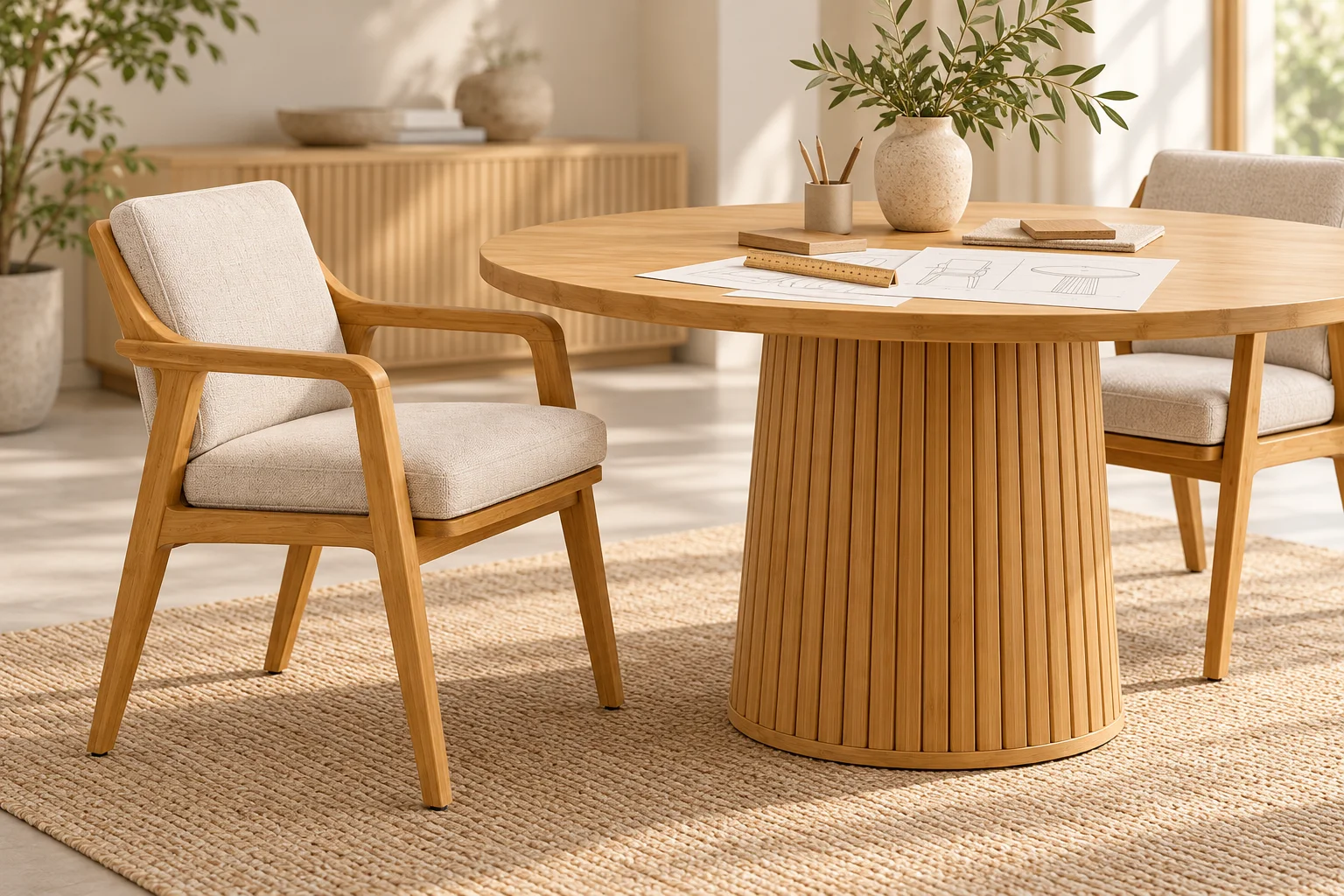
For a restaurant, café or hotel dining project, review the proposed chair and table as a pair before confirming quantities.
Look underneath the tabletop
Table height usually describes the top surface. A chair with arms needs a separate check against the lowest obstruction underneath: the tabletop edge, an apron beneath it, or another part of the frame.
Record the chair's maximum arm height and width alongside the table's underside clearance. Then consider how far the chair is intended to slide under the table. A curved arm or tapered tabletop may change the available clearance along that movement.
Use a side view and a plan view to discuss the pairing. Checking one height number does not describe the whole path of the chair.
Review the base and the proposed seating positions
The Modern Engineered Bamboo Arm Dining Chair provides an upholstered armchair reference. The Round Bamboo Pedestal Dining Table provides a central-base table reference. These are starting points for a paired review, rather than confirmation of a tested set.
For that combination, the useful questions include how the armrests meet the tabletop edge, where the front legs sit relative to the pedestal, and how much room remains for the seated person. A central base still has an outline that belongs in the drawing.
For a round table, place the actual proposed chair outlines around the top. Do not derive a seating count from a product photograph. Chair width, table diameter, place settings and the intended arrangement all need to be considered together.
Check three positions in the room
| Position | What to show on the plan | What the review should answer |
|---|---|---|
| Chairs stored beneath the table | Intended tucked-in position | Can the chairs reach that position without contact? |
| People seated | Chair positions during normal use | Does the proposed arrangement provide the intended seating space? |
| People arriving or leaving | Chairs pulled back | How does chair movement interact with adjacent furniture and service routes? |
Ask the room designer to confirm the required circulation space for the actual project. A suggested furniture arrangement does not establish a suitable aisle width for every room or operating pattern.
Include upholstery in the decision
The chair reference includes upholstered seating. Review the material reference, cushion construction and cleaning instructions alongside the frame finish. A color choice alone does not answer how the seating will be maintained.
If removable covers, replaceable cushions or stacking are important to the operation, identify them as requirements for review. Do not assume those features are included because a chair is described as suitable for dining or hospitality use.
Review a sample pair and record the result
Where sampling is agreed, review the proposed chair with the intended table or a dimensionally representative table. Try the planned movement into position, sitting and leaving, and ordinary handling by the people who will use or maintain the furniture.
Record the chair version, table version and unresolved fit questions. If either design changes, revisit the affected measurements. This practical review supports a purchasing decision; it does not replace any agreed structural or material testing.
The sample approval guide helps record what was accepted and what remains open. Use the finish sample guide for the separate appearance decision.
Discuss a bamboo dining chair project with the table reference, proposed layout, chair quantity and upholstery requirements. If the tables already exist, include their underside and base dimensions as well as photographs.