
A fabric swatch answers a question about appearance. It does not show how that fabric behaves around a chair arm, how a cushion cover comes off, or which cleaning method the completed seat permits. For hotel and commercial seating, the useful approval unit is the upholstered assembly, not the swatch alone.
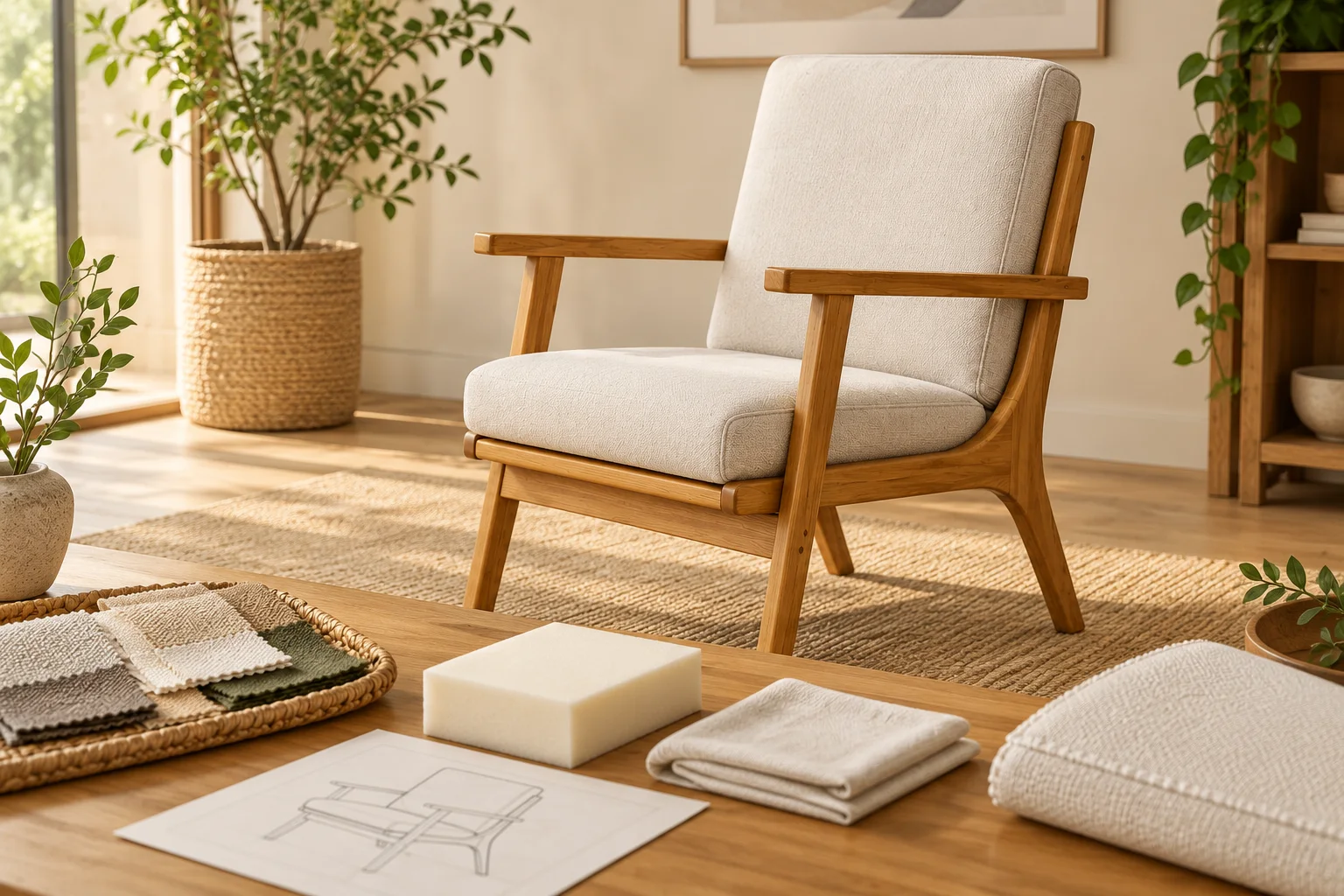
Separate the textile from the cushion underneath
Record the nominated textile by supplier reference, composition, usable width and color reference. Keep foam, filling, lining and cover construction in separate fields. A matching fabric does not guarantee matching cushion feel, and a foam-density figure alone is not a complete comfort specification.
The Engineered Bamboo Upholstered Armchair distinguishes its bamboo frame from project-reviewed fabric and foam. The High-Back Armchair similarly treats textile selection and its upholstered foam system as decisions to confirm. Neither page supplies a universal contract-use test rating.
Describe the cleaning method before asking for a performance label
Ask the operator which products, equipment and cleaning frequency are actually planned. Then obtain the textile supplier's instructions and check their relevance to the assembled chair. Do not infer that a fabric tolerates a cleaning agent because another fabric with a similar texture does.
Requirements vary by destination and setting. If a project calls for abrasion, fire or other evidence, identify the required method and scope with the responsible project team. A fabric report may not cover the foam, backing, adhesives or complete upholstery assembly. Keep those distinctions visible during approval.
Inspect the places a flat swatch cannot show
Use a made-up sample to review seams, piping, corners and the junction between fabric and frame. Check the direction of a weave or pattern across adjoining panels. Record whether the visible seam arrangement is deliberate or simply a sample-making choice.
For cushions, ask whether the cover is fixed or removable, whether its access point is reachable, and what cleaning or replacement is permitted. “Removable” does not automatically mean machine-washable. The approved construction and care instructions need to agree.
Keep an upholstery decision record
| Approval item | Information to retain | Question for the made-up sample |
|---|---|---|
| Textile identity | Supplier reference, composition, width and selected color | Is this the nominated fabric, including its visible weave direction? |
| Cushion assembly | Foam or filling reference, layers and cover attachment | Does the agreed construction produce the intended seated feel? |
| Care method | Approved instructions for the textile and completed seat | Can staff reach the areas they need to clean without damaging the assembly? |
| Seams and panels | Panel layout, stitching direction and agreed details | Do corners and frame junctions match the intended appearance? |
| Evidence and replacement | Required report scope and agreed removable parts | What is covered, and which parts can actually be replaced? |
Approve changes across the full seating program
The Upholstered Bamboo Lounge Chair allows customer-specified fabric to be reviewed with composition, width and performance requirements. This is a review route, not blanket approval of every nominated textile.
If the same material will be used on chairs and sofas, check each application rather than transferring one sample approval automatically. Panel sizes, seams and cushion shapes differ. Record any substitution before production and repeat the relevant checks.
For a contract seating upholstery discussion, provide the seating references, nominated fabric information, operator care requirements and required evidence. Construction, care claims and test applicability remain subject to the agreed specification.