
Two coffee tables can occupy a similar area while asking very different things of the people using them. A slatted surface divides the top into openings. An open shelf leaves objects visible. A drawer conceals them, but only helps when it can open towards the person who needs it.
For a hotel lounge, apartment or office sitting area, choose the working surface and storage arrangement before treating the table as a matching accessory for the sofa.
Put the smallest everyday object on the proposed top
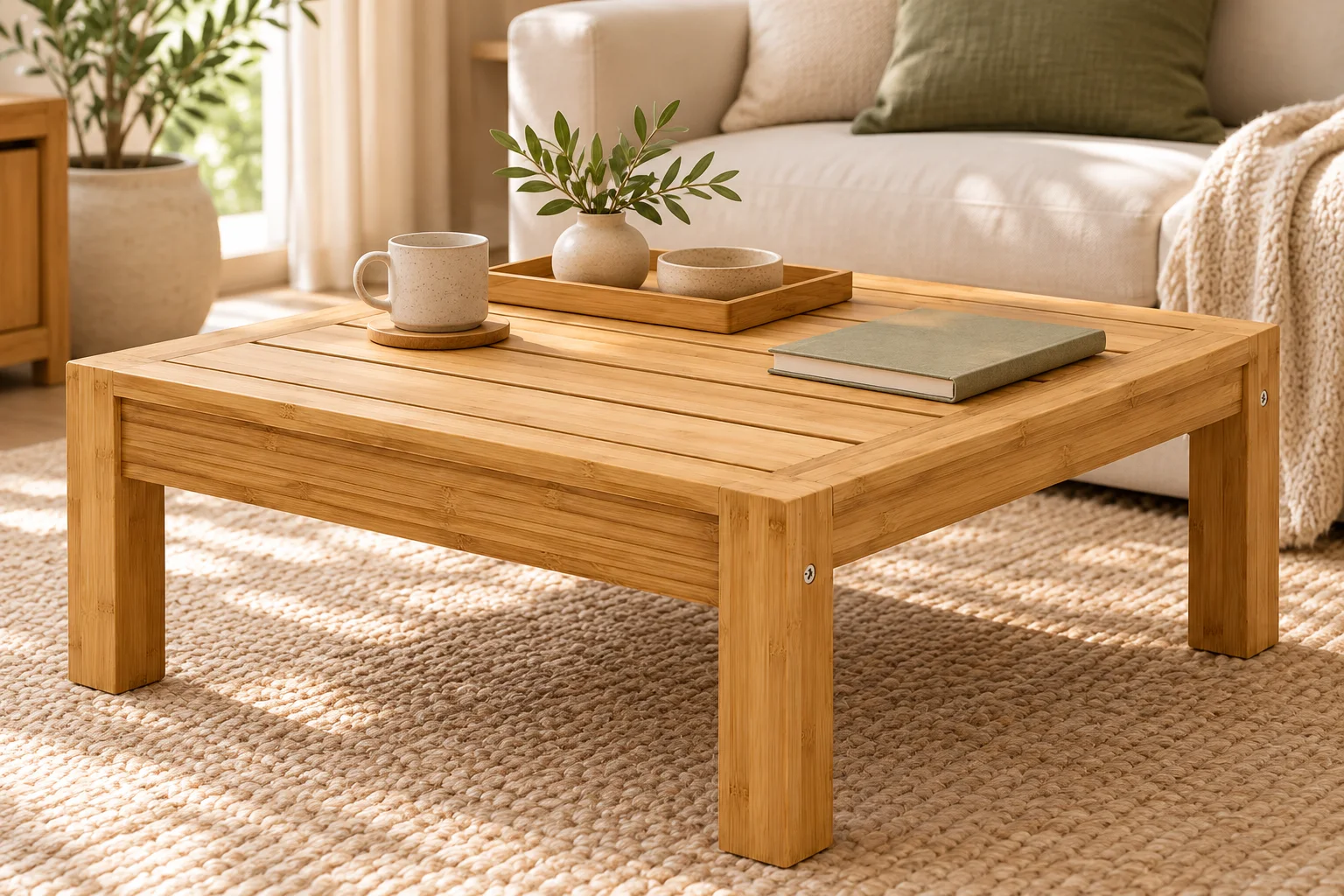
The Slat Coffee Table uses a framed slatted tabletop. Its slat width and spacing follow the approved drawing. Test a coaster, a cup base and anything else that may cross a gap; a large serving tray does not reveal the same issues.
Record whether those objects will sit directly on the surface or always on a supplied tray. If a continuous area is required, make that requirement explicit rather than assuming that all slatted tops work like a solid panel. Actual support and load requirements need engineering confirmation.
Decide whether lower storage should remain on display
The Open Shelf Coffee Table has a rectangular top, a lower open shelf and an asymmetric vertical divider. That divider changes where an object can be inserted and which side can reach it. Positioning it is a storage decision, not only a visual one.
Open storage can make selected objects easy to find. It also makes their arrangement part of the room's appearance. Decide whether the shelf will hold a deliberate display, regularly used items or a mixture. Test access from the occupied seats, not just from the front of an empty table.
Draw the concealed-storage opening as carefully as the tabletop
The round Aero Storage Coffee Table records an integrated curved drawer, with its usable layout and capacity subject to engineering review. Draw the drawer's opening path towards the appropriate seat and check it against knees and adjoining furniture.
Its baseline upper configuration is fixed. A rotating upper-layer concept may be reviewed where technically suitable, but it is not a standard function to assume from the layered appearance. Keep the chosen configuration in the order description.
Compare the jobs these tables will perform
| Table direction | A useful choice when | What must still be checked |
|---|---|---|
| Framed slatted top | The top's material rhythm is part of the design | Actual small-object support, approved gap layout and intended loading |
| Rectangular open-shelf table | Selected items should remain visible and accessible | Divider position, insertion direction and access from occupied seats |
| Round table with curved drawer | Particular items should be hidden between uses | Drawer opening path, usable interior and the specified fixed upper configuration |
| Any shared coffee table | Several seats depend on one central surface | Which user can reach which working area without occupying another person's space |
Send an object list with the furniture reference
Place actual trays, remote controls, brochures or other intended objects in the proposed arrangement. Mark which remain on top, which return to a shelf and which belong in a drawer. Include the operator's reset arrangement so the table does not become unplanned storage.
These examples use engineered-bamboo construction directions. Final sizes, surface details, drawer hardware, assembly and performance are project-specific. For a modern coffee-table specification review, provide the selected reference, surrounding seating plan and the objects the table needs to accommodate.