
An open wardrobe makes the contents part of the room. That can suit a deliberately edited guestroom, but it leaves less room for unspecified storage. Before choosing a rack, decide which belongings are expected to hang and which need another place.
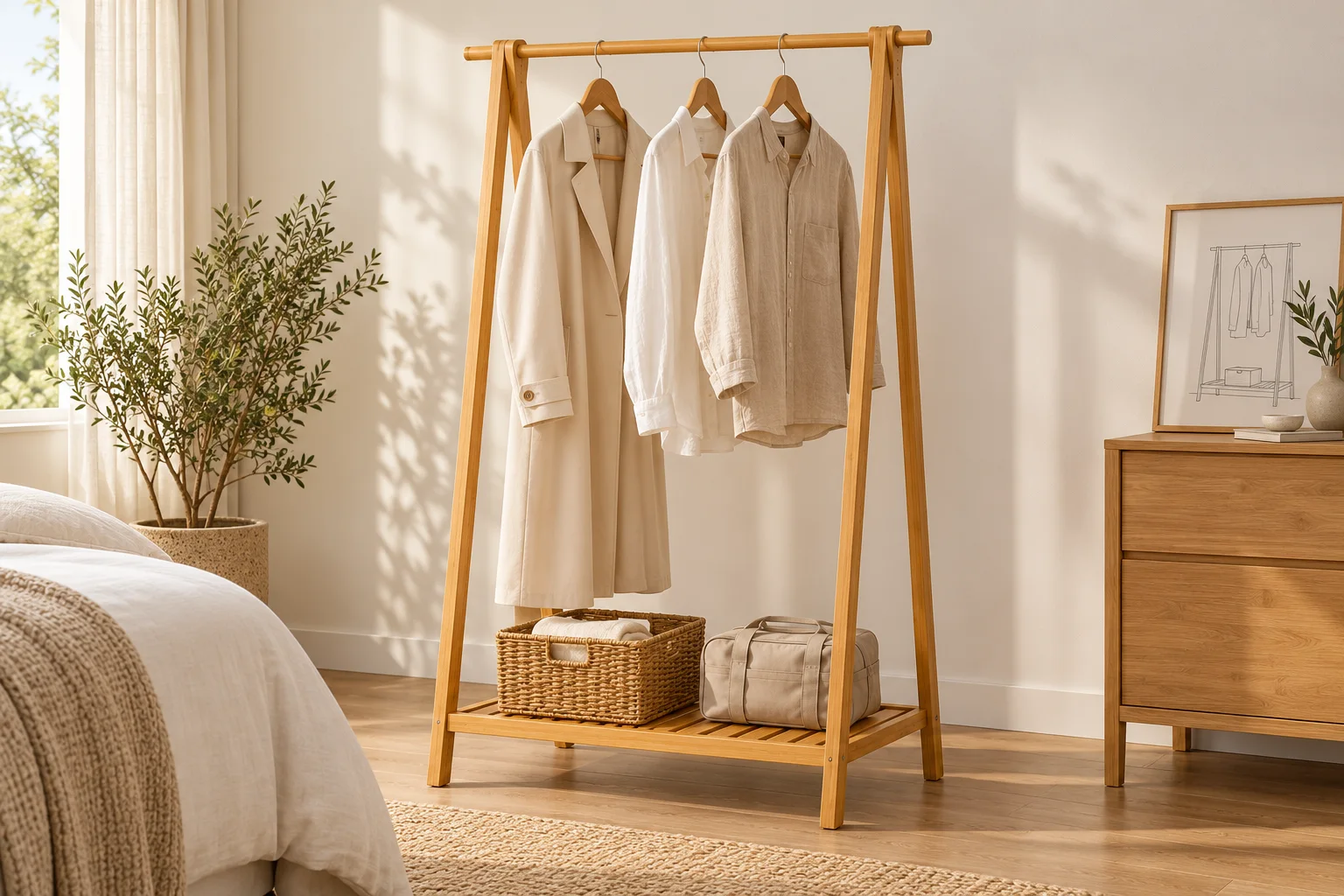
The Nordic Engineered Bamboo Open Wardrobe Rack has a top rail, A-frame side structure and slatted lower shelf. Those three elements establish the useful questions; its outer dimensions alone do not establish the hanging capacity.
Measure the hanging assembly, including the hanger
Start with the selected hanger and the longest garment the brief is meant to accommodate. Measure the drop from the rail contact point, not merely the length written on a garment label. Check what remains between the hanging item and the lower shelf or the objects placed there.
Also review hanger width and the movement needed to lift a hanger over the rail. A garment can fit once hanging yet be awkward to insert if nearby walls or the side frame restrict the approach. Show those actions in a side view.
Assign the lower shelf a distinct job
Decide whether the shelf holds footwear, baskets, folded objects or a bag. Measure the selected contents and include their handles, straps or other projections. Slat spacing matters for small feet and narrow contact points; a large empty suitcase does not test every intended object.
Do not assume the rack is a luggage stand or that the rail can carry a bag. The published load capacity remains subject to section, joint and hardware review. If bags are part of the brief, identify their placement and request confirmation for that specific use.
Distinguish access from a tidy display
A styled view can leave generous space between a few garments. A room brief may ask for a different number of hanging items. Show the intended assortment rather than copying the visual spacing from the photograph.
Keep long garments and lower-shelf objects in the same trial. Test taking one item out without pulling against its neighbor or brushing the stored objects below. The agreed rail positions and rack proportions should follow that trial, not an assumed universal garment capacity.
Build a contents-based rack brief
| Part of the rack | Reference to provide | Question to resolve |
|---|---|---|
| Hanging rail | Actual hanger and intended garment assortment | Is insertion, hanging and removal practical within the side frame? |
| Vertical hanging zone | Longest required garment on its hanger | Does it remain clear of the planned lower-shelf contents? |
| Slatted lower shelf | Selected shoes, baskets or other objects | Do their contact points and removal paths suit the approved slat layout? |
| Bag placement | Intended bag types and designated location | Is that use included in the structural review rather than assumed? |
| Freestanding frame | Room position, floor condition and assembly brief | What stability, fixing and loading requirements apply to this arrangement? |
Review the rack as part of the guestroom storage plan
An open rack does not replace every function of a closed wardrobe. Record where items needing concealment go and whether that furniture is supplied separately. Establish the desired housekeeping arrangement without promising that every guest's belongings will fit a display-style composition.
For an open wardrobe project review, provide the room position, hanger reference, contents list and intended loading. Final dimensions, frame construction, stability measures and packing must follow the approved project specification.