
A media console can fit a device neatly and still prevent it from being connected, controlled or maintained. The relevant dimension is not just the box: it is the box with its plugs, manufacturer-required clearances and the space needed to reach it.
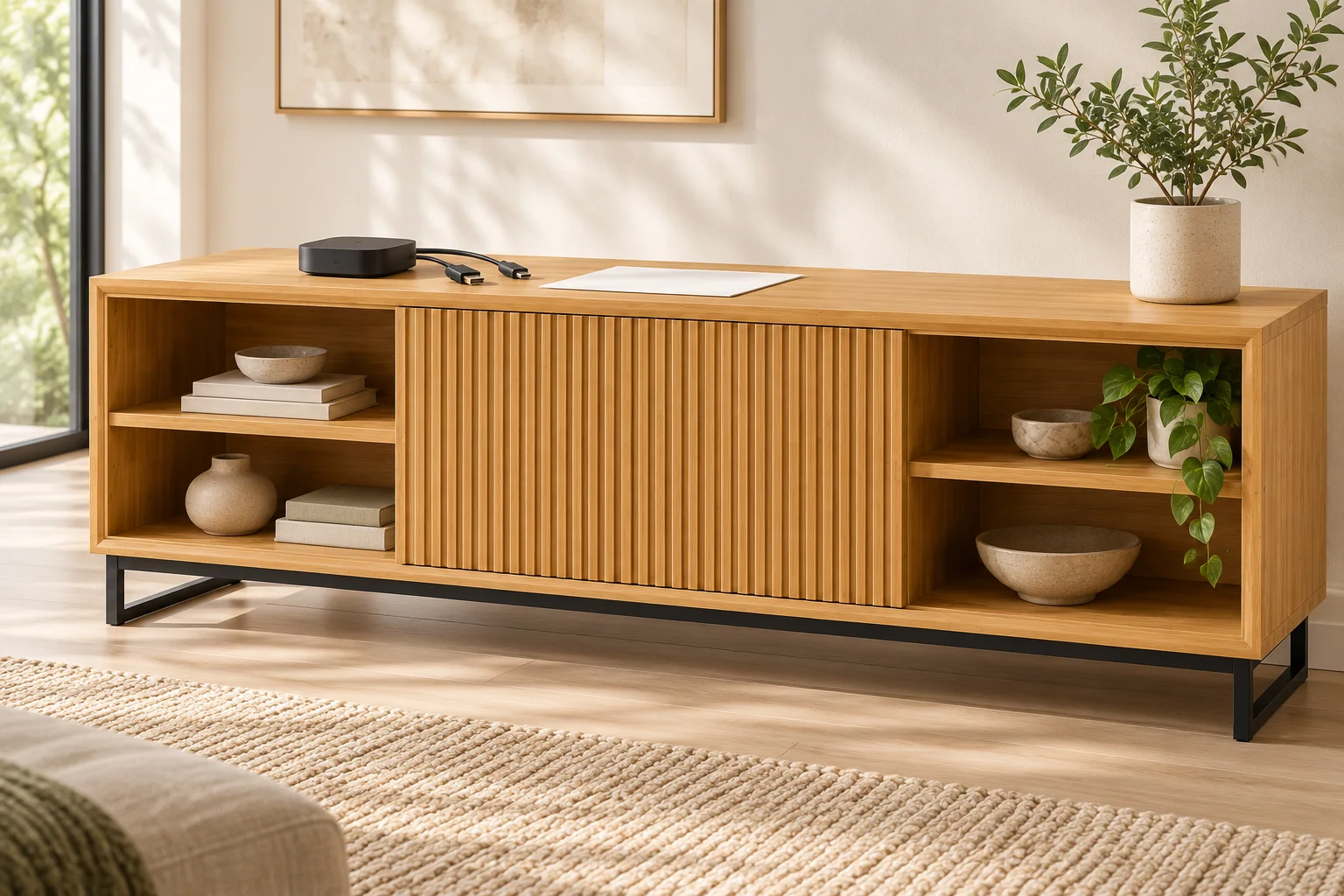
The Engineered Bamboo Media Console with Fluted Doors combines open side shelving with concealed central storage. Its door mechanism and cable details need project confirmation. The fluted appearance does not establish ventilation or remote-control compatibility.
List connected equipment, not generic compartments
Provide the actual devices intended for each compartment. Record body dimensions, connector positions and the device manufacturer's clearance instructions. Include a connected arrangement where possible so plugs and cable bends remain visible.
Keep powered equipment distinct from books or decorative objects. An empty shelf opening can accommodate their outlines without resolving equipment operating requirements. Required ventilation must come from the equipment documentation and the agreed furniture design, not from a guess that a larger compartment will be sufficient.
Decide what works with the doors closed
Identify how each device is controlled: an infrared receiver, radio-based control, physical buttons or another method. If a receiver must see the remote, check that path in the proposed door position. Not all remotes use the same method, and a decorative door should not be described as signal-transparent without verification.
Ask whether the device is intended to operate with the door closed. A cabinet that must be left open during use creates a different room arrangement from the one shown in a closed-door photograph. Record that operating position and its effect on nearby access.
Provide a route for replacing cables later
An opening is only useful if the required connector can pass through it. Size the agreed route around the connector and installation sequence, not just the cable's diameter. Clarify whether a back panel or another part can be removed for service; do not assume that it can.
Check access after the console is against its intended wall. Describe how a device or cable can be replaced without pulling on hidden connections or relying on the loaded cabinet being moved as one unit. The final procedure depends on the approved assembly.
Prepare a device-by-device access record
| Requirement | Evidence or reference | Furniture decision |
|---|---|---|
| Connected fit | Device dimensions with plugs and cable bends | Usable compartment size and insertion direction |
| Operating clearance | Manufacturer's ventilation instructions | Reviewed openings and equipment placement |
| Control access | Receiver or button positions and control method | Open or closed door during normal operation |
| Cable passage | Largest required connector and connection order | Hole positions, route and installation sequence |
| Future replacement | Intended service actions at the installed position | Approved removable parts and accessible connections |
Keep display storage separate from equipment approval
Open side shelves can hold selected objects or devices, but each powered item still needs its own operating review. A television placed above the console also needs a separately confirmed support or mounting plan. The console page does not publish a universal television-load rating.
For a media furniture specification review, send the equipment list, wall layout and proposed open or concealed positions. Final material composition, compartments, hardware, cable access and loading must follow the approved drawings and samples.