
A display cabinet can photograph well with its doors open and tell a different story when they are shut. A frame may cross an object's label, the shelf edge may hide the smallest pieces, or reflections may dominate the view from the room's main approach.
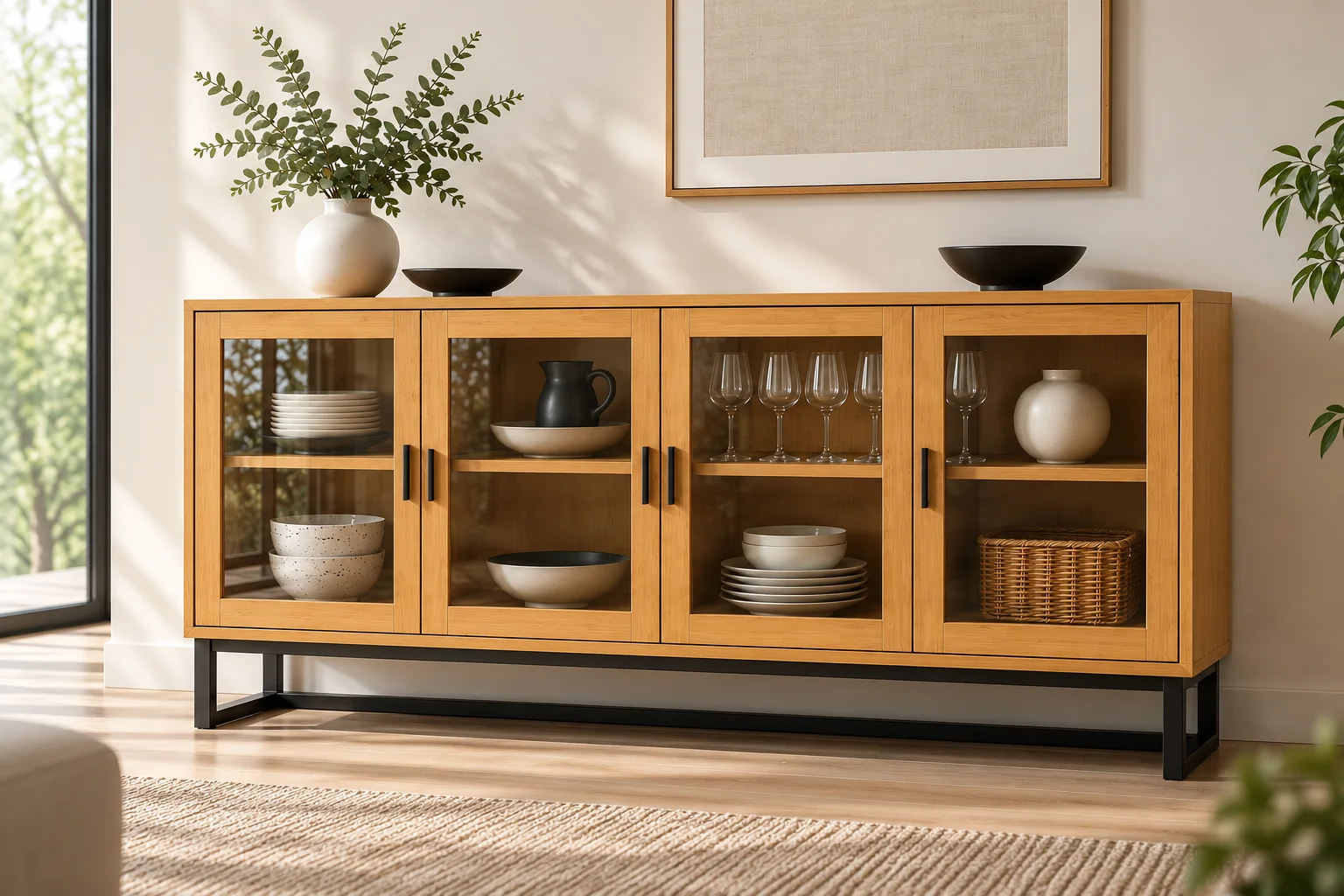
For a lounge, restaurant or showroom, choose the closed-door presentation deliberately. Storage capacity alone does not settle the display.
Decide what the visitor should see
Separate objects that need recognition from objects that simply contribute shape or color. A bottle label, a small merchandise card and a decorative bowl need different sightlines. Set the actual display arrangement before deciding door divisions.
The Modern Bamboo Glass Door Sideboard is a useful starting reference: an engineered-bamboo cabinet direction with glass doors, a metal base and a four-door reference layout. Alternative door layouts and shelf spacing are available for project review, not fixed retail specifications.
Look through the doors from the room
Review the proposed cabinet at the normal approach angle and from any important seated position. An object centered in a compartment may not remain centered within the visible glass opening once the frame and hardware are included.
Use the actual room lighting or a representative arrangement when reviewing a sample. Reflections depend on that setting and the agreed glass appearance. A bright product image does not prove that lettering will remain legible or that glass will be free of reflections in the finished room.
Arrange shelves for a closed-door composition
| Display intention | Arrangement question | Closed-door review |
|---|---|---|
| Labels or small signs | Which face must remain readable? | Frame, handle and shelf edges do not cover the needed information |
| A few larger objects | What visual gap should remain around each piece? | Objects do not merge into the cabinet divisions |
| Several small pieces | How will they be grouped? | The grouping is understandable from the normal viewing position |
| Spare items behind a display | Should reserve contents be visible at all? | Storage and presentation have separately agreed locations |
Leave rearrangement decisions in the brief. A cabinet that will show changing merchandise needs a different shelf discussion from a cabinet with a permanent decorative set. “Custom shelves” should lead to a confirmed arrangement or adjustment method, not an assumption that every shelf can move.
Review the glass as part of the complete door
Specify the intended glass appearance and ask for the proposed glass type, thickness, edge treatment, retention and related hardware. Do not assume tempered glass, a particular safety classification or a load capacity from transparent imagery.
Check cleaning access on the assembled sample, especially near frames and handles. If lighting is required, include its placement, power and access responsibilities separately. The cited sideboard does not establish a supplied illuminated-display system.
Approve the display, not only the empty cabinet
Photograph the agreed object arrangement with the proposed doors closed, from the positions that matter. Keep those views with the shelf layout and finish reference so the order records the intended presentation.
For a glass-front cabinet discussion, send the objects or merchandise sizes, viewing positions and preferred door divisions. Final bamboo build, glass, hardware, lighting scope where applicable and construction follow the approved drawing and sample.