
A chair selected as a focal object still has to work as a seat. Its broad outline may look inviting while leaving unanswered questions about where the body touches the shell and how someone gets out of it.
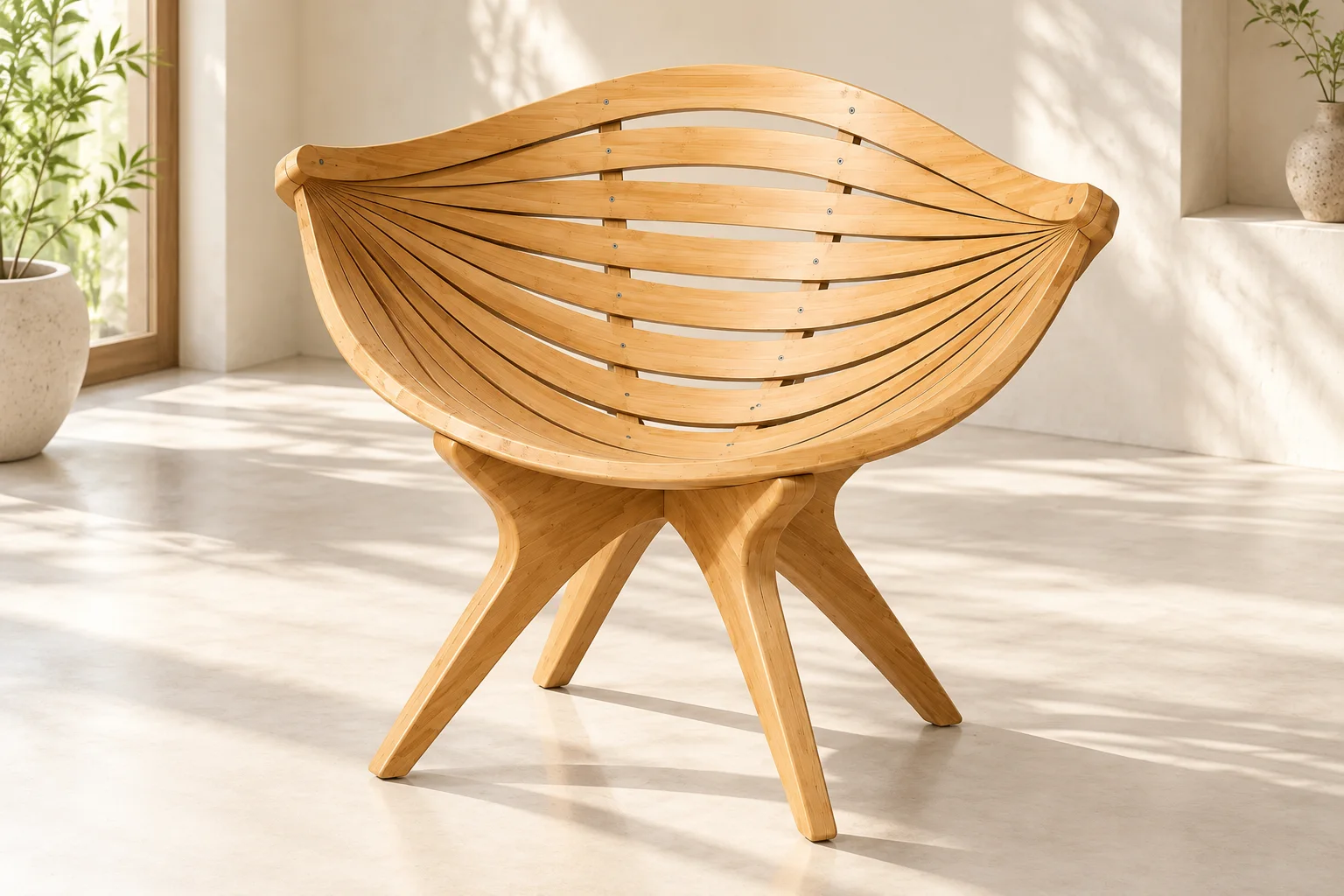
For a design-led lobby, reception space or reading corner, review the sculptural form from two viewpoints: the room looking at the chair, and the person sitting in it.
Identify the actual sitting construction
The Sculptural Bamboo Slat Lounge Chair describes a wide curved shell formed from open bamboo slats. Slat profile, spacing, radius, joints and final proportions remain subject to engineering review.
This is not an upholstered lounge chair with a continuous padded surface. A curved outline alone does not establish comfort, and its visual openness does not prove flexibility or a particular load performance.
Follow the points of contact
On the proposed physical sample, observe where the thighs, seat and back meet the slats. Look at edge transitions and the places where the direction of the shell changes. Test the intended sitting posture rather than judging the chair only from its front photograph.
Record observations without inventing a universal “ergonomic” label. Different users and intended seated activities can produce different requirements. A brief waiting seat and a chair intended for a long reading session should not receive the same approval merely because the silhouette fits both rooms.
Include sitting down and standing up
| Trial | Observation to record | Follow-up decision |
|---|---|---|
| Approach and sit | Where the user reaches and how the body enters the shell | Whether the proposed width and edge geometry suit the task |
| Settle into the intended posture | Actual contact with the slats and back transition | Which geometry requires review before approval |
| Change position | Movement within the shell and access to nearby objects | Whether the intended activity is practical |
| Stand and leave | How the user transfers weight and clears the chair | Whether the proposed form suits the selected use |
These are sample-review questions, not a medical assessment or a statement that the reference chair suits every user. The complete assembly's stability and project-specific loading or durability evidence require their own review.
Do not add a cushion only in the image
If a cushion is requested, develop it with the shell rather than placing a loose cushion into the rendering and considering the matter resolved. Ask whether it changes the usable seat, slips between or across slats, obscures the intended appearance or needs a defined attachment.
The cited design reference does not establish a standard supplied cushion. Proposed upholstery, attachment and care must be separately confirmed. Equally, a focal chair in an indoor lobby image is not evidence of outdoor suitability.
Retain both the visual and seated approval
Keep approved views of the chair alongside a record of the physical seated trial and any required construction changes. Visual approval and performance evidence answer different questions; neither should silently substitute for the other.
For a sculptural lounge-chair review, identify the intended seated activity and finish direction as well as the desired silhouette. Final bamboo build, slat geometry, supporting components, dimensions and project performance follow the approved specification.