
A furniture photograph shows the exposed face, not the complete material build. A bamboo-looking desk can use different panel constructions, and the supporting frame may use another material entirely.
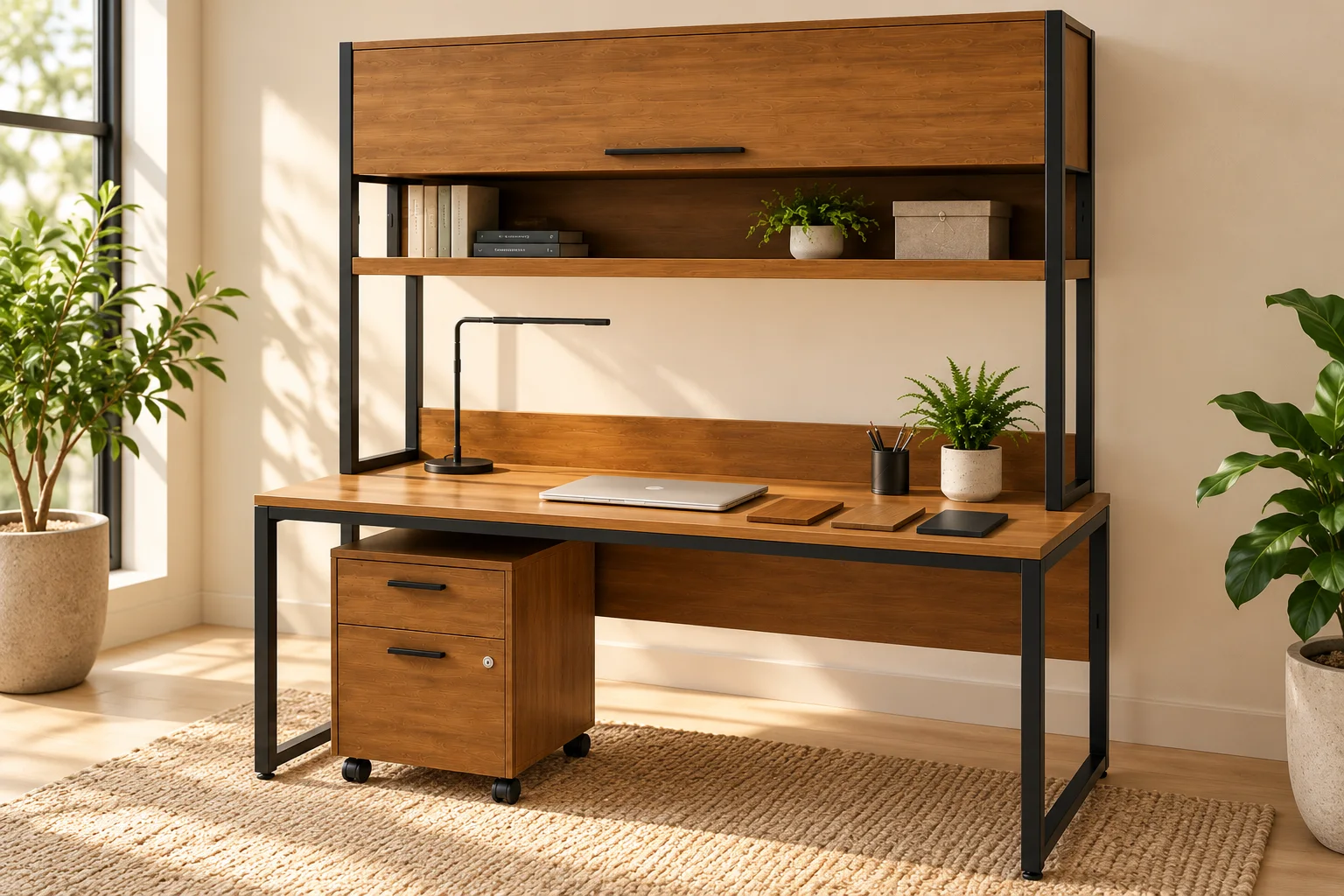
For custom furniture purchasing, a color reference is not a material schedule. Identify what is visible, what is underneath it and what carries or connects the assembly.
Read the description component by component
The Modern Bamboo Office Workstation lists engineered bamboo or bamboo veneer with a steel supporting structure as its material direction. Those panel alternatives must be resolved for the proposed version; the steel frame is a separate component.
The Engineered Bamboo Executive Desk describes an engineered-bamboo surface with supporting structural materials reviewed per project. Its name does not establish that every internal or supporting part uses the same bamboo construction.
Separate a facing from a complete panel
If a proposal uses veneer, ask what panel it faces and how the exposed edges are finished. If it uses an engineered-bamboo panel, request the proposed build-up and where it is used. Do not silently replace one description with the other because their finish samples look similar.
Identify visible undersides, backs and cut-outs as well as the primary face. A desk can have a convincing top surface while its cable opening or edge reveals another part of the material build. Agree whether that appearance is intended.
Make a component-level record
| Component | Material question | Drawing or sample reference |
|---|---|---|
| Visible working surface | Engineered bamboo panel or a specified facing on another panel? | Approved build-up and finish sample |
| Exposed edge or opening | What material will be visible at the cut? | Edge section and finishing detail |
| Supporting frame | What material and finish form the support? | Component drawing and agreed connection |
| Internal or rear parts | Same construction or a separately specified material? | Named part in the material schedule |
| Other visible elements | Glass, metal, upholstery or other confirmed components? | Their own specification, not the cabinet's umbrella name |
The Glass Door Sideboard, for example, combines an engineered-bamboo direction with glass and a metal base. Calling the whole item “bamboo furniture” does not remove those separate specification decisions.
Keep color language out of the material identity
A tone described as oak-like or walnut-like can refer to color rather than the wood species used. Record the actual material separately from the desired tone, grain appearance and sheen.
Likewise, approving a finish swatch does not establish panel thickness, internal construction, fastening or a tested performance. Samples and drawings should identify the proposed combination, not just its most attractive exposed surface.
Record alternatives before comparing offers
When a material remains open for review, list it as an unresolved alternative rather than allowing suppliers to quote different constructions under one name. Once selected, keep the component schedule with the approved drawing and sample.
For a custom furniture material review, provide the item reference and surfaces that matter to the room. Final bamboo composition, supporting materials, construction and any required evidence must be confirmed for the project. Appearance alone does not establish environmental, emissions, durability or compliance claims.