
Adding a lock to a bedside drawer raises a small but practical operations question: who has the key when the room changes users? If that answer is left until delivery, a simple furniture feature can become an avoidable handover problem.
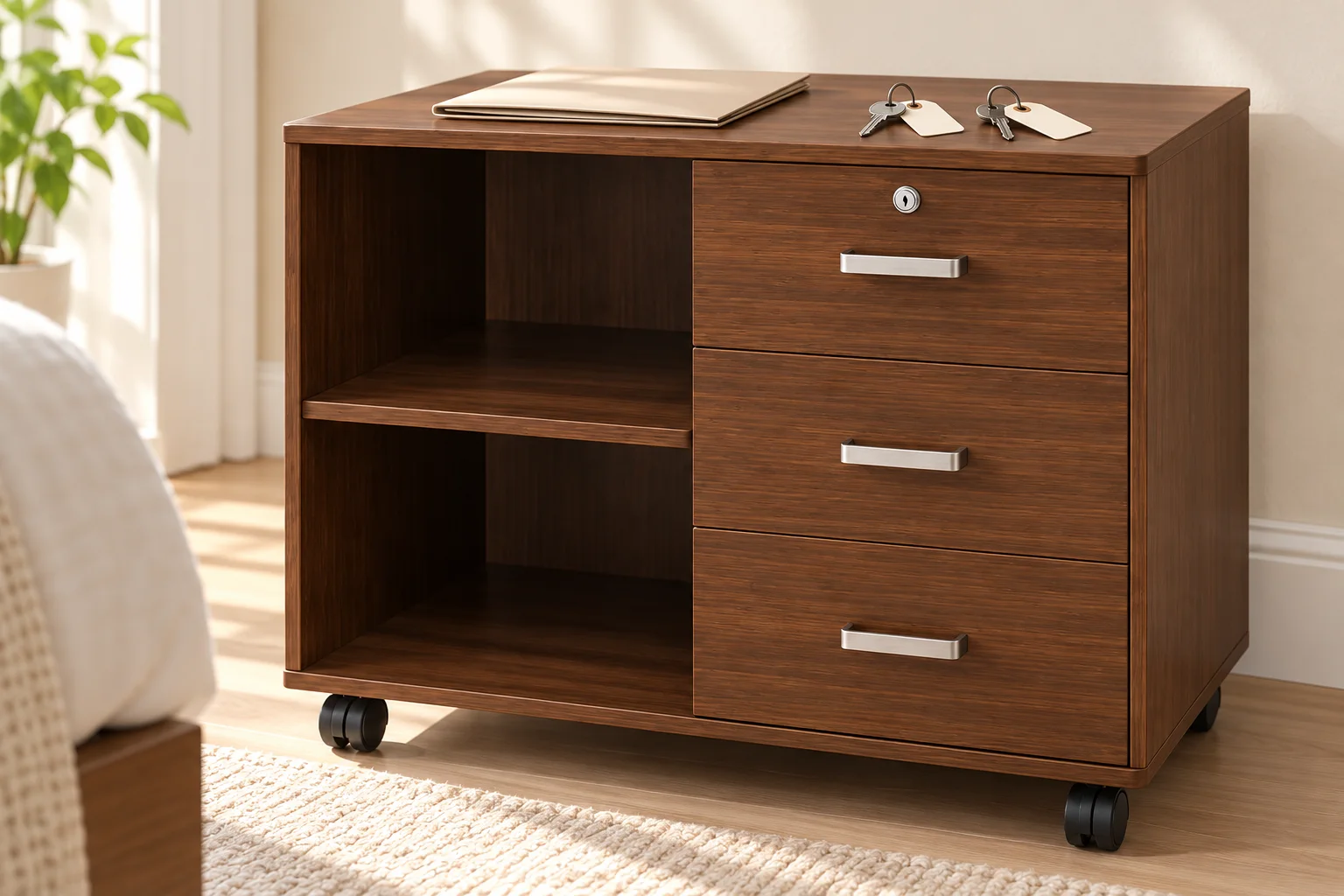
Start with the purpose of the locked compartment. Keeping everyday belongings out of casual view is a different requirement from protecting valuables, records or regulated items.
Define what the drawer is meant to do
The English design description of the Engineered Bamboo Mobile Bedside Storage Cabinet identifies a lockable upper drawer, alongside open shelves, other drawers and a caster base. The supplied version, lock hardware and permitted use still need confirmation for the project.
A lockable furniture drawer is not a rated safe. Do not infer resistance to forced entry, fire protection or approval for a particular type of storage from the presence of a keyhole. If any such requirement matters, state it separately and request an appropriate solution with relevant evidence.
Choose the key arrangement deliberately
Ask whether proposed units have different keys or share a key arrangement, how many keys accompany each unit, and whether any master-key function is proposed. Do not assume these options are offered; ask for the actual available system and its limitations.
For repeated guestrooms, link each delivered key set to an item or room reference. Decide who retains spare keys and who records a reassignment. Keep any operational access policy with the client rather than leaving it to a furniture label.
Separate three different uses of “locking”
| Term in the brief | What it should mean | Confirmation to request |
|---|---|---|
| Drawer lock | Access to one identified compartment | Lock reference, key arrangement and operating instructions |
| Drawer retention | Keeping a drawer in its intended state during approved handling | Permitted movement and any separate retention provision |
| Caster brake | Controlling movement of the cabinet at its parking position | Proposed wheel and brake arrangement and use instructions |
Locking a drawer does not establish that the cabinet is secured against movement. Braking the wheels does not secure the stored contents. Neither should silently substitute for the other in an order.
Review the lock on the completed cabinet
Under the approved review procedure, check access to the keyhole in the cabinet's intended position. Confirm that the key can be used without an adjacent bed, overhanging top or furniture part interfering. Check the specified drawer's opening and closure with representative permitted contents.
Agree what happens if a key is lost or a lock needs replacement. A replacement cylinder, spare key or interchangeable component should only be recorded as available once the supplier confirms it. Include the relevant identification and instructions in the handover record.
Put key scope beside furniture scope
Discuss a lockable bedside-cabinet requirement with the intended contents, room assignment and access needs. The final lock system, keys, drawer construction, mobility provisions and any security requirement must be agreed explicitly, rather than inferred from a product image.