
Two parts can use the same material and approved color while showing their surface lines in different directions. A tabletop may run lengthwise, a drawer front vertically, and an end panel across its width. A finish name does not resolve those relationships.
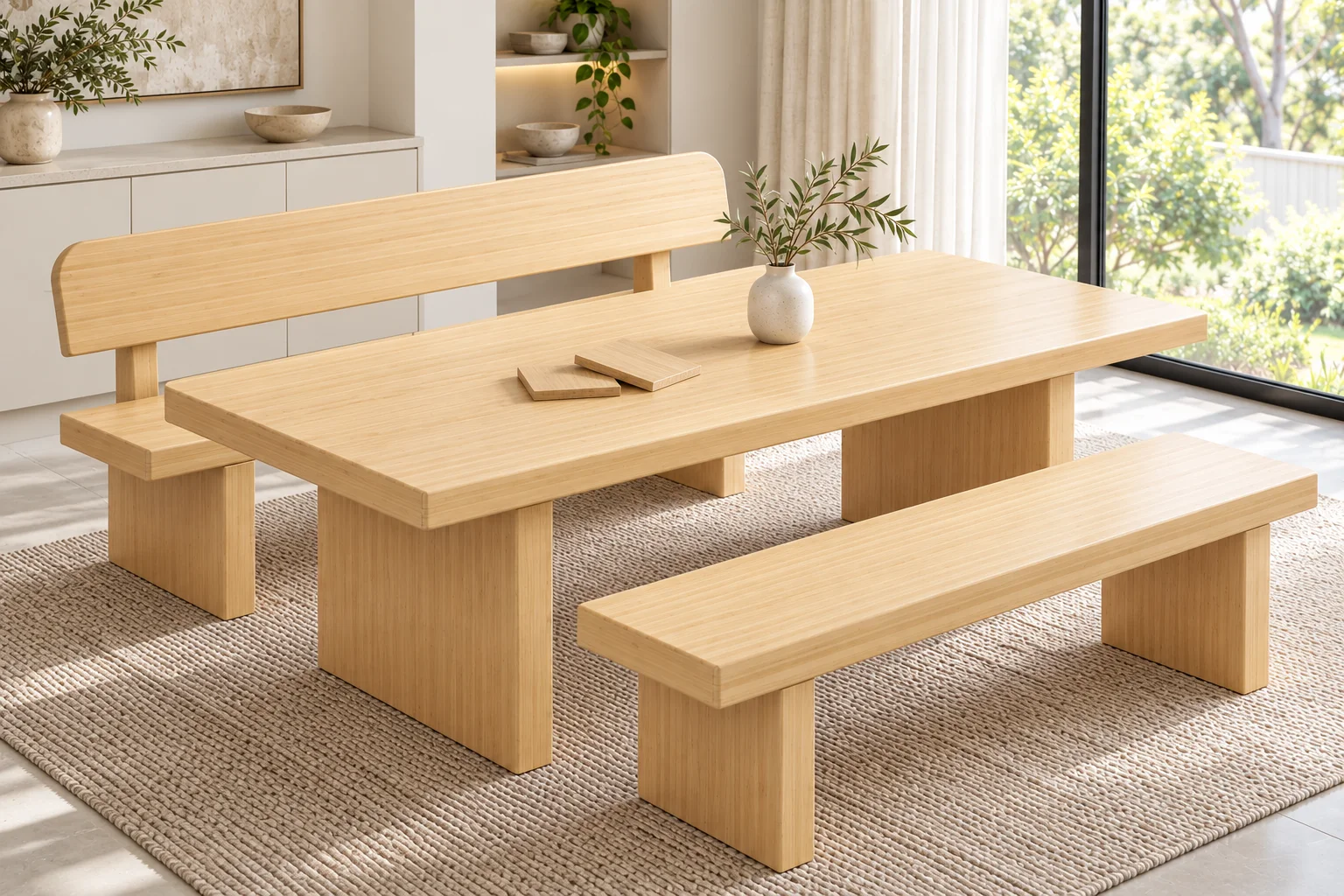
If direction is important to the collection, mark it on the visible faces before the sample is made. That is more precise than asking for all pieces to “match.”
Name the faces whose direction matters
Begin with the faces people see in the installed position: top, front, exposed ends, back and relevant returns. Give each a reference and show the intended surface direction on an elevation or detail.
The Nordic Bamboo Dining Collection treats grain direction as part of its coordinated material story. Table and seating belong to one visual program, but that does not automatically mean every surface runs in the same direction. A shared finish and a coordinated directional layout are separate instructions.
State the relationship across a break
Several cabinet doors can share a vertical direction without their individual grain lines continuing across the door gaps. Likewise, a long surface assembled from parts can have consistent direction without reading as a single unbroken grain sequence.
Distinguish parallel direction, a deliberately different direction, and a requested continuous visual relationship. If continuity is wanted, ask the supplier whether the proposed material, part sizes and construction can achieve it. Do not promise that feature or leave it implied by the word “matching.”
Make a visible-face schedule
| Face or relationship | Drawing instruction | Question to resolve |
|---|---|---|
| Tabletop | Direction arrow on the top view | Which direction runs along the table? |
| Adjacent fronts | Arrows on each door or drawer | Same direction only, or a separately agreed continuity requirement? |
| Exposed end | Arrow on the side elevation | Does the direction change at the corner deliberately? |
| Replacement component | Face reference and original approval record | Which appearance limits apply to a later part? |
Review corners and large surface fields
The Architectural Bamboo Slat Wall Panel System combines broad flat zones with vertical slat accents. The direction on a flat face and the rhythm of the slats are related visual decisions, but they are not the same property.
Mark intended changes at corners and transitions. Ask the sample to show the relevant relationship where a flat chip would be ambiguous. If a large repeated surface is important, define what a larger layout review needs to demonstrate instead of treating one small sample as approval of the whole field.
Keep direction separate from material identity
An orientation drawing does not establish whether a face is a veneer or another engineered-bamboo construction. Nor does it establish structural performance. Retain the material build and finish identification separately, together with the approved visible-face layout.
If part sizes, material construction or a visible end change, revisit the affected direction decisions. Send a furniture surface-layout enquiry with marked faces and the relationships that matter. Final grain appearance and any matching limits require explicit project confirmation.