
An adjustable chair is not defined by how many holes appear in its frame. The buying question is which seat and footrest positions belong together in the supplied version, and how those arrangements work with the intended table.
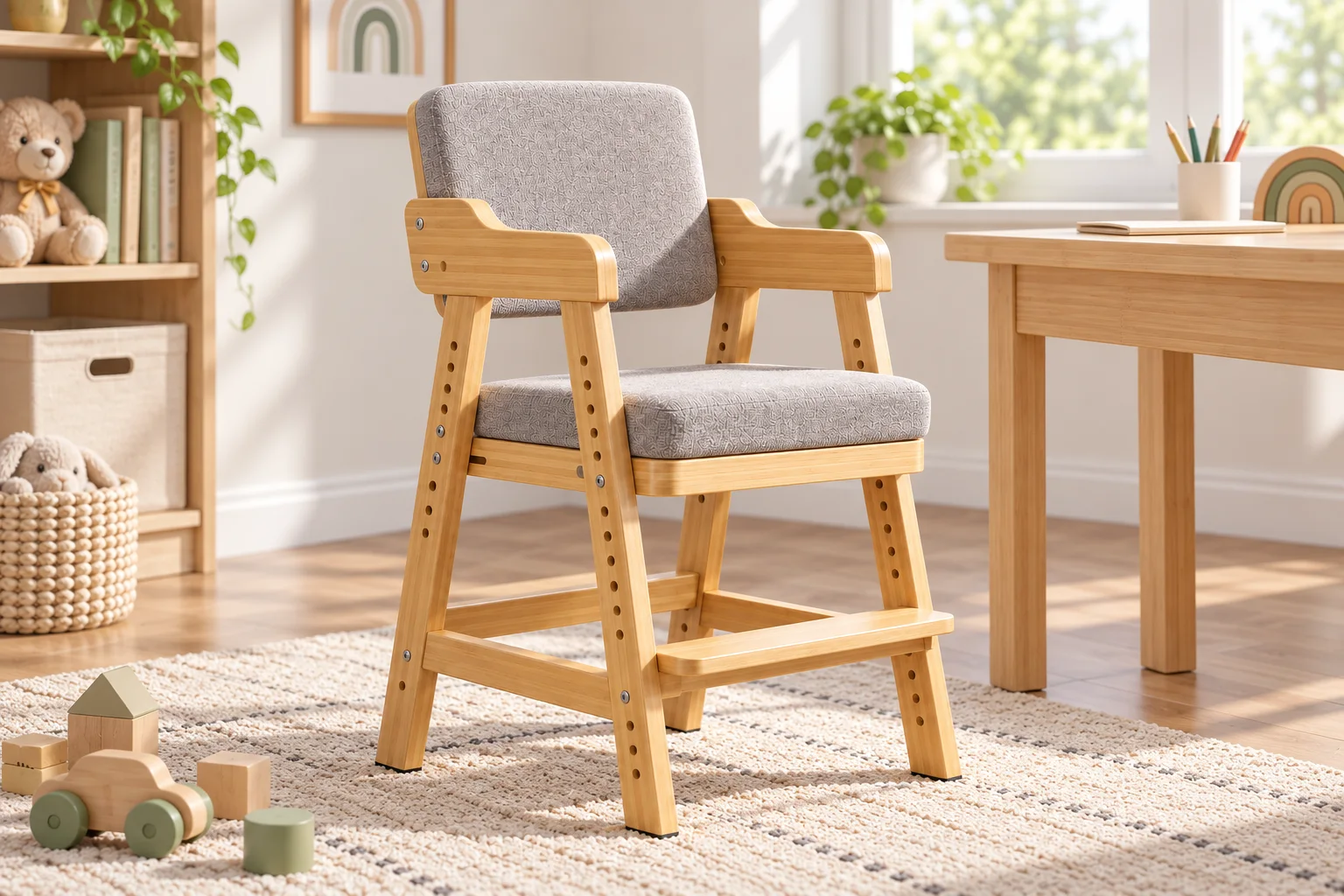
That distinction matters in a furniture collection with more than one desk or dining table. A picture of the chair at one setting does not resolve the other settings. Nor does a target age on a purchasing brief establish a safe or suitable configuration.
Ask for permitted combinations, not a list of heights
The Height-Adjustable Bamboo Children's Chair is a published design direction with an engineered-bamboo frame, upholstered seat and back, and multiple seat and foot-support positions. Its final adjustment range, hardware and construction are subject to drawing and sample review.
Ask the supplier to identify the permitted seat-and-footrest combinations for that final version. Give each combination a reference that can also appear in the instructions. A list of seat heights and a separate list of footrest heights leaves the relationship unanswered.
Do not assume every apparent fixing position can be combined with every other position. The responsible supplier needs to define the arrangement, exclusions and applicable evidence. This article does not provide an adjustment procedure or a recommended setting for a particular child.
Bring the actual table into the review
Show the table surface and underside, not only its nominal height. An apron, rail or other under-table feature can matter to the proposed chair position. Record the arm profile, approach and occupied chair location against the nominated table.
Use the supplier-approved arrangement and review process. A useful visual comparison keeps the table, chair version and setting reference together; it does not turn a room photograph into a fit or safety assessment.
For a hypothetical collection with a study desk and a family dining table, make two review lines. A configuration reviewed beside the study desk should not silently become the approved dining arrangement. Changes to upholstery or other components also need to remain visible if they alter the reviewed geometry.
Keep one setting record through the order
The record below organizes questions for the supplier. Populate it from the approved documents rather than by measuring a concept image.
| Review item | Information to retain | Question to close |
|---|---|---|
| Chair identity | Item code, drawing and sample version | Which delivered construction does this cover? |
| Adjustment pair | Supplier-defined seat and footrest references | Which combinations are permitted or excluded? |
| Table interface | Nominated table and relevant underside details | Has this exact arrangement been reviewed? |
| Changing the setting | Current instructions and named responsible user | What approved procedure and restrictions apply? |
| Evidence | Report or assessment with product identity and scope | Does it cover the reviewed version and configurations? |
The order and packing documents should identify the same chair version as this record. If a later change affects the positions, hardware or upholstered assembly, return the affected points for review rather than retaining an earlier approval without checking its scope.
Keep appearance, instructions and safety evidence separate
A rounded frame and soft upholstery describe visible design features. They do not establish a safety classification, a growth range or suitability for every setting. Requirements for the destination and intended use need to be identified by the responsible project team and checked against the actual product evidence.
Agree who will change settings, what information that person receives and how a current instruction version is supplied. Do not invent tightening details, hardware substitutions or adjustment steps from photographs. A normal sample viewing should not involve an unapproved configuration or an improvised child-use trial.
Use the drawing revision checklist to retain the right version and the test-report guide to check identity and scope. For an adjustable seating project discussion, send the chair reference, intended tables, target market, quantity and the setting questions still open. The goal is a clearly reviewed configuration, not a larger number of adjustment positions.