
A stripe can run along the seat, across it or in a different direction on the back. All three arrangements might use the right fabric. Only one may be the arrangement the designer intended.
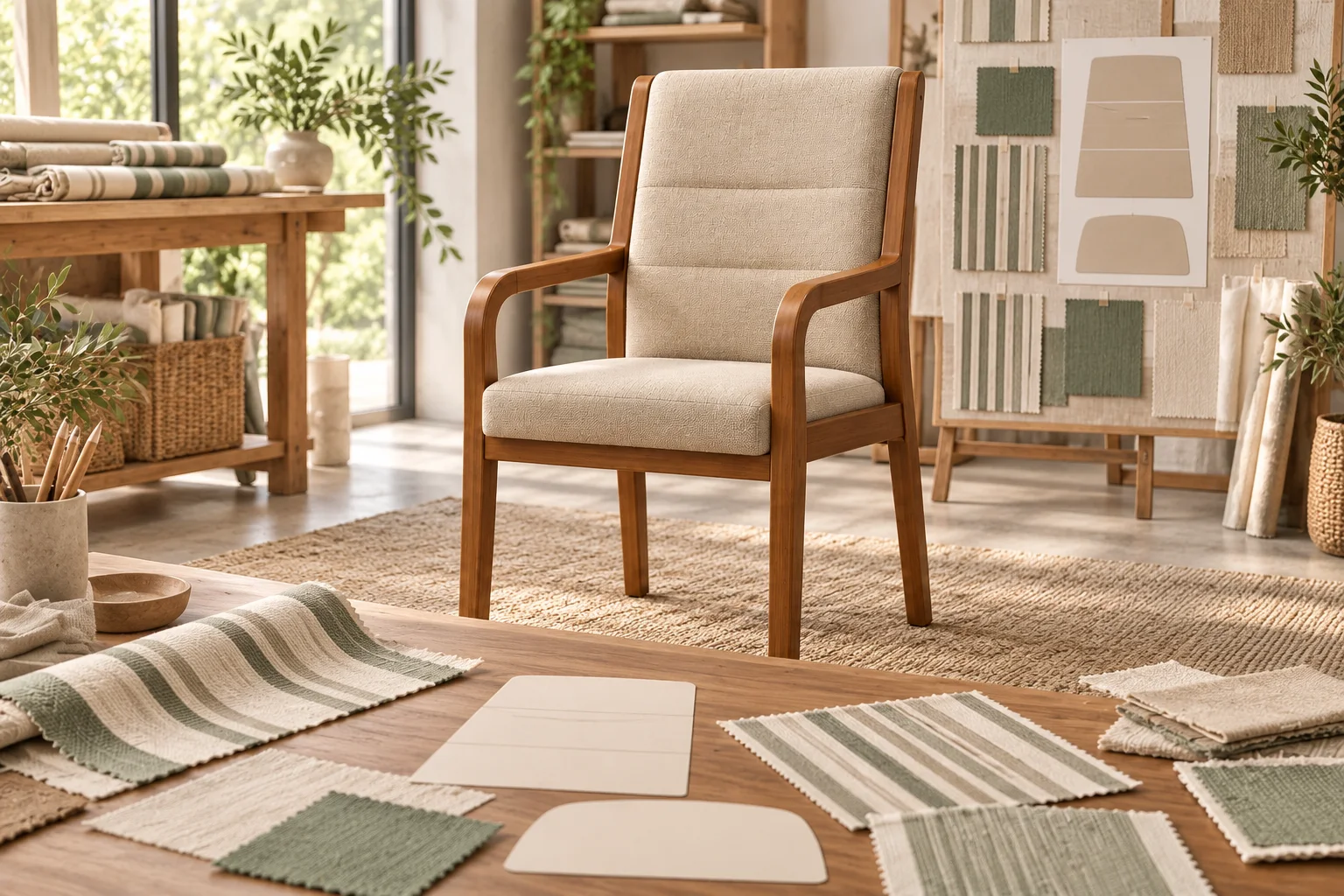
When a project selects patterned upholstery, identify the visible result panel by panel. The textile reference controls which material is used; a layout record controls how that material appears on the furniture.
Mark the pattern in the furniture viewing direction
Obtain the textile supplier's pattern information, including the repeat and usable width, and identify the agreed viewing direction. Then mark the front of the chair and the direction on the seat, inside back, outer back and any separate cushion as applicable.
The Upholstered Bamboo Lounge Chair allows textile and stitching requirements to be reviewed. The High-Back Armchair has a different upholstered profile and a visible rear panel. Their pattern layouts need separate review even when the same fabric is nominated.
If the design uses a floral, geometric or other repeated motif, mark where the focal part should sit. Centering a motif on the seat and centering it on the complete chair are not necessarily the same instruction.
Decide which seams should connect visually
Show the intended relationship across adjoining panels. A design may require stripes to continue across a particular junction, while accepting a deliberate break at another. Name those locations instead of requesting that every pattern match everywhere.
Ask the upholstering supplier to review the proposal against panel shapes, seams and material availability. A flat sketch can communicate an intention but does not establish that it can be achieved around a curved or padded assembly. Where a requested relationship is not feasible, resolve the alternative before approving the sample.
Define repetition across the seating group
Decide whether each chair should start with the same visible motif or whether an agreed range of placements is acceptable. A pair standing side by side may need a more specific relationship than chairs dispersed throughout a large lounge.
| Visible area | Layout instruction | Reference to retain |
|---|---|---|
| Seat | Direction and focal placement | Marked top view of the approved version |
| Inside back | Orientation relative to the seat | Front view with panel boundaries |
| Outer back | Whether the rear has its own composition | Rear view for the room approach |
| Named seam | Continuity or deliberate break | Close-up tied to the complete chair |
| Seating group | Same placement or agreed variation | Reviewed group arrangement |
These are appearance decisions, not fabric-performance specifications. Keep textile suitability, cushioning and care with their separate approval requirements.
Approve the made-up layout before fixing quantities
Use a representative upholstered sample to review the pattern on the real panel shapes. Record accepted positions and exceptions alongside the furniture version. Photographs should include an overall view and identified details so that a later reviewer can understand the intended relationship.
Pattern placement can affect the supplier's proposed material requirement. Obtain that requirement for the agreed layout rather than applying a general extra-percentage rule. If the layout changes, request an updated quantity before procuring or dispatching fabric.
The buyer-supplied fabric guide covers the separate material handover. For a patterned seating enquiry, send the textile information, marked panel views, chair quantities and group arrangement. Confirm feasibility and sample scope before treating the drawing as a production instruction.