
A cabinet is moved away from the bed for cleaning and returned to its usual position. The wheels are now partly hidden by the bed frame. If a parking control is required, can the operator reach it there, and does the instruction clearly identify what it controls?
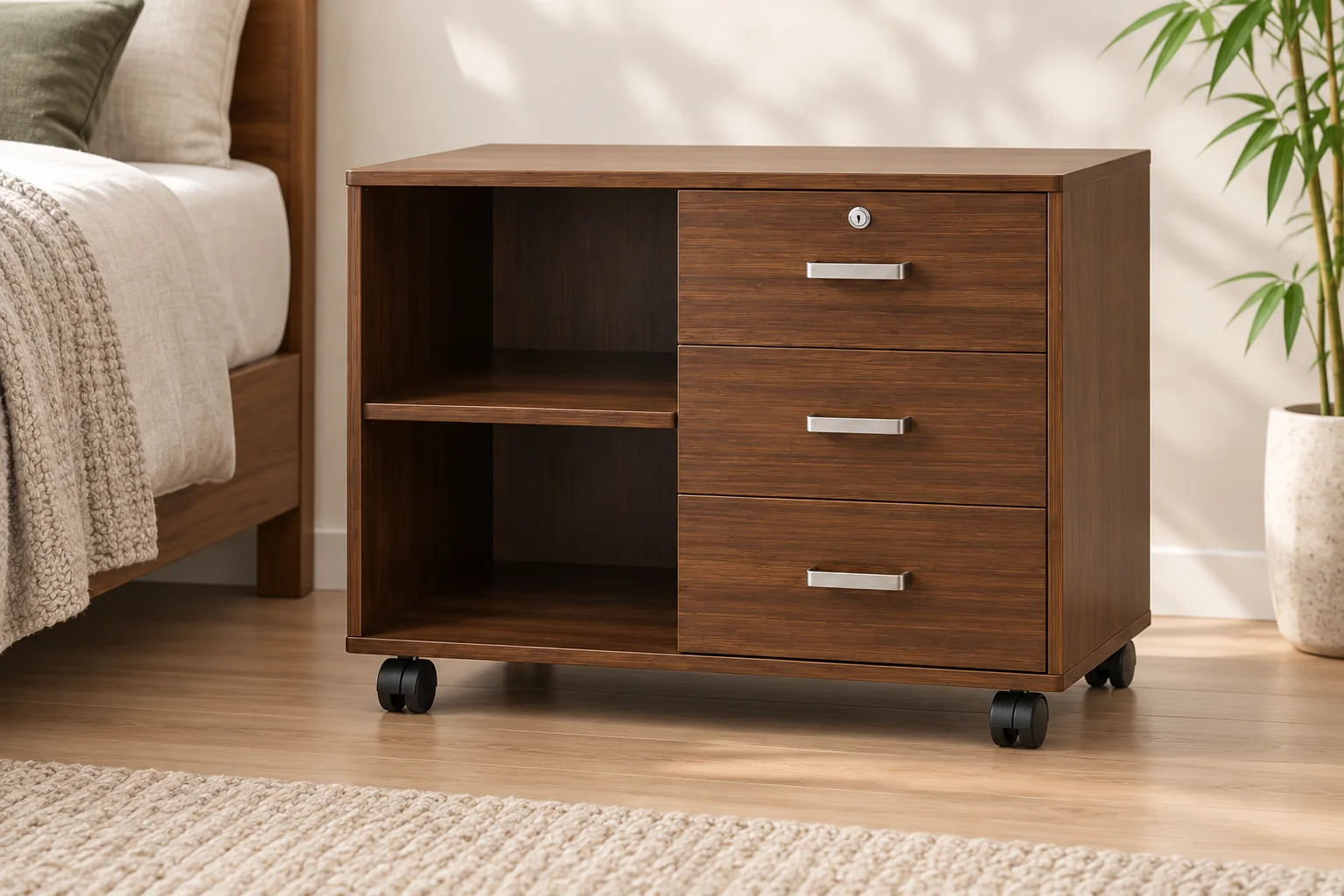
The purchasing question is not simply whether the cabinet has wheels. It is how the approved cabinet changes between its moving and parked states.
Specify the stationary use first
Record where the cabinet normally stands and what it holds during that use. Show the adjacent bed, wall or desk, the open drawer positions and the operator's approach. Keep a proposed parking control accessible in this actual arrangement, rather than demonstrating it only on an isolated cabinet.
The Mobile Bedside Storage Cabinet has a swivel caster base, with brake requirements available for project review. This does not identify a final brake type or permitted loaded operation. Those details belong to the selected hardware and complete cabinet version.
If relocation has no useful operational role, compare a fixed reference such as the Two-Drawer Nightstand. Mobility should solve a defined task, not become an extra feature with no agreed use.
Name what each proposed control does
Ask the supplier to identify the wheel positions and the function of each control. Holding a wheel against rolling and controlling the caster's swivel are different questions. Do not assume that a component described as braked provides every required restraint.
Retain a simple annotated view that uses the supplier's component identity. Where some wheels have controls and others do not, make that distinction clear. Confirm the operating instructions and any limitations with the responsible supplier; the diagram is not an invitation to modify hardware.
Check access when the cabinet is parked
An accessible control in the showroom may be obscured in the guestroom. Review the nominated layout with the bed edge, floor covering and neighboring furniture present. Ask the intended operator to assess access under the supplier's permitted procedure.
| Cabinet state | Detail to review | Record needed |
|---|---|---|
| Parked beside furniture | Which controls remain accessible | Marked cabinet and room view |
| Ready to move | Permitted contents and preparation | Supplier's instructions for that version |
| Relocated for servicing | Operator position and nearby services | Agreed servicing arrangement |
| Returned to use | Position and specified control state | Clear reset instructions |
Do not treat a brake demonstration as proof of overall cabinet stability. Drawer operation, load distribution and any project safety requirements need their own review by the responsible team.
Keep repositioning separate from transport
Moving a cabinet occasionally for cleaning is not the same requirement as regularly transporting loaded contents. Describe which operation is intended. Give the supplier the floor conditions and expected contents so that hardware and permitted use can be assessed together.
Where a lamp or device connects to room services, agree how those connections are dealt with before relocation. Do not pull the cabinet away while treating the cable as part of the handle or relying on unspecified slack.
Keep the bedside room plan for reach and storage decisions. For a mobile cabinet enquiry, include the parked location, relocation task, floor information and required controls. The order should identify the confirmed hardware, limitations and operating documents, not promise that every caster arrangement is interchangeable.