
A screen with the right panel count can still have the wrong pattern sequence. Repeating one panel is different from continuing a design across several panels.
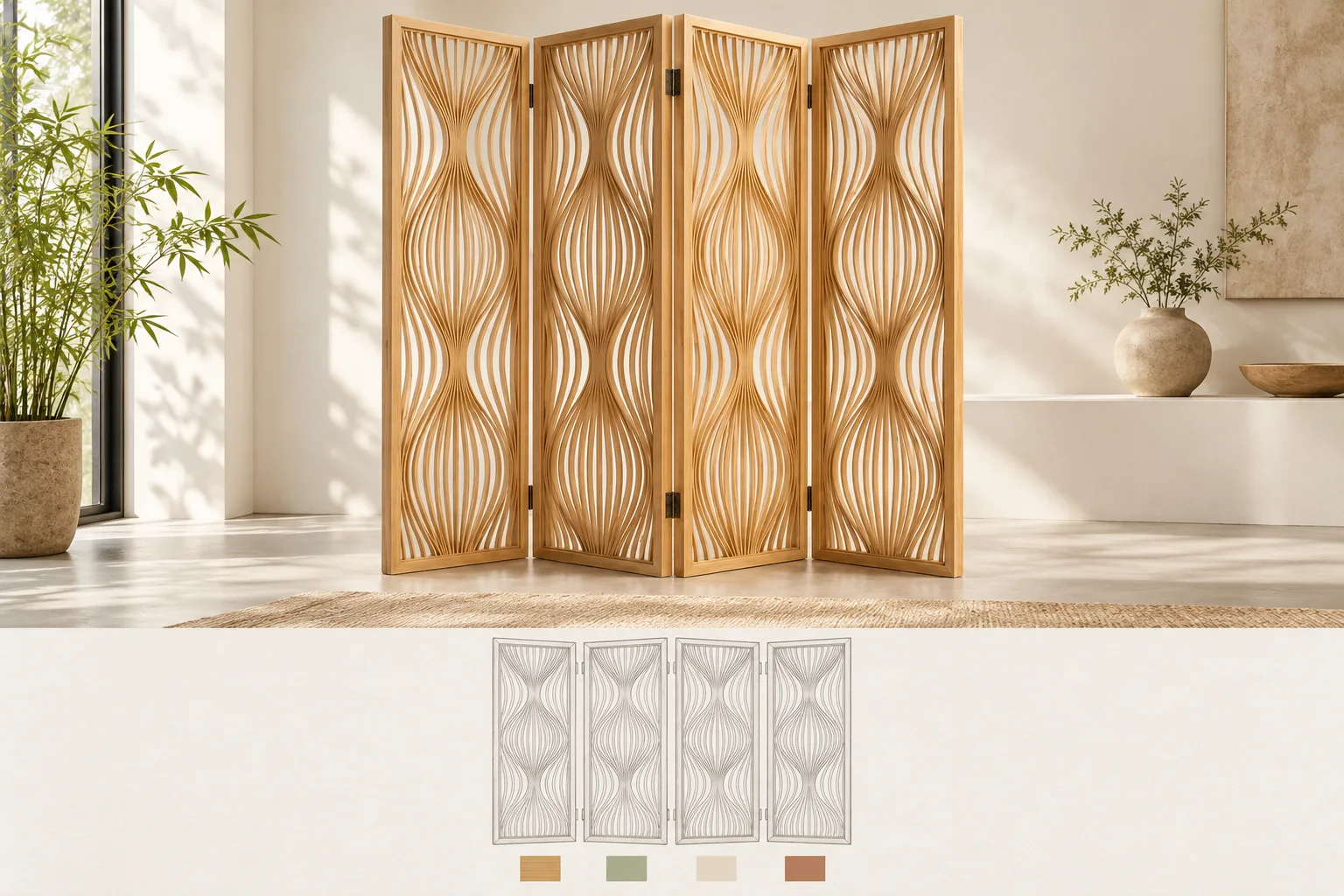
For a decorative folding screen, identify the panels before approving the appearance. That small step gives a curved motif, a repeated unit and a later request for an extra panel a clear reference.
Identify what repeats in the selected design
The Sculptural Bamboo Folding Screen describes flowing curved slats. For this direction, ask whether each panel repeats the same motif or whether the intended composition changes along the complete screen.
The Contemporary Bamboo Folding Room Divider describes an open-slat composition with rounded outer frames and a four-panel reference direction. Its panel count and final pattern remain project decisions.
Both are open-slat design references. A pattern approval does not establish complete visual privacy, acoustic performance or stability.
Number the panels from an identified view
Create an elevation and name the viewing side. Number the panels in that view, then retain the numbers on the individual panel details. If both sides will be visible, provide the second view without silently reversing the first.
Show where a curve is intended to continue across a junction and where a deliberate break is acceptable. Hinges and frames sit between the slats; a continuous line in a sketch may require interpretation in the actual assembly.
| Design decision | What to mark | Why the record matters |
|---|---|---|
| Whole-screen composition | Numbered elevation and viewing side | Identifies the intended order |
| Repeated unit | Which panels use the same pattern | Separates repetition from continuation |
| Panel junction | Accepted relationship across frames and hinges | Prevents an unclear sketch becoming an assumed detail |
| Additional panel | Its location and proposed motif | Shows what changes when panel count changes |
| Second visible side | Corresponding numbered view | Keeps orientation consistent |
Review the junction, not only one isolated panel
A single panel sample can show its own slats and finish. It cannot demonstrate the relationship between two neighboring patterns unless that junction is represented.
Agree whether a drawing, a junction sample or a larger assembly is needed for each unresolved appearance question. Identify which panels and joints the evidence covers. Do not treat approval of a color chip as approval of the complete pattern.
The room review is a separate task. Use the screen layout guide for sightlines, folding positions, storage and circulation.
Revisit the pattern when the count changes
Adding a panel may interrupt a composition or extend a repeat. Removing one may leave a different ending. Request an updated numbered elevation instead of attaching an old appearance approval to a new count.
Keep the accepted panel sequence with the relevant drawing revision and agreed identification or assembly instructions. Mark any proposed packing labels as requirements to confirm, not existing supplied features.
For a decorative screen enquiry, send the chosen reference, requested panel count, quantities and marked pattern. Final geometry, joins, support and finish follow the approved project documents.