
How much can it hold is an incomplete question if the item has several surfaces. A load on a table top, a load on its lower shelf and a load inside a divided cabinet concern different parts of the proposed furniture.
Before requesting a capacity figure, describe the intended use and the part that must support it. That gives the supplier a requirement to review rather than a number to guess.
Name the surface and the proposed version
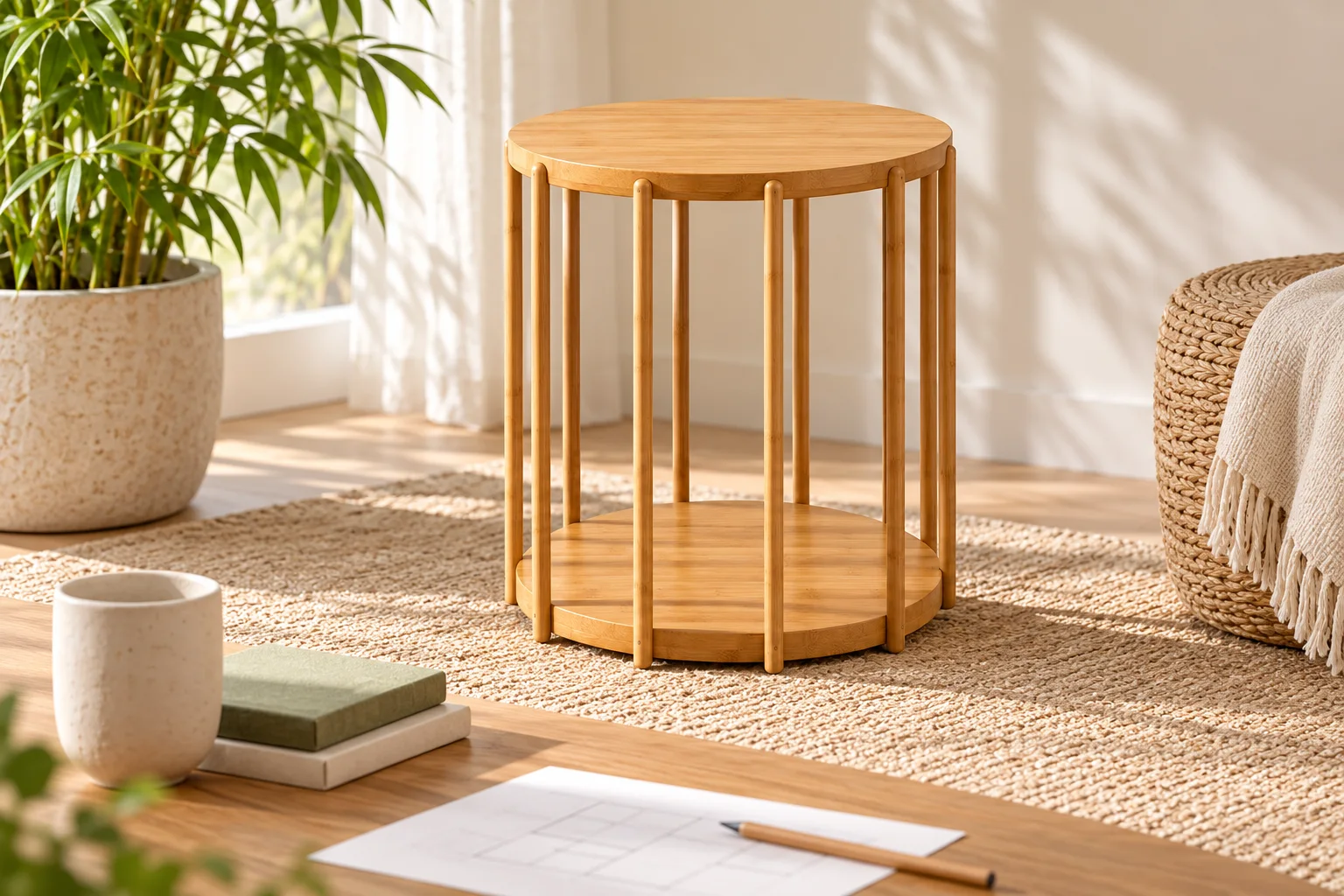
The Bamboo Round Side Table has a round top, a vertical spindle frame and a lower shelf. Its published information leaves final load requirements for project confirmation; it does not give one rated capacity covering both surfaces.
The Ribbed Bamboo Sideboard Cabinet describes adjustable shelves in divided compartments. A cabinet-wide weight total would not identify which shelf, compartment or approved support arrangement must carry it.
Use the relevant drawing to label the surface. Keep the item size, construction and shelf position attached to that label.
Describe the contents and their position
List the objects that will normally occupy the surface and their known weights. Include the container or equipment that remains with them. Where a weight is not known, mark it as missing rather than estimating it from a photograph.
Show whether the objects sit across the surface or occupy a particular area. Identify any intended position near an edge or over a shelf junction. These descriptions allow a technical review; they do not establish that the proposed furniture can carry the load.
| Brief item | What the buyer provides | What the supplier must review |
|---|---|---|
| Supporting surface | Identified top, lower shelf or cabinet shelf | The relevant construction and connections |
| Intended objects | Dimensions and known weights | The stated loading requirement |
| Placement | Marked positions and contact areas | How the requirement applies to that arrangement |
| Use and handling | Intended operation and any equipment movement | Applicable assessment and instructions |
| Proposed version | Drawing, assembly and shelf-position reference | Which complete configuration the evidence covers |
Keep use conditions beside the weight
State the ordinary task, not only the weight of the contents. If equipment moves during use or items are regularly placed and removed, describe that operation for review. Do not convert it into an unsupported impact or dynamic rating.
For a side table, identify its intended table use. A furniture name or a seemingly substantial top is not approval for people to sit or stand on it. Any different intended use requires its own explicit review.
Ask the supplier and responsible project team which assessment and evidence are appropriate for the destination and application. This guide supplies no universal safe load, test method or compliance claim.
Match any rating to the agreed configuration
If a capacity or test result is provided, identify the item, configuration, supporting arrangement and conditions to which it applies. A result for another shelf position, connection or furniture version should not be transferred without review.
The furniture test-report guide helps check the identity and scope of supplied evidence.
For a furniture loading-requirement enquiry, send the product reference and marked loading brief. Keep unknown weights and unconfirmed uses visible. Final capacity, construction and required evidence follow the approved project specification, not a general material description.