
A restaurant table can match the approved color sample and still arrive with an unresolved question: can the operator use the cleaning routine already in place? Settle that question before ordering, not during the first evening service.
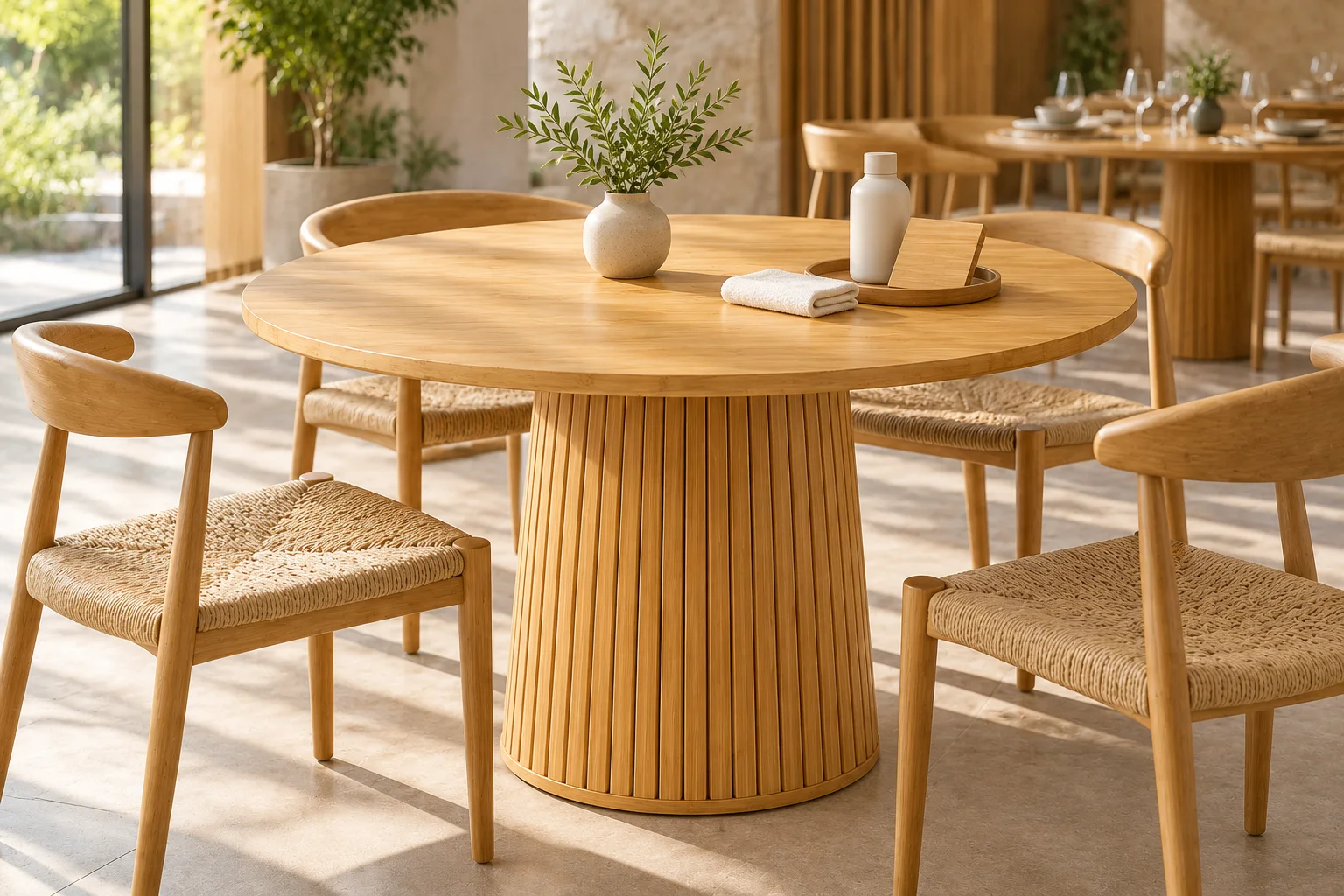
For the Round Bamboo Pedestal Dining Table, protective coating is reviewed by sample. The product name does not identify a universal cleaning method or establish compatibility with alcohol, bleach, steam or a particular branded wipe.
Send the actual product label, not just “daily wiping”
Ask the operator for the cleaner’s exact name and current label, the preparation used, how it is applied and what happens afterwards. Include the cloth or pad and the normal cleaning frequency. A ready-to-use wipe and a diluted concentrate should not be grouped under one loose description.
Where sanitizing or disinfection is required, the operator’s responsible team must select an appropriate procedure. Surface compatibility and hygiene effectiveness are separate decisions. Approval of a furniture finish does not establish that a cleaning routine meets the premises’ hygiene requirements.
Match the routine to the supplied surface
Ask the furniture supplier to identify the proposed coating and which surfaces it covers: top, edge, underside and base where applicable. Do not transfer care instructions from another manufacturer’s table merely because both have a bamboo or wood appearance.
Manufacturer guidance illustrates why the details matter: Steelcase’s cleaning guide calls for following cleaner instructions, including dilution and contact time. It is guidance for its own products, not an approval for this table.
If compatibility is not established, ask the responsible supplier to propose a documented review on a representative finished sample. Keep a retained reference for comparison and agree what will be observed. A single successful wipe is not evidence of long-term resistance or a substitute for required testing. Do not improvise chemical mixtures or alter a cleaner’s labeled instructions.
Use one cleaning handover sheet
| Record | Information to attach | Decision to close |
|---|---|---|
| Table surface | Item revision, coating reference and applicable faces | Which finished sample represents the order? |
| Cleaning product | Exact product label and preparation | Is the named routine compatible with the proposed finish? |
| Use procedure | Application, contact time, removal and frequency | Do operator requirements and care instructions agree? |
| Review evidence | Written advice or agreed sample assessment | What was checked, and what remains unverified? |
| Handover | Final care sheet and responsible operator | How will later product changes be reviewed? |
Keep the color decision and care decision separate
The finish-sample guide records appearance. Add the accepted care instructions to that record without pretending the color approval covered cleaning resistance. If either the coating or cleaning product changes, reopen the compatibility question.
For example, a project may approve one tabletop shade while the operator uses different routines in the dining room and a meeting area. Those are two use conditions to review, even if the furniture looks identical. Record any limitation where staff will actually see it, not only inside a purchasing email.
Discuss a restaurant table brief with the table reference, quantities, destination and cleaning-product information. Final coating, care guidance and any relevant evidence need confirmation for the supplied version.