
A lounge chair beside glazing and the same chair deeper inside the room may have different light exposure. “Indoor upholstery” does not settle whether a selected fabric and color are suitable for both positions.
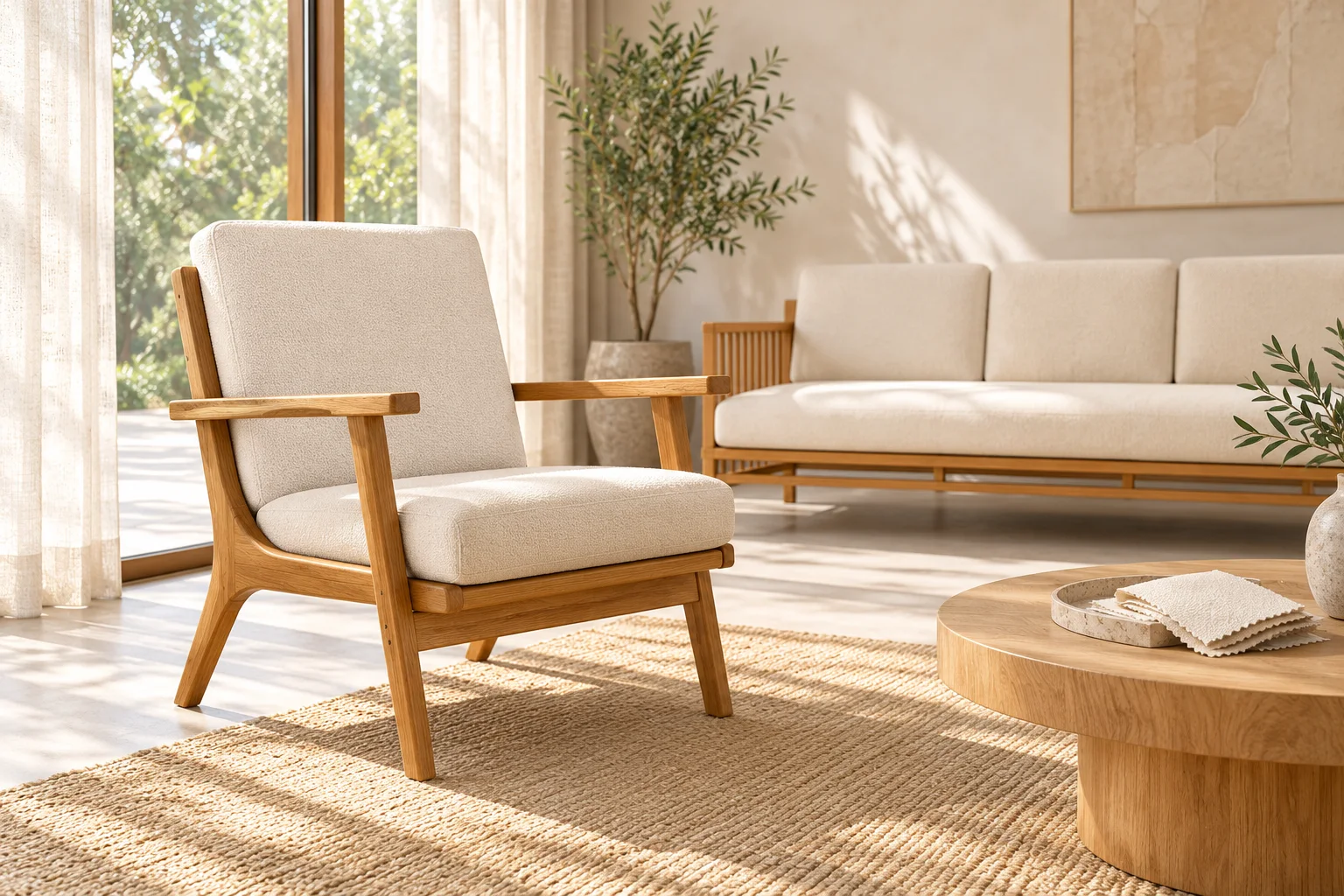
The Upholstered Bamboo Lounge Chair and Bamboo 3-Seater Lounge Sofa allow upholstery requirements to be reviewed for the project. Their room images communicate a design direction; they do not provide fading results for the textile that will ultimately be ordered.
Describe the seating position before asking for a rating
Mark which items sit near windows, under roof glazing or farther inside the room. Add the known shading arrangement and how the space will normally be used. If the final glazing or blinds have not been selected, record that as unresolved instead of assuming a generic level of protection.
The furniture buyer does not need to invent an exposure calculation. The useful first step is to give the textile supplier and project designer an accurate location brief so that they can identify appropriate evidence and limitations.
Read the scope of the lightfastness information
ACT’s indoor woven-fabric guidance treats resistance to fading from light as a specific property and states that laboratory exposure hours do not directly correspond to hours in use. A test duration therefore cannot be converted into a promise of years without fading.
Retain the textile reference, selected color, test method and result as supplied. Ask whether the document applies to the actual material being proposed. Keep woven, coated and knit constructions—and indoor and outdoor uses—distinct when reviewing a guideline or data sheet.
An abrasion result answers a different question. A report about wear from rubbing does not establish resistance to light. Likewise, an acceptable appearance under the sample-room lighting does not prove long-term color retention beside a window.
Separate the window-side group in the furniture schedule
| Schedule item | Information to record | Decision needed |
|---|---|---|
| Furniture position | Item code and location on the room plan | Which seats need a specific light-exposure review? |
| Textile and color | Exact proposed material and color reference | Does the submitted evidence cover the proposal? |
| Environment | Known glazing, shading and operating conditions | What limitations or missing facts remain? |
| Evidence | Method, rating and exposure conditions as reported | Who accepts suitability for the intended location? |
| Future replacement | Traceable accepted reference and care information | What must be rechecked if the textile changes? |
Resolve differences before combining the order quantities
For an illustrative hotel lounge, one schedule may contain window-side armchairs and sofas behind an internal partition. Keep those locations visible in the review even when the designer wants one coordinated fabric. If a different material is proposed for the brighter group, record that as a specification decision, not a silent substitution.
Do not promise a future replacement cushion will visually match fabric that has been in service. Keep the original material reference, but have the responsible supplier assess any later replacement against the actual condition and available material.
This is an indoor light-exposure review. If furniture is intended for a terrace or other weather-exposed setting, use the separate indoor-versus-covered-terrace guide and obtain a broader suitability assessment. Lightfastness information alone does not establish outdoor suitability.
Discuss upholstery for a bright interior with the seating references, quantities, marked room plan and proposed textile. Final material selection, evidence and use limitations remain subject to project confirmation; no fade-free guarantee is implied.