
Start a restaurant furniture budget with a list of what the room needs, not a chair price multiplied by the number of guests. Tables, service storage and the work needed to get the furniture into use belong somewhere in the plan. A cheap-looking seat allowance can conceal an incomplete order.
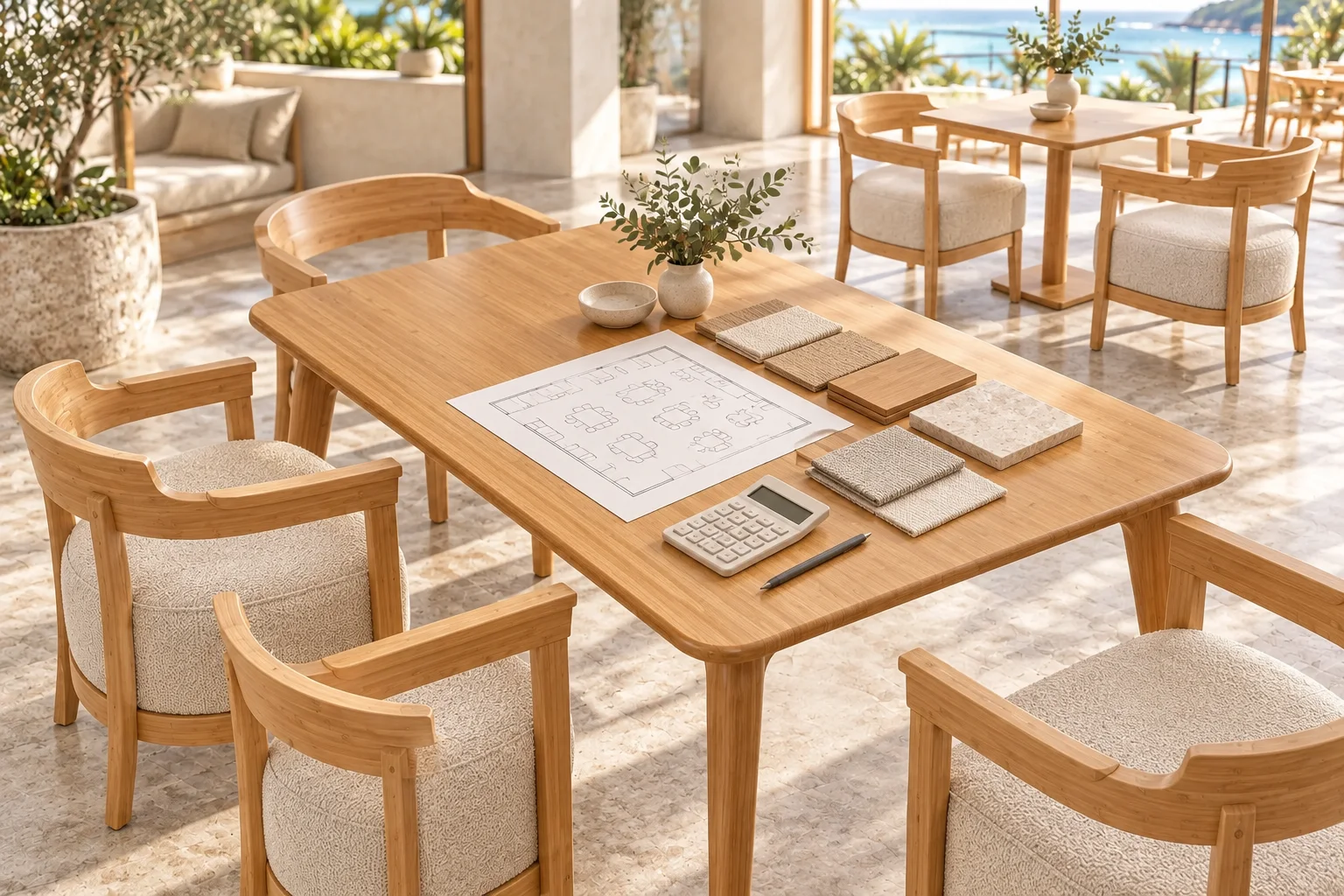
There is no reliable price for your room until the model, quantities, finish and delivery scope are defined. The method below lets you prepare that information without pretending an internet price range is a supplier quotation.
Turn the seating plan into furniture quantities
Consider an illustrative dining room with eight two-place tables and six four-place tables. That represents 40 planned dining places, 14 tables and 40 chairs if every place uses an individual chair. Two additional replacement chairs would make the purchase 42 chairs, not a 42-seat restaurant. This is an arithmetic example, not an approved layout or a seating-capacity claim.
The designer still needs to confirm occupied-chair space, circulation and applicable local requirements. Count a table that changes arrangement between lunch and dinner once, not once per drawing. Keep bar stools, outdoor pieces and waiting-area seating outside the indoor dining-seat denominator unless the budget explicitly includes them.
Copy this worksheet before asking for prices
Copy the rows into a spreadsheet and replace the blanks with your project quantities and received prices. Add one row for each size, finish or upholstery version. Mark each amount as quoted, estimated, included elsewhere or still unknown; an empty cell is not zero.
| Budget line | Quantity × unit price | Scope to identify | Status / amount |
|---|---|---|---|
| Dining tables by version | ___ × ___ | Complete table, or top and base quoted separately? | ___ |
| Dining chairs by version | ___ × ___ | Frame, seat and chosen upholstery included? | ___ |
| Service storage or other furniture | ___ × ___ | Only items actually required for this room | ___ |
| Additional replacement pieces | ___ × ___ | Separate from normal service seating | ___ |
| Samples and development | Agreed fee: ___ | Identify any credit or exclusion in writing | ___ |
| Packing, delivery and assembly | Separate lines: ___ | Name delivery point and responsible parties | ___ |
| Applicable taxes and other project costs | Confirmed amount or allowance: ___ | Identify who verifies them; avoid double counting | ___ |
Calculate a per-seat figure with a stated boundary
Furniture-only cost per dining place equals the agreed furniture subtotal divided by the planned dining-place count. An installed-room figure uses a different numerator: the included furniture plus the separately budgeted costs of bringing it into use. Write the included scope beside either number.
For the 40-place example, use 40 as the divisor even if you buy two additional chairs. If you include those spare chairs in the subtotal, say so. Keep different currencies separate until you choose a common exchange-rate basis, and do not mix tax-inclusive and tax-exclusive amounts. The resulting figure is a comparison for this project, not a market benchmark.
Reduce cost without quietly removing required furniture
If the estimate exceeds the budget, identify optional items and specification alternatives instead of deleting delivery or assuming assembly is free. Compare a smaller number of finish versions, a different storage scope or a different furniture shortlist with actual revised quotations. None is automatically cheaper, and a lower purchase total says nothing by itself about maintenance or replacement costs.
The Nordic Bamboo Restaurant Table is a starting reference for a rectangular-table brief. The Bamboo Coastal Dining Collection offers a different coordinated dining direction. Keep the selected tables and chairs as named quotation lines; styled accessories are not automatically supplied.
Use the budget to request a useful quotation
Send the layout or intended place count, furniture references, quantities, finish direction and delivery city when you request a restaurant furniture quotation. Tell us which costs your project team will handle separately. Once offers arrive, use the supplier-quote comparison guide to compare their scope. The budget worksheet prepares the question; the quotation supplies the actual prices.