
For a Japandi restaurant, choose a calm relationship between the tables, chairs and storage before adding more decorative objects. A natural-looking finish alone does not create a coordinated room. The repeated shapes, visible chair backs and amount of open or concealed storage matter just as much.
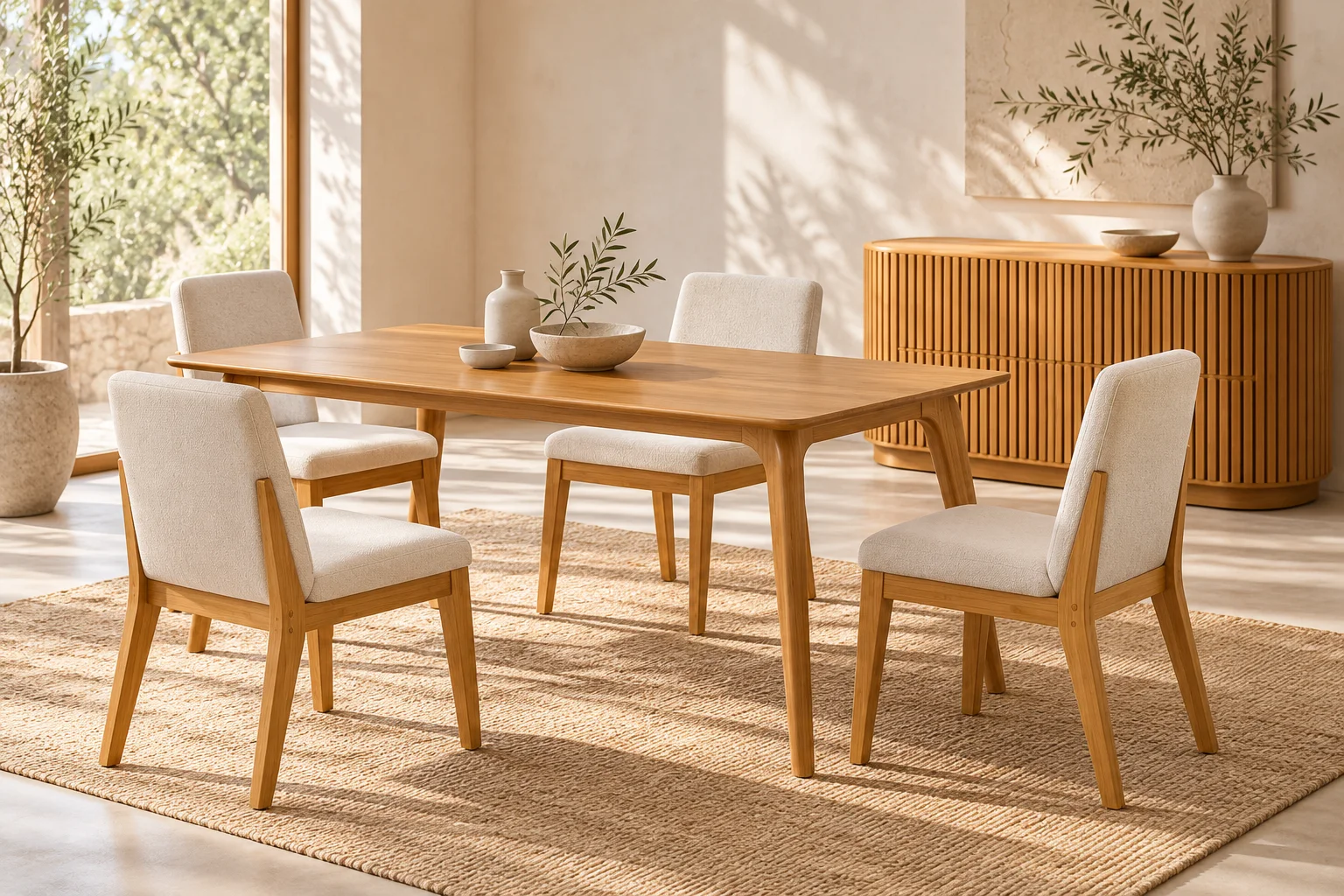
IKEA’s Japandi collection guide combines Japanese and Scandinavian influences with restrained colours and natural-material references. Here, that broad style vocabulary becomes two possible dining-room shortlists using Green Bamboo Space product references. These are proposed combinations, not photographs of completed customer projects or claims of Japanese manufacture.
Direction one: quiet lines and one textured storage piece
Start with the Nordic Bamboo Restaurant Table, whose published design has a rectangular top with softened edges and tapered legs. Pair it as a design proposal with the Bamboo Upholstered Dining Chair, then review the actual table-and-chair fit. Keep the proposed upholstery visually restrained if the room already has prominent stone, plaster or wall texture.
Use the Ribbed Bamboo Sideboard Cabinet as the textured element rather than repeating pronounced ribbing on every piece. Its concealed storage can form a different visual role from open display. Identify the service items it must contain before choosing its final internal arrangement.
This direction suits a brief that asks the furniture to recede behind the room and food presentation. That is a design intention, not a claim that light colours or a particular chair will increase sales.
Direction two: rounded forms with a stronger focal table
The Round Bamboo Pedestal Dining Table gives a different starting point: a round top and vertically slatted central base. Let that base carry the strongest repeated texture, and select surrounding pieces so they do not all compete for attention. A round table is a visual choice here, not an automatic promise of better circulation or more seats.
For either direction, compare the actual chair-back silhouette from the entrance and the service route, not just a front-on product image. The room is often seen through a row of chair backs. Check the selected arrangement with occupied chairs before fixing quantities.
Keep the same decisions visible across the shortlist
| Decision | Quiet-line direction | Focal-table direction |
|---|---|---|
| Main table reference | Rectangular Nordic table 559 | Round pedestal table 351 |
| Repeated shape | Softened straight edges and tapered legs | Round tabletop and central base |
| Texture emphasis | A ribbed storage piece as the accent | The slatted table base as the accent |
| Chair review | Upholstery tone and visible back silhouette | Back silhouette plus fit around the chosen top |
| Operational check | Service storage and occupied-chair routes | Actual seating positions and service access |
Coordinate samples, not colour names
Place the proposed furniture finish, upholstery and nearby floor or wall sample together under the project’s intended lighting. A walnut-brown finish name is not a wood-species declaration, and similar names from different suppliers do not establish a match. Decide which pieces should match closely and which should deliberately contrast.
Use the existing finish approval guide for recording the chosen samples. For this style decision, the important step is selecting a relationship across the room before asking every individual item to be approved in isolation.
Make the calm appearance practical
Choose a place for menus, spare tableware and service supplies before removing visible storage from the scheme. A clean-looking rendering can hide the objects staff need during service. Keep cleaning requirements, furniture suitability and applicable project criteria separate from the style approval; a Japandi label proves none of them.
Request a coordinated restaurant furniture proposal with a room plan or photographs, a few style references, the preferred product direction, quantities and destination. Indicate what belongs in concealed storage and which furniture should remain the visual focus. The result should be a named shortlist to quote and sample, not a promise to reproduce an unspecified moodboard.