
A reading chair beside a bookcase looks inviting until someone sits there with a bag and another customer wants the books behind it. For a bookstore cafe, choose the furniture as a route from shelf to seat and back—not as separate shopping lists for the bookstore and the coffee area.
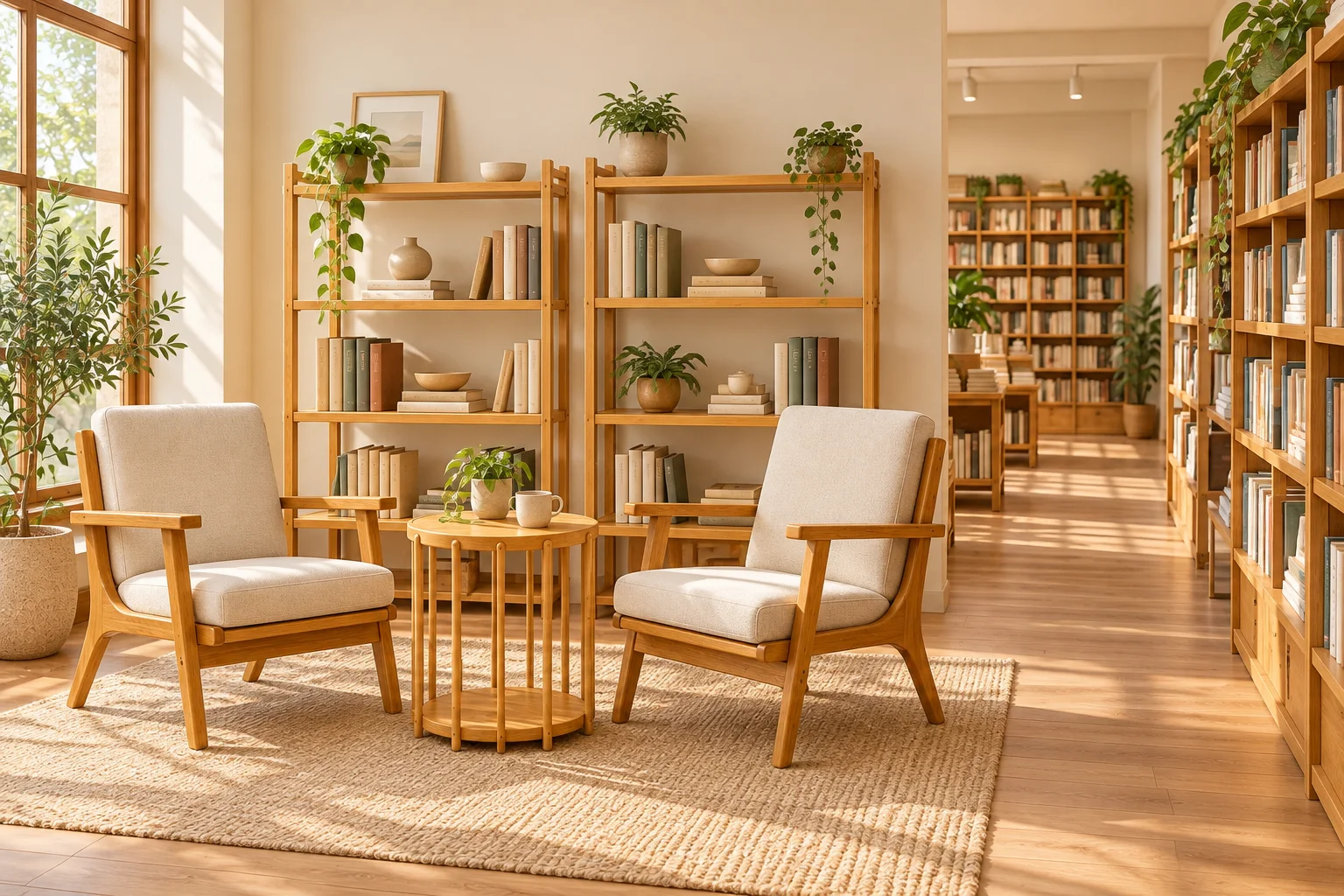
Start by deciding whether visitors may read sale copies at the tables. Some operators provide designated reading copies; others allow browsing stock throughout the shop. The furniture cannot make that policy for you, but the policy changes where books are put down, collected and returned.
Give books and cups different landing places
Put an open book, a closed book and the actual cup and saucer on a proposed table outline. Add the food you intend to serve, if any. A small table that holds a drink may not leave a useful place for an open illustrated book. Conversely, a large merchandise table does not automatically make a comfortable reading table.
Decide what happens when a reader leaves. Does the book return to its shelf, go to a staff sorting point, or stay as a reading copy? Give that action a named place. Do not use the nearest sale display as the default landing area for cups, used dishes and unsorted books.
Treat the edge of the reading area as browsing space
Tradis’s cafe-bookstore guide distinguishes shelving, cafe seating and reading corners. The exercise here adds a stock-handling test to those broad zones; it is not a claim that a particular layout increases book sales.
On the plan, mark the chair with a person seated, the bag in its intended position and the space used to pull a book out. Try the lower shelf as well as the shelf at eye level. A chair can leave the aisle apparently clear while preventing someone from using the lowest books. Move the seat or the relevant stock before adding more shelves.
| Item | Normal place | After use |
|---|---|---|
| Sale stock | Reviewed display shelf | Return through the agreed stock routine |
| Reading copy | Marked reading shelf or table | Keep separate from unsorted sale stock |
| Drink | Approved cafe or side table | Staff clearing route |
| Bag | Assigned position beside the reader | Never a browsing aisle or another seat |
Choose the furniture against the actual book assortment
The Contemporary Bamboo Open Shelving Unit is an open-frame reference whose shelf arrangement and loading need project review. Take the largest regular books and the intended display method into that review. Upright spines, face-out books and short stacks ask different things of a shelf; do not infer book capacity from a styled photograph.
For seated reading, compare the Upholstered Bamboo Lounge Chair with a table-height seating arrangement. The Nordic Bamboo Restaurant Table offers a separate rectangular dining-table reference. These are not a tested bookstore package. Check the chair and table together, including how a reader supports the book, places a drink and stands up.
Walk one book through the proposed shop
Try a simple staff exercise: select a book, carry it to a seat, order a drink, read, and leave the book where the shop intends it to go. Have someone else browse the adjacent shelves at the same time. Record the point where either person must move furniture or put an object somewhere unintended. This is a proposed layout trial, not customer research or a seating-capacity approval.
A book-club event is a separate layout. If the shop needs it, draw where displaced reading furniture and stock will go; do not assume the chairs stack or the tables can be moved routinely. Keep any kitchen equipment and food-service fit-out outside the ordinary furniture quotation unless separately agreed.
Use the object-based shelving guide for the detailed shelf brief. To discuss bookstore cafe furniture, send the floor plan, book formats, reading-copy policy, cup and food examples, selected furniture references and quantities. That gives the proposal a real browsing and reading task to solve.