
An empty gap on a sample shelf can mean several things: the sample is with a client, someone borrowed it for a scheme, or it has been discontinued. Buying more shelving will not tell you which. A useful material library needs places for reference stock, active projects and items waiting to return or leave the collection.
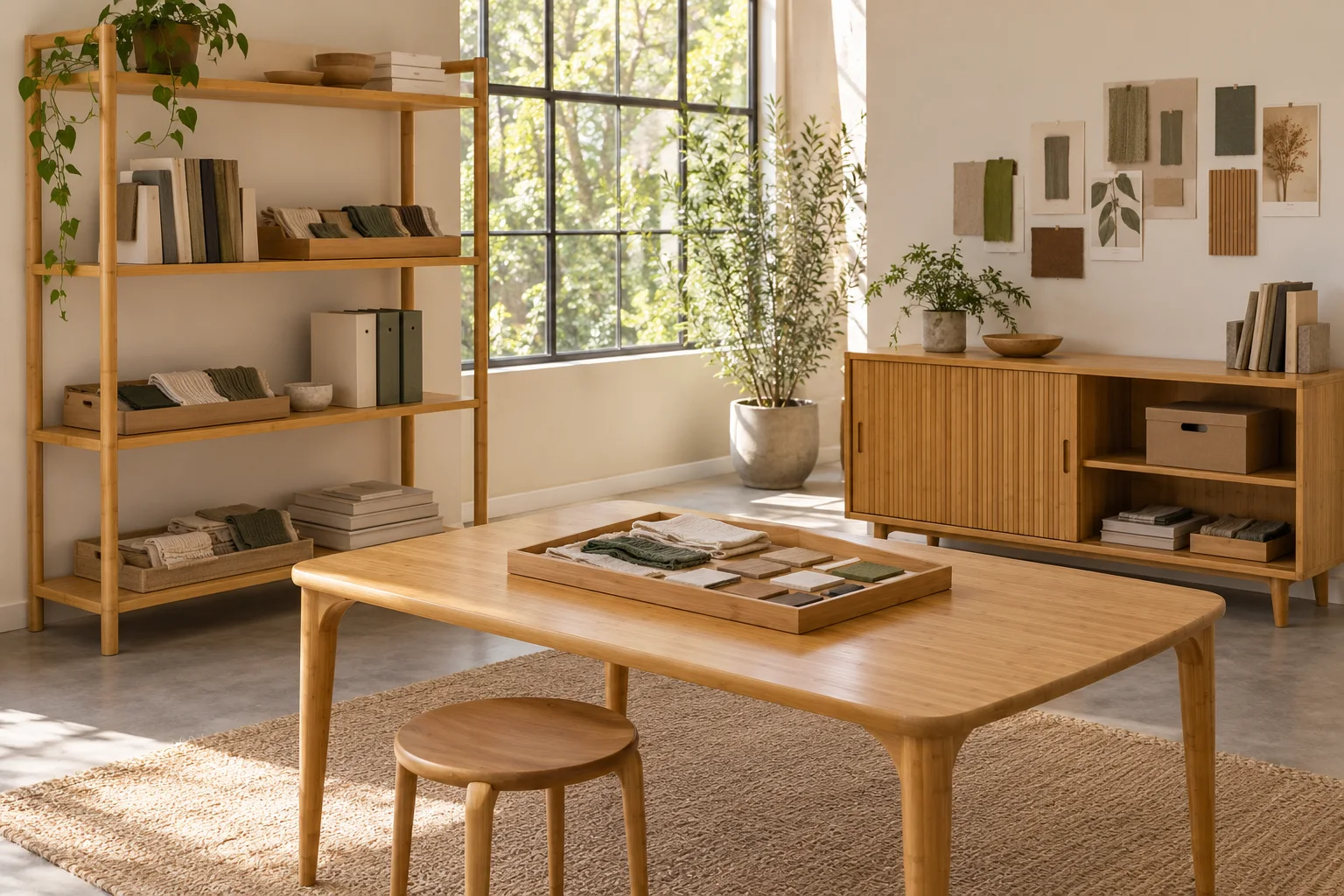
Separate the sample’s identity from its current location
Keep the supplier, material reference and current project attached to the sample or its container. The library location is a separate field: the same sample may leave its usual shelf without becoming untraceable. Give active-project trays an identifiable home instead of quietly spreading them across the meeting table.
NYSID’s published materials-library guidelines distinguish sample types and place limits on size, condition and age for its own collection. Those are institutional collection rules, not shelf-load ratings. The useful lesson for furniture planning is to define what the library will accept before ordering space for everything.
| Status | Physical home | Record that travels with it |
|---|---|---|
| Reference stock | Assigned shelf or cabinet position | Supplier and material reference |
| Active project | Separate project tray | Project, borrower and intended return |
| Awaiting review | Clearly separated holding box | Reason: missing label, changed range or unknown status |
| Ready to return | A defined return container | Destination and responsible person |
Measure the container in use
The bamboo open shelving unit is a starting direction with project-reviewed shelf spacing and loading. For a hypothetical example, two trays each 30 cm wide need at least 60 cm before allowing any separation, handles or hand access. That calculation is a lower bound, not a recommended 60 cm clear opening or a published product size.
Measure the tray fully loaded and include anything projecting above it. Pull it out while the neighboring tray remains loaded. If that requires lifting over a front edge, show the movement and required clearance. Heavy hard samples need their actual weights and support positions reviewed; a collection that fits by volume can still be unsuitable for a shelf.
Decide what open and concealed storage each does
The bamboo sliding-door sideboard combines open and covered areas. Use its drawing to check which compartment can be accessed with the door in each position. A return box should be removable without first unloading the project samples next to it.
Do not store an approved project sample indistinguishably among general references. Keep its approval identity and project status intact. A cabinet door reduces visual clutter but does not establish archival protection, fire resistance, secure custody or the continued availability of the material inside.
Keep a selection surface available
A bamboo table can be discussed as a dry sample-comparison surface. Check the intended trays, sample masses and surface protection; avoid treating it as a stone-working bench. At the end of a review, the project tray should have somewhere to go so the next team can use the table.
Before you request material-library furniture, send your accepted sample types, largest containers, measured weights, expected active-project trays and a marked storage plan. Include the proposed review and return locations. For detailed clear openings, see the shelf measurement guide. The output should be a furniture schedule that matches the collection you intend to manage.