
A supplier sends a fabric test report while your order describes a finished upholstered chair. Before filing it as approval, identify what the report evaluated and how that evidence relates to the exact furniture configuration. A matching fabric color alone does not answer that question.
Separate the requirement from the document received
CPSC guidance on upholstered furniture describes smolder-resistance methods covering several material categories under the U.S. standard. That is a useful warning against treating all fire-test documents as interchangeable. The destination, intended use and applicable specification need to be established by the responsible buyer or compliance reviewer.
Write the required test or evidence in the enquiry, with its edition and scope where known. Ask the reviewer to resolve whether component testing, an assembly evaluation or another route applies. Do not ask the supplier simply for a “fireproof certificate,” and do not describe any chair as fireproof.
| Review item | Evidence to record | Do not infer |
|---|---|---|
| Report identity | Issuer, full report number, date and test method | A cropped pass page covers the whole order |
| Test specimen | Material codes or assembly description | The same cream color means the same material |
| Order mapping | Furniture model and approved component schedule | One chair report covers every sofa construction |
| Changes | Substitution notice and reviewer decision | An unchanged exterior means unchanged evidence |
Match the report to a configuration, not only a photograph
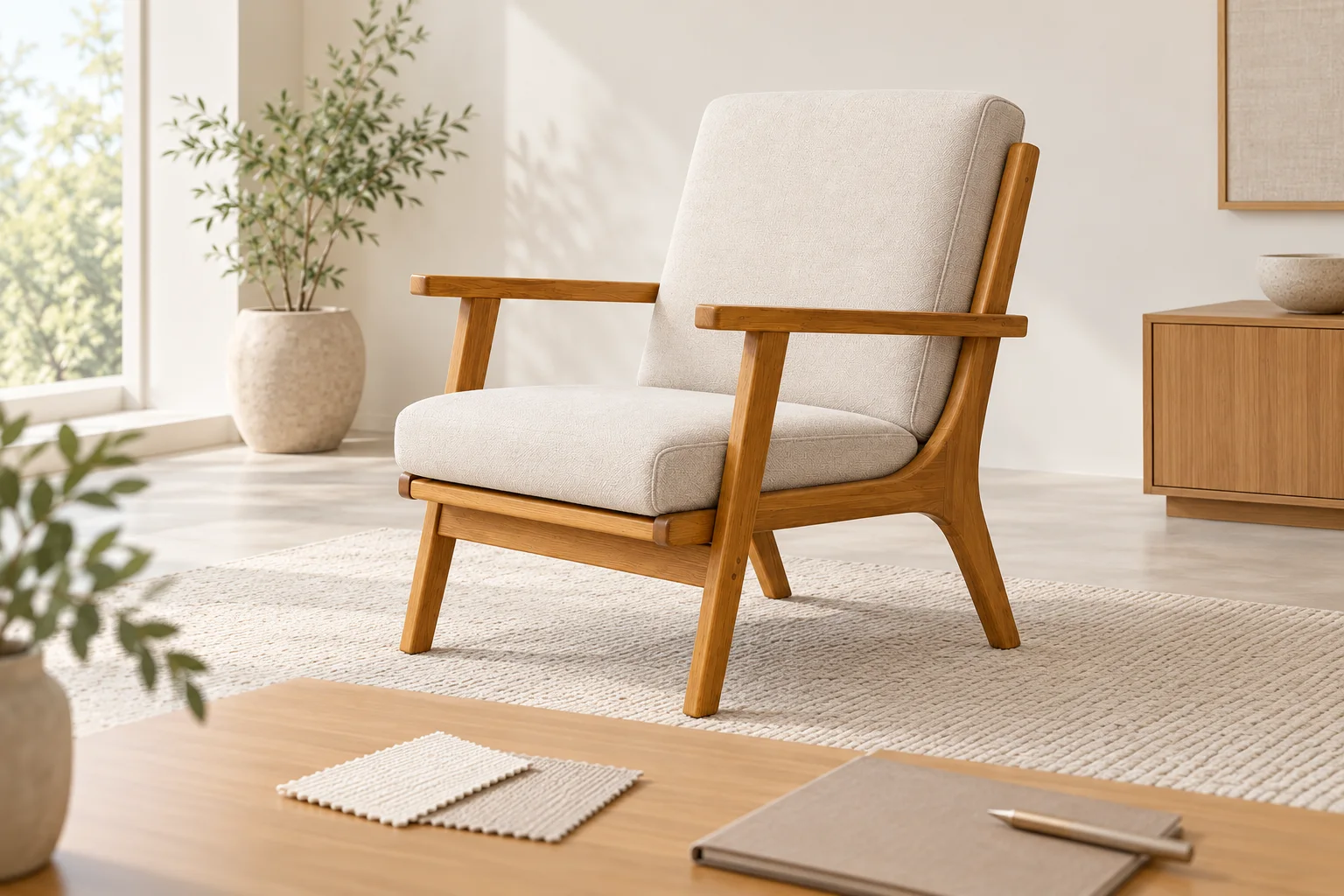
The bamboo lounge armchair has a visible bamboo frame and upholstered seat and back. The photo helps identify the design direction; it does not identify the filling, barrier or tested material codes. Request a configuration sheet linking the ordered model to the relevant material references and report numbers.
For a sofa family, ask which sizes and constructions are covered and who has confirmed that coverage. A test report for a different cushion build should remain an unresolved item until the responsible reviewer accepts its applicability. Keep the original document, not just a cropped pass result.
Treat substitutions as a review trigger
A fabric supplier, backing, foam or barrier may change while the visible chair stays similar. Record the approved material codes and a requirement to disclose substitutions before release. Ask how the production batch can be traced to those codes; a generic brochure cannot connect the delivered chairs to the reviewed materials.
If the report and purchase specification use different names, obtain a written cross-reference from the supplier. Let the qualified reviewer decide whether additional evidence is needed. Do not conduct an improvised flame test on a furniture sample.
Close the evidence gap before approving production
Maintain three separate statuses: document received, identity matched and applicability accepted. Assign a person and a date to the last two. An unresolved requirement should stay visible in the order rather than disappear into a folder marked “certificates.”
This is a procurement document check, not a claim that a listed Green Bamboo Space product has any specific fire certification. For fabric selection and replacement planning, keep the material decision separate from the compliance decision.
Send the destination, intended room use, selected model and required evidence with your upholstered bamboo furniture enquiry. The configuration and available documents can then be discussed together.