
A cabinet can arrive in the correct finish and still have an unresolved installation task. Before a tall storage unit enters use, the purchaser needs to know who checks the site, who provides the appropriate restraint arrangement and who records completion. Delivery and installation are separate handovers.
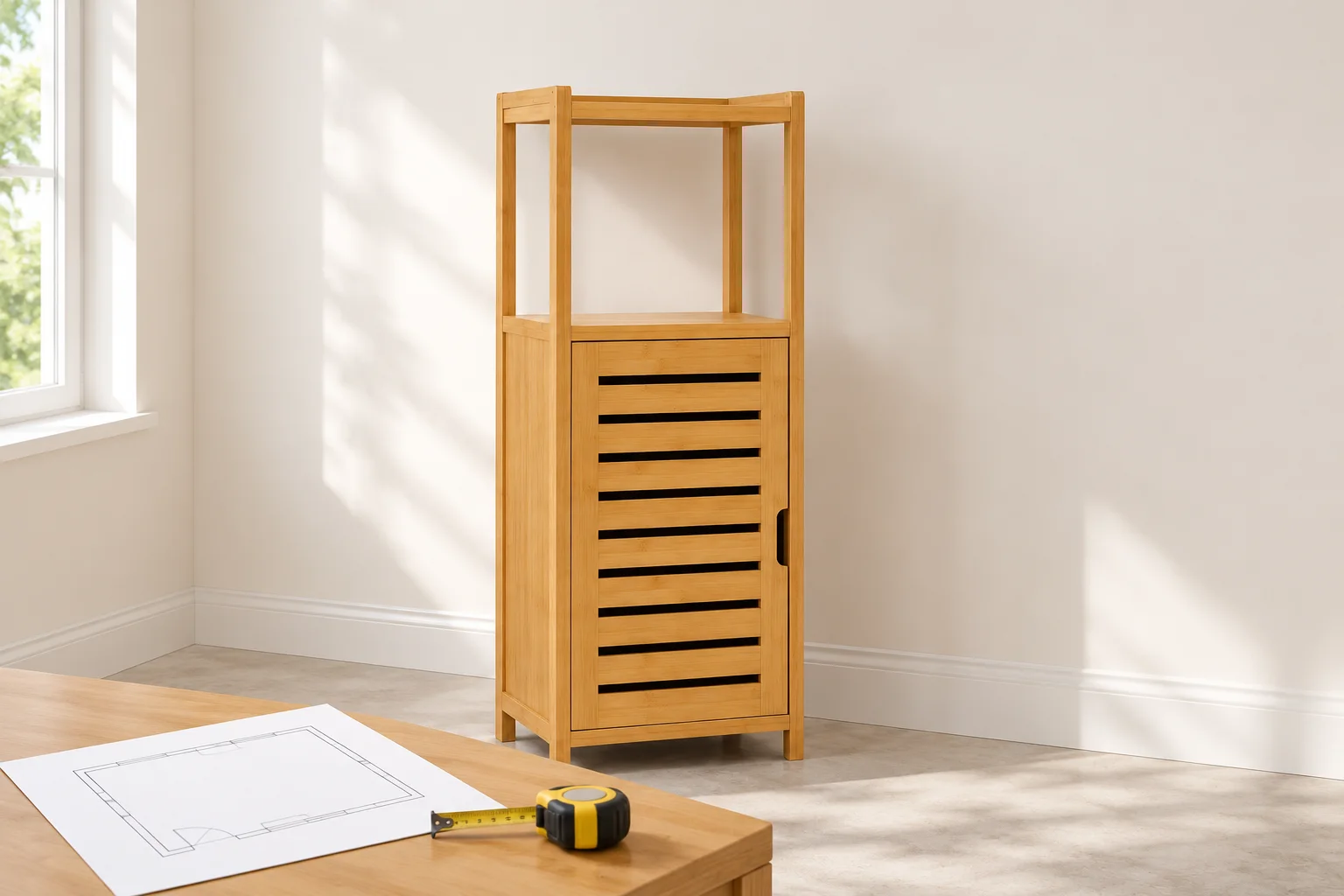
Record the site before selecting the fixing arrangement
CPSC’s Anchor It! campaign emphasizes securing furniture with drawers, doors and shelves to the wall to prevent tip-over injuries. A procurement drawing should therefore identify the intended location, not treat wall attachment as an optional decoration.
For the narrow bamboo storage cabinet, the visible upper shelf and lower slatted door are useful design references. They do not establish the wall construction, a fixing specification or the contents that will be stored. Ask the site team to provide wall build-up information, skirting details and access restrictions to the competent installer.
| Review item | Evidence to record | Do not infer |
|---|---|---|
| Location | Room, cabinet ID, wall information and skirting | Any wall accepts the supplied fitting |
| Supply scope | Instructions, restraint parts and site-specific exclusions | Delivery includes installation |
| Completion | Installer confirmation and unresolved exceptions | A signed delivery note releases furniture for use |
| Relocation | New location review and retained instructions | The previous fixing record covers the new wall |
Separate the furniture package from the site installation
List whether manufacturer instructions and restraint hardware are included, who checks compatibility with the actual wall, and who supplies any site-specific parts. A bag of fittings is not evidence that those fittings are suitable for an unknown wall. Follow the manufacturer’s instructions and the installer’s site assessment.
If a landlord or facilities team must authorize work to the wall, resolve that before delivery. Do not silently change the order to a freestanding arrangement when permission is delayed. Keep the unit out of service until the required installation is resolved.
Ask for a location-specific completion record
Use the room and cabinet reference on the installation record. Capture the installer’s confirmation that the specified work was completed, relevant photographs and any remaining exception. A carton delivery signature only confirms a different stage of the process.
Avoid a generic “all cabinets checked” statement when some walls or units differ. Mark excluded rooms individually, with an owner and next action. This makes it possible for the facilities team to see which furniture has actually been released for use.
Keep the instructions with future moves
When a cabinet is relocated, its old completion photograph no longer describes the new wall. Retain the product instructions and installation record so the next installer can reassess the new location. A change of use or storage arrangement also needs review against the manufacturer’s guidance.
This checklist allocates procurement and handover responsibilities; it does not prescribe a universal anchor, load limit or drilling method. The product image is not evidence of tested stability or a completed installation.
Include cabinet quantities, room locations and available wall information in your bamboo storage furniture enquiry so supply and installation responsibilities can be clarified before ordering.