
A showroom cabinet may be available immediately, but its photograph is not a condition report. First establish whether the offer is for that individual display unit, a similar unit from stock or a new piece made to the same design. Those are different purchasing decisions.
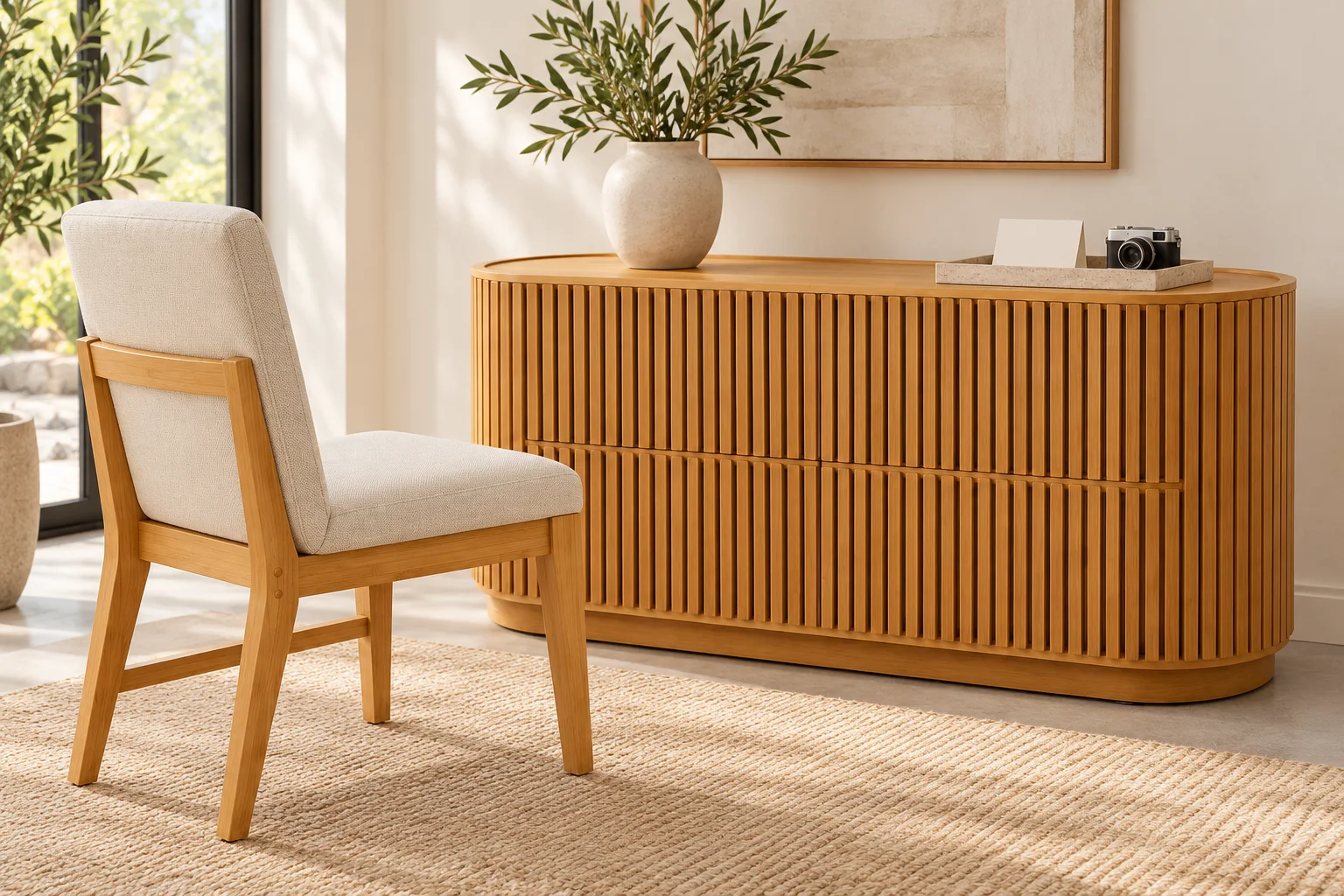
Identify the physical unit before comparing the offer
Ask for a unique temporary reference, current overall views and the location where the item can be inspected. Keep a stock image separate from a photograph of the offered unit. If several displays look identical, record which one the price and condition notes describe.
IKEA describes condition tags for its As-Is items, which may include former showroom displays. The relevant idea is item-specific disclosure. Its inspection process, price reductions and terms do not apply to a different seller. This guide does not establish that Green Bamboo Space offers ex-display stock.
Inspect surfaces that were hidden in the display
The Ribbed Bamboo Sideboard Cabinet has a rounded outline and repeated vertical ribs. If it was displayed against a wall, request views of the rear, curved ends and lower edge as well as the attractive front. Do not assume a mark on a rib can be corrected without changing the appearance of adjacent ribs.
For the Bamboo Upholstered Dining Chair, identify the actual seat, back upholstery and exposed frame. Ask the seller to disclose observed wear, cleaning or previous repairs. A clean fabric surface does not verify hidden cushioning, joints or suitability for your intended commercial use.
| Decision | Request | Keep separate |
|---|---|---|
| Unit identity | Current images and unique reference | Catalog stock image |
| Condition | Visible marks, known repairs and unresolved checks | Assumed new condition |
| Completeness | Included fittings and documentation | Photographed styling accessories |
| Handover | Removal, packing, transport and support terms | A new-production quotation |
Compare completeness and support on the same basis
List included shelves, fittings and loose components for the offered configuration. Ask which instructions and product identity records will accompany it. A replacement promise needs the part and the responsible party identified; do not assume current-production spares will fit an older display version.
Clarify actual warranty, return and support terms before comparing prices. The practical comparison includes any agreed assessment, cleaning, repair, disassembly and delivery. This guide supplies no standard discount or legal meaning for “as is.” Have contractual questions reviewed for the transaction.
Preserve the inspected identity through removal and receipt
If the item remains on display after inspection, agree how its identity and condition will be retained until collection. Record any later work or newly observed mark before dispatch. Have competent personnel confirm whether dismantling and reassembly are appropriate; being assembled in the showroom does not prove it can be dismantled repeatedly.
For a furniture availability enquiry, state whether you need new production or wish to discuss an identified existing unit, if offered. Send quantities, intended use and condition expectations. The development-sample guide concerns approving a design for production, which is a different task from purchasing an individual used display.