
A buyer may supply handles to coordinate furniture with the rest of an interior. A photograph and an overall length are not enough for the furniture maker to drill the door fronts. The useful handover combines the exact hardware, its fixing information and an agreed installation location.
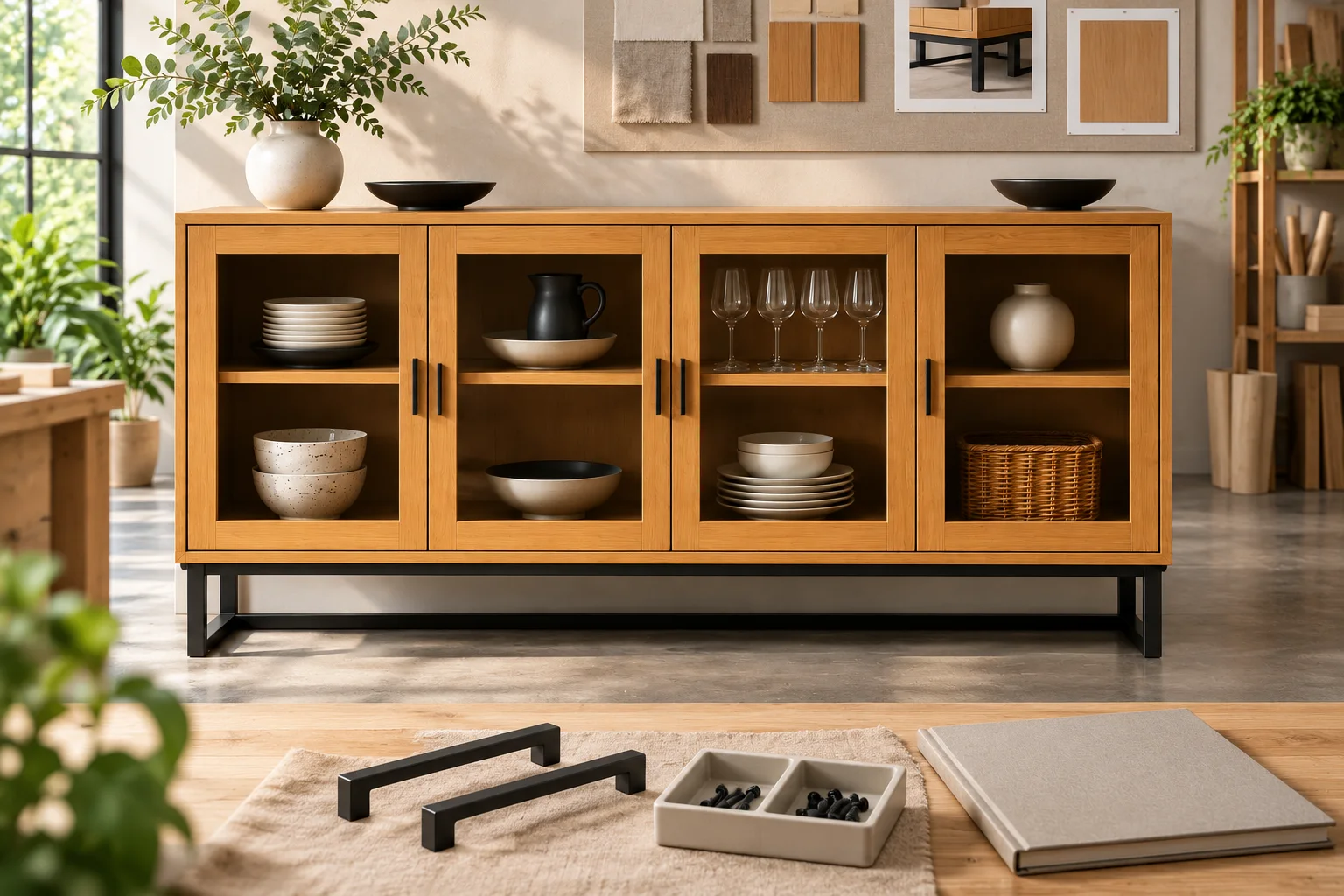
Identify the hardware by model and fixing geometry
Record manufacturer, item code, finish, version and whether fixing screws are included. Distinguish the distance between fixing holes from the overall handle length. For example, the Hettich Varna product data lists those as separate dimensions. Its values and fixing details belong to that handle only; they are not dimensions for the Green Bamboo Space product.
Request the hardware maker’s current drawing or installation instructions and an actual matching sample for the furniture supplier’s fit review. Let the responsible technical team confirm screw type, engagement and front thickness together. Do not choose a screw length from an online photograph.
Check the furniture interface before authorizing holes
The Modern Bamboo Glass Door Sideboard reference shows dark vertical pulls on framed glass doors. A proposed replacement needs to be reviewed against the confirmed frame geometry, opening direction and nearby door clearance. The picture does not establish the width of the frame or the permitted drilling location.
Ask who approves the location and who performs the drilling. A match in hole spacing alone does not prove that the handle’s projection clears the adjoining door or that its fixing position suits the agreed construction. If a mismatch appears, resolve a revised handle or reviewed furniture detail before machining; do not assume the installer can adapt it on site.
| Decision | Evidence to provide | Release condition |
|---|---|---|
| Correct hardware | Model, finish and current drawing | Sample matches the identified item |
| Physical fit | Hole centres, fixing details and front geometry | Technical review resolves compatibility |
| Machining | Approved location and responsible workshop | Written release before drilling |
| Parts handover | Handle and fixing counts; condition report | Shortages and exceptions resolved |
| Remaining parts | Installed count and unused quantity | Agreed return or retention record |
Count and identify the parts at every handover
Separate samples used for fit review from production quantities. Create an item-by-item count of handles, matching fixings and any agreed spare units. Agree who checks cosmetic condition, how different finishes stay separated and who receives any shortage report before production needs the parts.
Keep the buyer’s dispatch list, the supplier’s receipt record and the installed quantity linked. Ask how unused parts are returned or retained. Receipt of a sealed carton is not confirmation that its hardware is complete, undamaged or suitable for the furniture.
Define the interface responsibilities and release evidence
Record who supplies the hardware data, who checks compatibility, who approves drilling and who handles problems with the separately purchased component. The supplier must confirm whether it can accept this arrangement; the guide does not promise customer-supplied hardware services or determine warranty liability.
For a handle compatibility enquiry, send the furniture reference, handle model and drawing, proposed location and quantity list. Use the handle-use comparison to choose the operating style first; this checklist addresses the physical and documentary fit of the selected hardware.