
A woven seat may look like a separate surface, yet its repair can involve the surrounding frame. Before buying a roomful of woven chairs, ask what the supplier can actually service: an individual strand, a complete woven area, a removable frame or the whole chair.
Identify material and anchorage independently
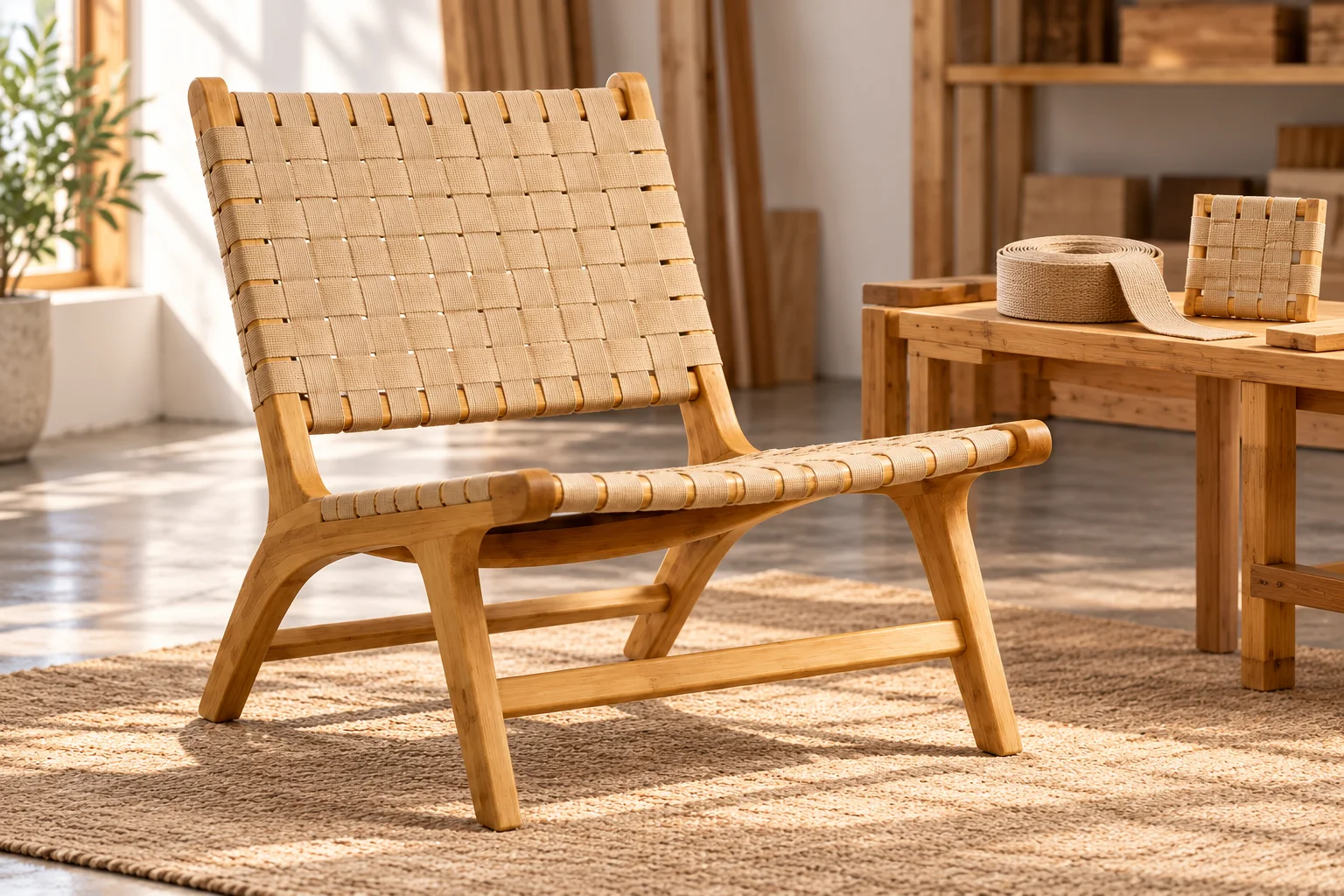
The woven bamboo lounge chair shows broad interlaced bands across both seat and back, wrapped around shaped bamboo rails. The product page leaves the final weave material and structural joints to approval. The image alone does not prove paper cord, natural cane, textile webbing or a removable seat cassette.
Request the material name, finish and supplier reference, plus an underside or rear detail showing how the weave terminates. Mark seat and back separately. Ask which parts remain intact during the proposed repair and whether accessing the anchorage requires frame work.
Compare repair units, not vague repairability claims
A local patch, a complete reweave and a factory-supplied replacement panel have different visual and service consequences. Request the supported options, who performs them, the required sample approval and how the chair is returned to service.
Carl Hansen & Søn’s paper-cord guidance refers to skilled weaving for repair or replacement of its own material. It supports asking for an identified specialist route; it is not proof of the material or repairability of this bamboo chair.
Use a service-boundary review sheet
Ask the supplier to demonstrate the proposed service route on a representative sample or provide a documented sequence. The buyer’s task is to verify the boundary and resulting appearance, not to prescribe weaving tension or attach replacement straps without an approved method.
| Question | Evidence to request | Procurement decision |
|---|---|---|
| What is woven? | Material and seat/back identification | Approved material reference |
| Where is it fixed? | Anchorage detail and access description | Frame work included or excluded |
| What gets replaced? | Patch, whole weave, panel or complete chair | Supported service unit |
| Who releases it? | Repair appearance and seating assessment record | Named competent service provider |
Judge the repaired result next to an unchanged chair
Review weave pattern, band direction, colour relationship, edge terminations and the condition of the frame after service. Ask who assesses seating performance before release. A visual match alone does not confirm a structurally acceptable repair.
For a large programme, agree whether replacement weave will be kept in stock or sourced later, and how colour variation will be handled. Read this alongside frame and weave selection; comfort selection and future repair capability should both be explicit.
Send a decision-ready inquiry
Send the chair reference, intended quantity and preferred maintenance route through our project inquiry. Request an identified service unit, repair provider and sample-review method before agreeing a spare-material allowance.