
A touch-up can hide a small mark while creating a different sheen around it. Before asking site staff to repair visible bamboo surfaces, agree which cosmetic defects may be treated locally, which finish system is involved and what result the buyer will accept.
Classify the defect before choosing a product
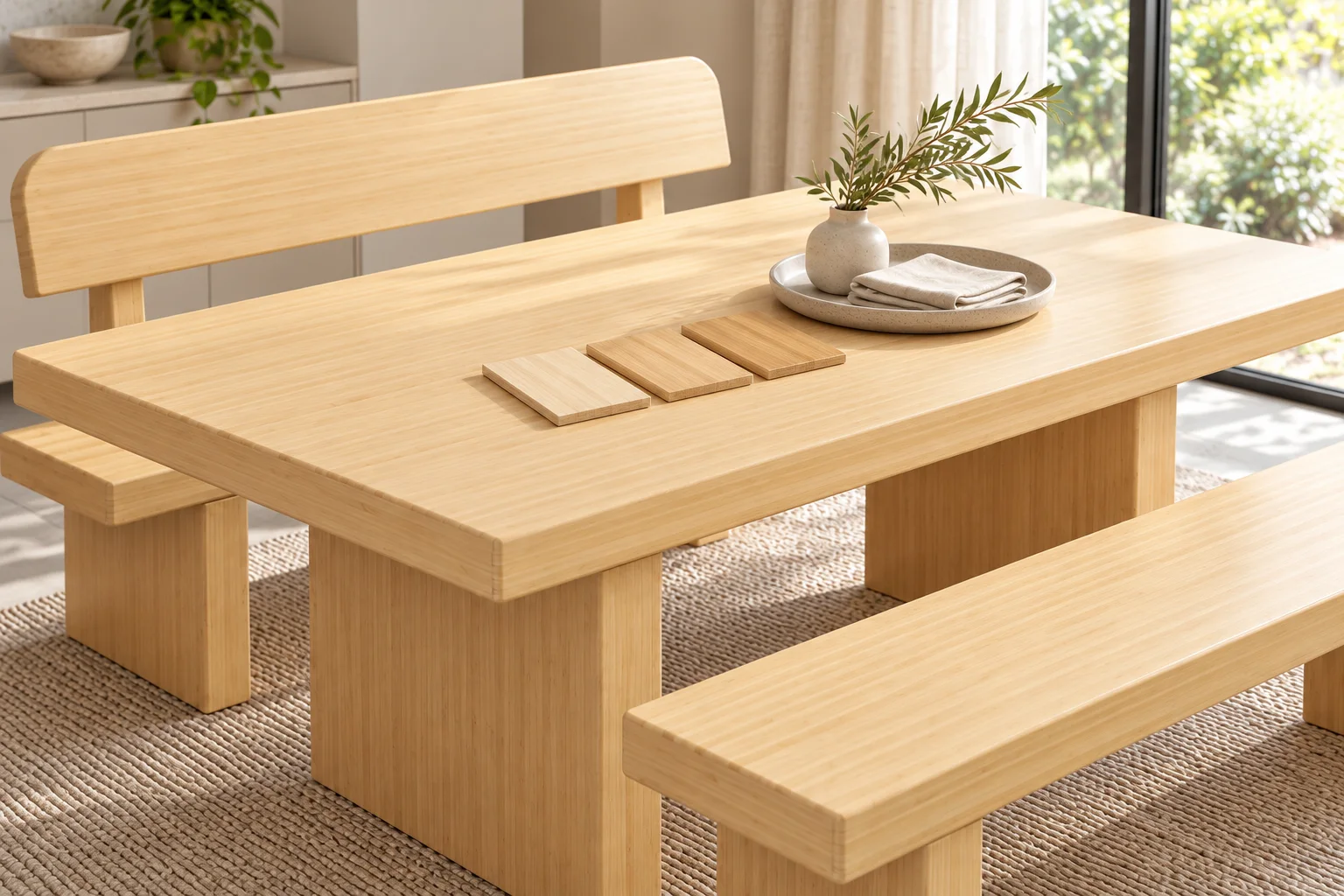
The bamboo dining table and bench set presents broad pale surfaces where a local colour or sheen change can be easy to notice. Its photograph does not identify the coating chemistry or prove compatibility with any repair kit.
Separate a mark on the finish from an indentation, exposed substrate, open joint or structural damage. Record location, extent and photographs under normal and angled light. Ask the supplier to classify the proposed repair; this guide does not authorise cosmetic material to fill a structural defect.
Match the repair system to the approved surface
Osmo’s care and repair paste is presented for its Polyx-Oil surfaces. The narrow intended system illustrates why an off-the-shelf repair product is not automatically suitable for a different coating. Obtain the actual finish identity and a supplier-approved repair route.
Request matching-build coupons from the approved production surface, not merely a similarly coloured piece of wood. Ask the responsible professional to reproduce a representative cosmetic defect and trial the proposed repair while leaving an untouched comparison area.
Agree how the trial will be judged
Use the project’s normal viewing distance and lighting, plus an angled view that reveals sheen differences. Record colour relationship, visible repair boundary, texture and any required return-to-use conditions specified by the coating supplier. Do not invent a universal drying time or promise an invisible patch.
| Stage | Evidence | Outcome |
|---|---|---|
| Defect classification | Location and condition photographs | Cosmetic route or further assessment |
| System match | Original coating and approved repair materials | Compatible trial authorised |
| Trial review | Untouched comparison and agreed lighting | Accept colour, sheen and boundary |
| Release or stop | Return-to-use requirements and failed criteria | Approved repair or replacement scope |
Set a stop point and a replacement route
If the trial fails the agreed criteria, decide whether a larger professionally refinished area or a replacement component is appropriate. Obtain a revised scope instead of escalating through multiple unapproved products on installed furniture.
Retain the accepted coupon, approved materials and applicator responsibility with the finish sample record. For extensive or repeated damage, use the separate retain, refurbish or replace assessment rather than stretching a local touch-up allowance.
Send a decision-ready inquiry
Send the furniture reference, finish approval record and defect photographs through our inquiry page. Request a repair-coupon trial and a clear alternative if the local repair cannot meet the agreed appearance.