
A supplier may keep the same furniture name while changing a hidden fixing or panel detail. If several deliveries must share one spare-parts stock, compatibility needs to be demonstrated against the actual revisions, not inferred from the catalogue picture.
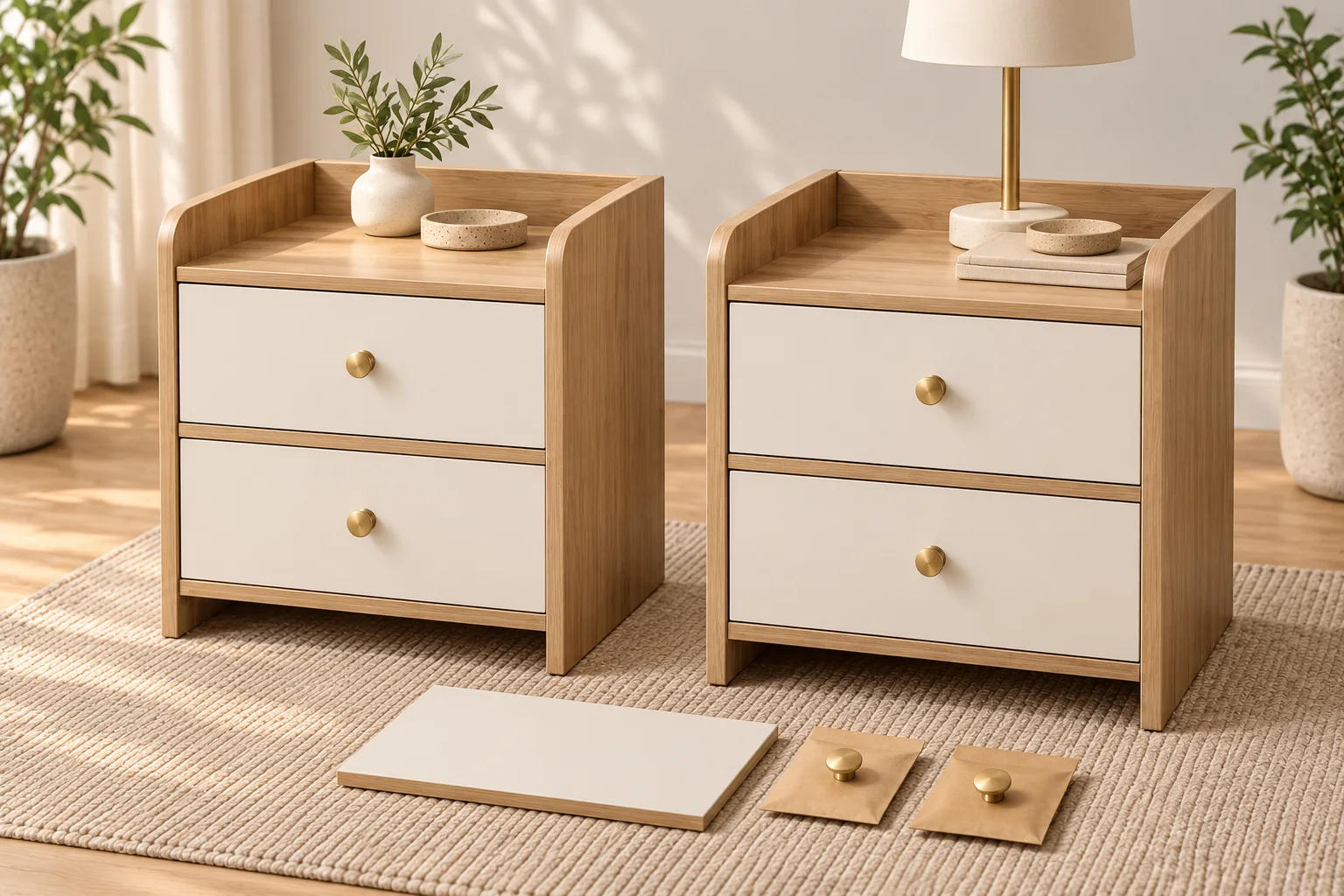
Identify the receiving furniture, not just the spare
The two-drawer bamboo bedside cabinet shows cream fronts, round metal knobs and bamboo sides rising around the top. These visible features help identify the design, but they do not establish hole locations, runner connections or the interchangeability of two similar drawer fronts.
List each receiving furniture revision and delivery batch. Add the component position, handedness where applicable, finished dimensions, interface drawing and finish reference. A spare described only as “nightstand drawer” is not a controlled match.
Keep a part code separate from a visible marking
Blum’s replacement guidance requests identification photographs and notes that some markings are component numbers rather than orderable part numbers. It also treats the related mounting plate as part of hinge identification. The principle is useful even when another manufacturer supplies the hardware.
Ask the furniture supplier for a confirmed service part code and its associated pieces. Record whether a replacement is supplied alone or as a matched set, and whether the original adjoining part must also change.
Use a revision-by-revision compatibility matrix
For every spare candidate, mark each receiving revision as verified, not compatible or awaiting trial. Have the appointed supplier or technician perform a non-modifying trial fit on representative units: check the interface, alignment, operation and appearance against agreed criteria. Do not force a fit or drill new holes just to call the part interchangeable.
| Receiving revision | Candidate spare or matched set | Acceptance evidence |
|---|---|---|
| Earlier batch A | Confirmed service part code | Trial fit, operation and appearance |
| Later batch B | Same candidate code | Independent verification |
| Changed interface C | Alternative or matched-set proposal | Drawing approval and new trial |
| Unverified units | No automatic allocation | Hold pending identification |
Control what happens when the matrix changes
A successful fit in the latest unit does not approve all earlier batches. State which revision combinations were actually checked and whether appearance remains acceptable next to aged components. Keep failed combinations out of the common spare bin.
When a revision changes, update the matrix and the component identification record before ordering more stock. Use the spares handover to record quantities only after compatibility has been established.
Send a decision-ready inquiry
Send the receiving batch list, component photographs and available revision drawings through our project inquiry. Ask for a compatibility matrix and representative fit check before consolidating spare stock.