
By closing time, a small table has moved to another seating group and two chairs face a different direction. Staff can make the room look tidy without restoring the arrangement the operator approved. A reset record should say what returns where and how an exception is handed over.
Record one approved normal arrangement
Start with the operator’s approved layout, not a fresh design exercise. Give it a version and retain a clear plan plus photographs from fixed viewpoints. Identify furniture by the existing item reference and position, so similar-looking pieces do not swap roles unnoticed.
Keep operational requirements established by the responsible project team in that record. A reset photograph does not independently prove access, fire safety or other compliance. If the approved layout changes, replace the record rather than keeping two competing “normal” arrangements.
Describe the relationships that a photograph can hide
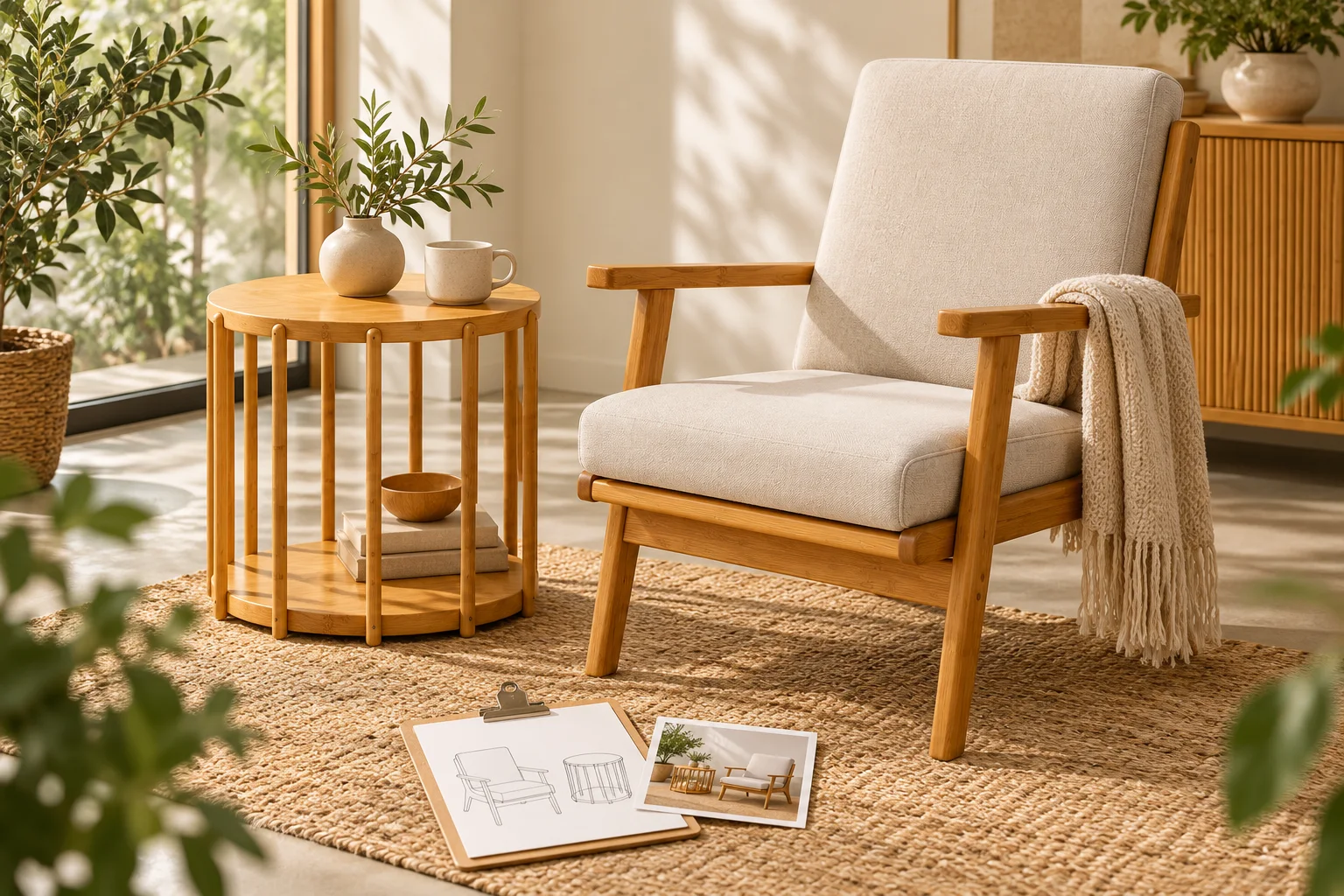
The bamboo lounge armchair has an exposed frame and upholstered seat, while the bamboo side table has a top and a lower shelf. Record which side of the chair the table belongs on and which group it serves. Similar furniture can look tidy while leaving a guest without the intended table.
Use a plan to identify positions and photographs to help recognise orientation. Do not ask staff to recreate a precise gap by judging camera perspective. Any required dimensions should come from the approved layout.
| Record element | What it resolves | Exception to pass on |
|---|---|---|
| Current layout version | Which arrangement is normal | New layout awaiting approval |
| Item and assigned position | Where each piece belongs | Item moved or unavailable |
| Orientation and group relationship | Which seat the table serves | Temporary regrouping |
| Closing and opening check | Who saw the actual condition | Unresolved change and decision owner |
Create a visible exception route
If an item is damaged, unavailable or deliberately moved for a temporary use, record its item reference, location, reason and the person deciding the temporary arrangement. Staff should not fill the space with an unreviewed substitute simply to match a photo.
Keep the moving method and staff permissions separate from the reset plan. The product image does not confirm that a chair can be lifted by its arms, a table can be dragged or furniture can be stacked. Use the supplier’s applicable handling instructions.
Hand over the room, not only the count
Have the closing shift compare the actual room with the current record and pass unresolved exceptions to the opening shift. The opening check should confirm that deliberate temporary changes are understood rather than automatically undoing them.
For a repeat-use bamboo lounge furniture enquiry, send the approved layout, intended reset frequency, item references and any handling requirements for review. The furniture handover and spare-parts guide can hold the related product documents; the reset record tells staff how that furniture is currently arranged.