
A table can have a generous curve when viewed from above and still have a quite different edge across its thickness. Asking for rounded corners leaves those two decisions mixed together.
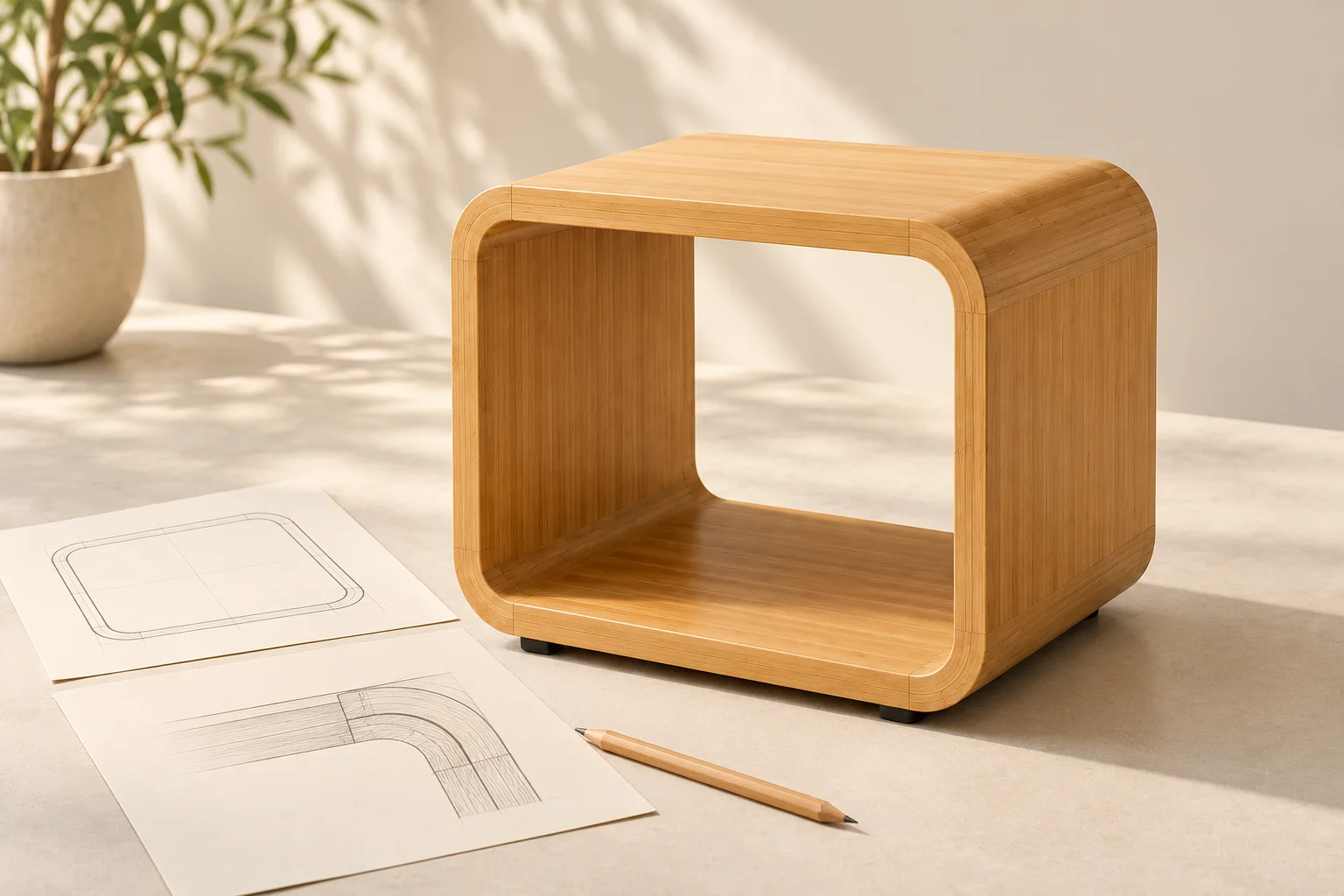
For modern bamboo tables, nightstands and bed frames, describe the footprint and the exposed edge separately. That gives the drawing and sample review a specific feature to resolve.
Use a top view for one question and a section for the other
The plan view shows how a straight side turns around a corner. A section shows how the upper surface meets the side through the thickness: a small eased edge, a chamfer, a larger curved profile or another agreed detail.
These are descriptions of geometry, not recommendations for a universal radius. The appropriate shape, dimensions and construction need the project's design and technical review. Mark units and the locations to which each detail applies.
Identify the edges people actually encounter
On the Rounded Bamboo Side Table, the outside corner, upper edge and lower storage opening are different surfaces. A request about the outer silhouette should not silently approve the inner opening.
The Two-Drawer Nightstand adds a raised top surround. Ask which edges are covered by the proposed detail, including the inside of that surround and the drawer fronts. Keep handles and projections in their own review.
Put the distinctions on a small detail sheet
| Drawing location | What the view establishes | What it does not establish |
|---|---|---|
| Top-view corner | Outside footprint and corner curve | Edge shape through the material thickness |
| Edge section | Transition from top face to side | How all corners and joints are formed |
| Storage opening | Exposed inside edges and their locations | Load capacity or general product safety |
| Corner sample | Actual surface and join relationship represented | Every unrepresented edge on the complete item |
A continuous-looking rendered corner is not evidence that the body is made from one bent piece. Product 389 describes a panel-built direction with radiused components and concealed connections, subject to engineering confirmation. Retain the material build-up beside the shape detail.
Approve the finished detail, not only a line on the drawing
Ask for a representative sample that includes the relevant face, edge and corner junction. Identify its material, finish and drawing revision. A flat finish chip cannot demonstrate the edge transition.
Review appearance and intended ordinary contact under the agreed procedure. Do not describe a softened edge as child-safe, impact-safe or compliant with a standard without the relevant evidence. The same visual treatment on a bed and a small table does not make their uses or technical requirements identical.
Discuss a furniture edge-detail request with marked views and the selected item. Keep final geometry, material, joining and any required safety assessment within the approved project specification.