
The sideboard photograph you like is only the beginning of a quotation. A ribbed front can conceal opening doors, while a slatted front may slide across part of the cabinet. Glass changes what remains on view. These are different product directions, not three interchangeable finishes on one confirmed cabinet.
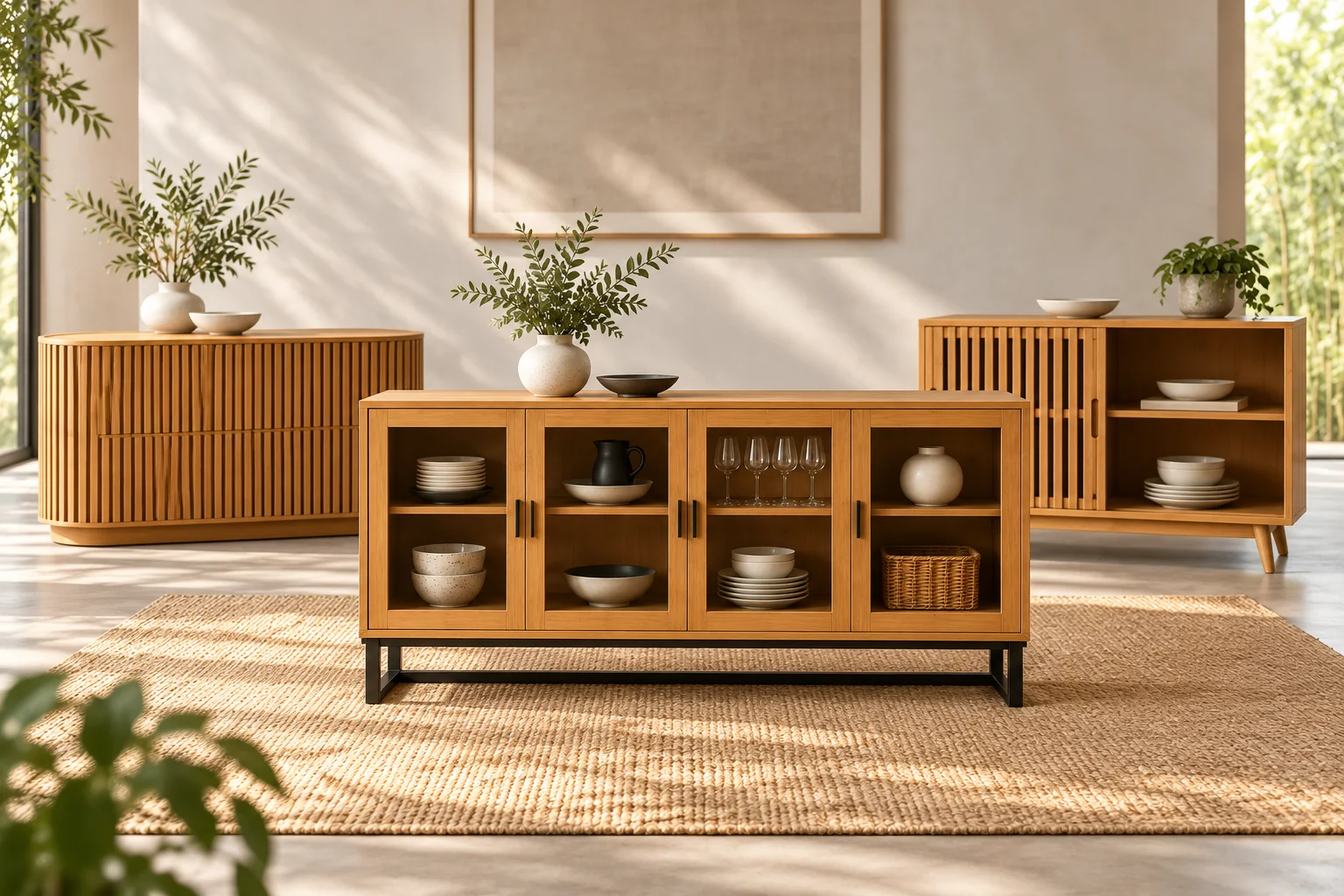
Green Bamboo Space has separate published references for each direction. Choose the starting model, then describe the changes needed for the project. A quotation is easier to compare when the reference and its door arrangement stay together.
Three references with different fronts
The Ribbed Bamboo Sideboard Cabinet describes four push-to-open doors, adjustable shelving and a recessed plinth. Its ribbing forms a continuous exterior expression; it does not mean the doors slide.
The Sliding-Door Sideboard combines a sliding-front concealed zone with an open shelf zone. Its visible open area is part of the reference, rather than a missing door.
The Glass Door Sideboard uses glass-front doors and a metal base. The published four-door configuration is a reference for review. Alternative layouts and the final glass, hardware and supporting materials need their own confirmation.
Choose what should remain visible
Concealed storage and display storage ask different things of the same room. A dining room may need to hide reserve tableware. A reception lounge may want selected objects visible while keeping other supplies out of sight. An apartment program may need an open zone for frequently used items.
Write that preference as a storage-zone decision, not simply a color choice. If a project requests a glass panel on a concealed-storage reference, identify it as a proposed change. Do not treat a feature shown on another model as an automatic option included in the selected version.
Keep one comparison row for each model
| Published reference | Recorded configuration | Decision for the quotation |
|---|---|---|
| Ribbed sideboard | Four push-to-open doors and adjustable shelves | Confirm door divisions, shelf arrangement and selected hardware |
| Sliding-door sideboard | Concealed sliding-front zone and open shelf zone | Identify which storage should be open and which should be concealed |
| Glass-door sideboard | Four-door display reference with glass and metal details | Confirm glazing, visible fittings and the intended display layout |
These are starting configurations, not fixed size, load, price or delivery promises. The sideboard storage guide covers the next step: whether the actual objects fit through the selected opening and into the compartments.
Ask for the chosen version, not a combined photograph
Send the selected product link with target dimensions, the storage-zone preference, finish reference, quantity and destination. Mark additions and exclusions on one drawing. If two fronts are still under consideration, ask for two clearly identified alternatives rather than one blended description.
Discuss a bamboo sideboard quotation with that shortlist. The resulting offer should name the selected construction, door system, materials and packing scope. This gives both sides a product to review rather than a collection of attractive features with no agreed model.