
The shelf can move, but can it move to the position the buyer needs? A quotation that says adjustable shelves leaves that question open if it does not show the available positions and the supporting parts.
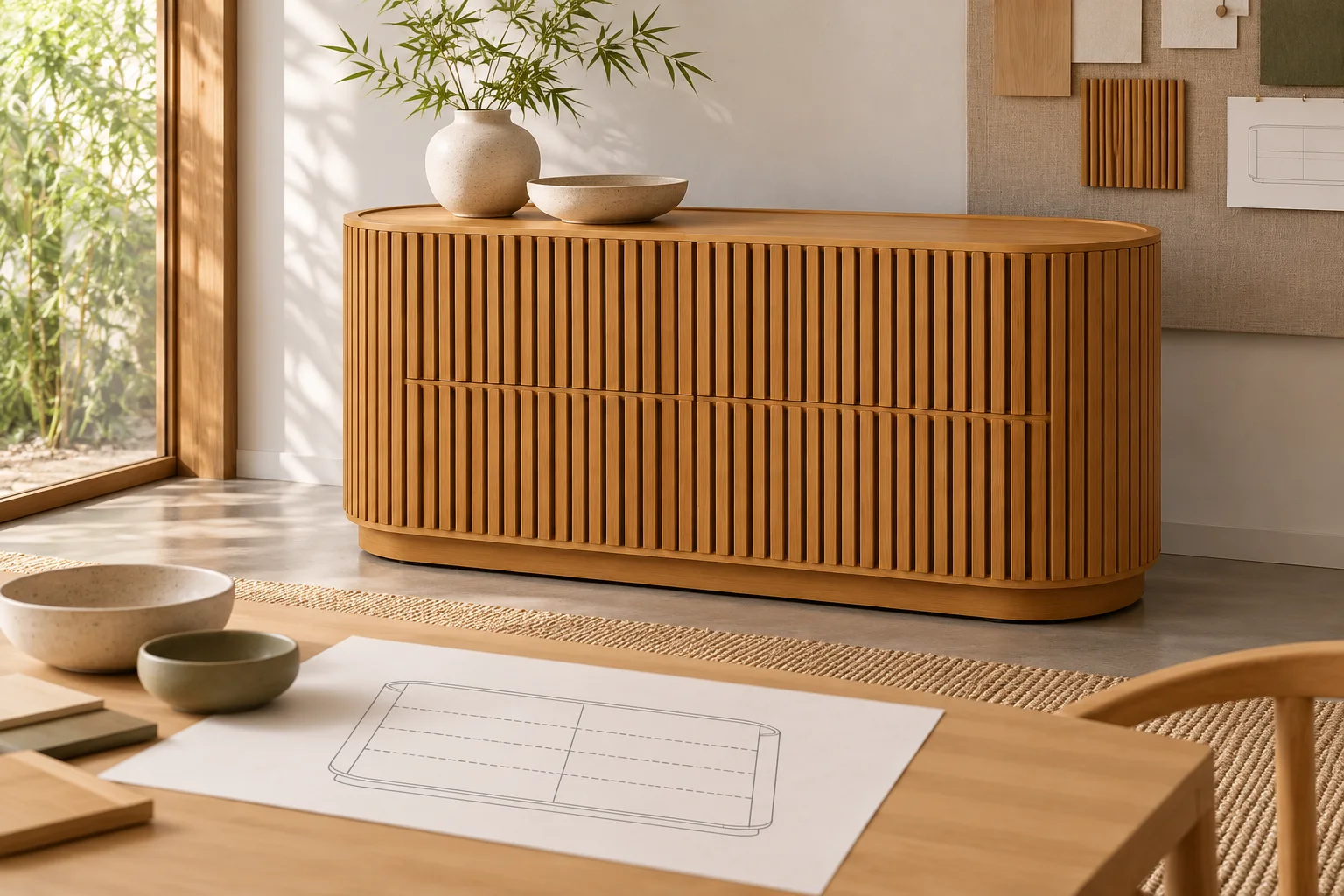
The Ribbed Bamboo Sideboard Cabinet explicitly describes adjustable shelves in divided compartments. Use that as the starting point for a detail review, not as a complete description of the adjustment mechanism.
Distinguish adjustment from a customizable layout
A supplier can develop a shelf layout for production without making every shelf movable afterwards. These are different requirements.
The Glass Door Sideboard allows shelf layout and spacing to be customized. Its published information does not identify a particular adjustable support system. If later adjustment matters, ask for it explicitly rather than transferring the feature from another cabinet reference.
Mark which shelves should be fixed and which should be adjustable. A fixed shelf may have a role in the proposed construction; changing it needs supplier review.
Ask for the actual positions inside each compartment
Request an internal view showing the available support positions, the shelf edge and any areas where hardware restricts movement. Identify the usable clear height above and below the shelf at the positions you expect to use.
Do not assume that all compartments share the same adjustment range. Hinges, partitions and other fittings can create different conditions behind apparently similar doors.
| Detail | Information to request | Practical question |
|---|---|---|
| Available positions | Marked support locations in each relevant compartment | Can the shelf reach the proposed arrangement? |
| Supporting parts | Identified parts and how the shelf engages them | What keeps the shelf in its intended position? |
| Shelf movement | Agreed adjustment and handling instructions | What must be removed or released first? |
| Removal route | Shelf outline and clear door opening | Can the complete shelf come out as intended? |
| Loading requirement | Intended contents and reviewed support arrangement | What evidence applies to this shelf configuration? |
Review one adjustment, not only the finished photograph
Where an adjustable sample is agreed, ask to see a shelf moved between the proposed positions using the intended instructions. Include removing stored items, releasing any retaining detail, repositioning the supports and returning the shelf to its accepted arrangement.
This is a review of usability and supplied instructions. It does not prove a load rating. The loading requirement, support construction and any applicable assessment need their own agreement.
Also check the route out of the cabinet if shelf removal is required. A shelf wider than the clear opening may need a particular movement or door position; resolve that with the actual proposed version rather than guessing from the exterior.
Record the parts that belong with the cabinet
List the support parts included for each adjustable shelf and identify any separately agreed spare parts. Do not prescribe a universal pin size, spacing or spare quantity without the proposed system.
Keep the accepted internal drawing and adjustment instructions with the cabinet version. For an adjustable shelf enquiry, send the product reference, the required shelf arrangements and the contents they must accommodate. The sideboard storage guide helps prepare the separate contents and access brief.