
A fabric rated at a larger number of rubs is not automatically the better choice for every upholstered chair. Before comparing numbers, identify what was tested, which method was used and how the textile will be used on the furniture.
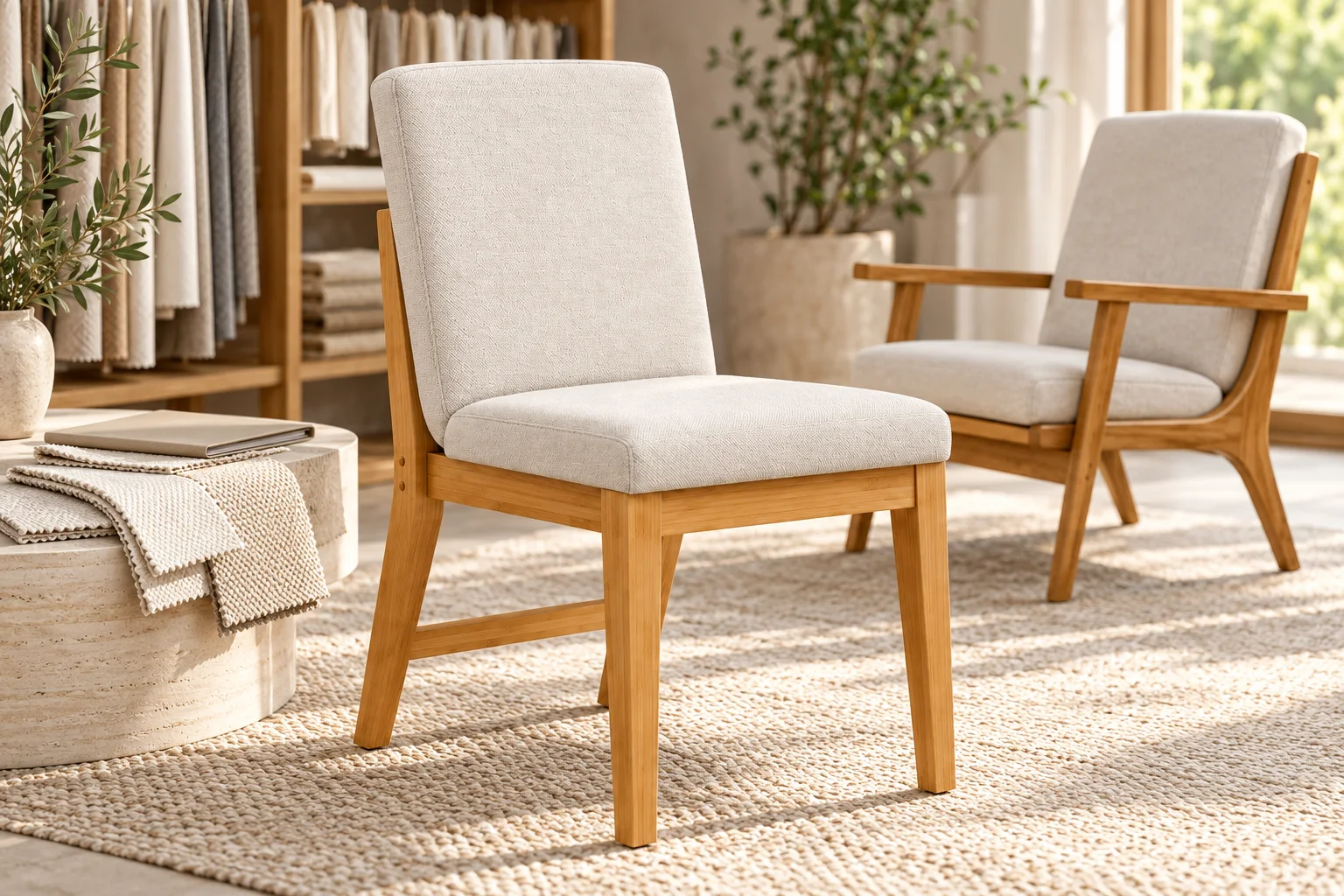
The Bamboo Upholstered Dining Chair has an upholstered seat and tall back in its design reference. The Upholstered Bamboo Lounge Chair allows textile requirements to be reviewed by project. Neither description supplies an abrasion result for every fabric a buyer might nominate.
Keep the test name beside the result
Ask for the fabric supplier’s reference and the report or technical information that supports the quoted result. Preserve the method name, reported unit, test conditions and endpoint where stated. A spreadsheet column headed only “wear: 50,000” discards information needed to interpret the number.
Wyzenbeek and Martindale are different test methods. Do not invent a conversion or rank mixed-method results as if they were one measurement. If the project specification names a particular method, ask the responsible textile supplier how the submitted evidence addresses it.
Do not turn abrasion into a lifespan promise
The Association for Contract Textiles explains that flat abrasion testing does not cover every form of wear in an upholstered application, and a doubled result does not mean doubled service life. Its guidance also cautions against treating very high results as proof of longer life.
That leaves a practical purchasing question: what else must be suitable for this chair? Keep care instructions, seam behavior, appearance retention and the intended use in the specification. A strong abrasion result cannot close all those questions. Nor does a textile report become a load, stability or whole-chair compliance report.
Compare evidence in a useful format
| Field | What to keep | What to avoid |
|---|---|---|
| Textile identity | Supplier reference, selected color and relevant report identity | A result for an unnamed sample |
| Test result | Method, unit, conditions and endpoint as reported | A bare number or homemade conversion |
| Application | Furniture item and covered components | Assuming every seat and back has the same demands |
| Other requirements | Care and other applicable performance information | Calling abrasion the complete durability specification |
| Decision | Named reviewer, accepted evidence and open questions | Publishing an unsupported lifespan or warranty |
Bring the report back to the made-up chair
For an illustrative restaurant order, the seat and the upper back may use the same fabric while meeting different contact conditions. Ask for the nominated textile to be assessed on the proposed upholstered construction, particularly around edges and junctions. A report for flat material and a sample of the finished chair answer different questions.
Use the contract upholstery guide for the wider fabric, cushioning and care brief. Keep the abrasion evidence as one identifiable part of that approval, rather than replacing the brief with a minimum number selected without context.
When two quotations name different textiles, retain separate comparison rows until the responsible project team accepts the difference. A more expensive fabric is not proved better by the price or by the largest number on its data sheet.
Send a seating specification for review with the chair references, quantities, nominated fabrics, intended use and evidence requirements. No abrasion rating, certification or service-life claim is implied for an unconfirmed fabric or furniture version.