
A guesthouse breakfast room can remain useful after the dishes are cleared. The furniture decision is not simply to buy more comfortable chairs. Work out what must disappear after breakfast, where it goes, and what a guest can do in the room while staff reset it.
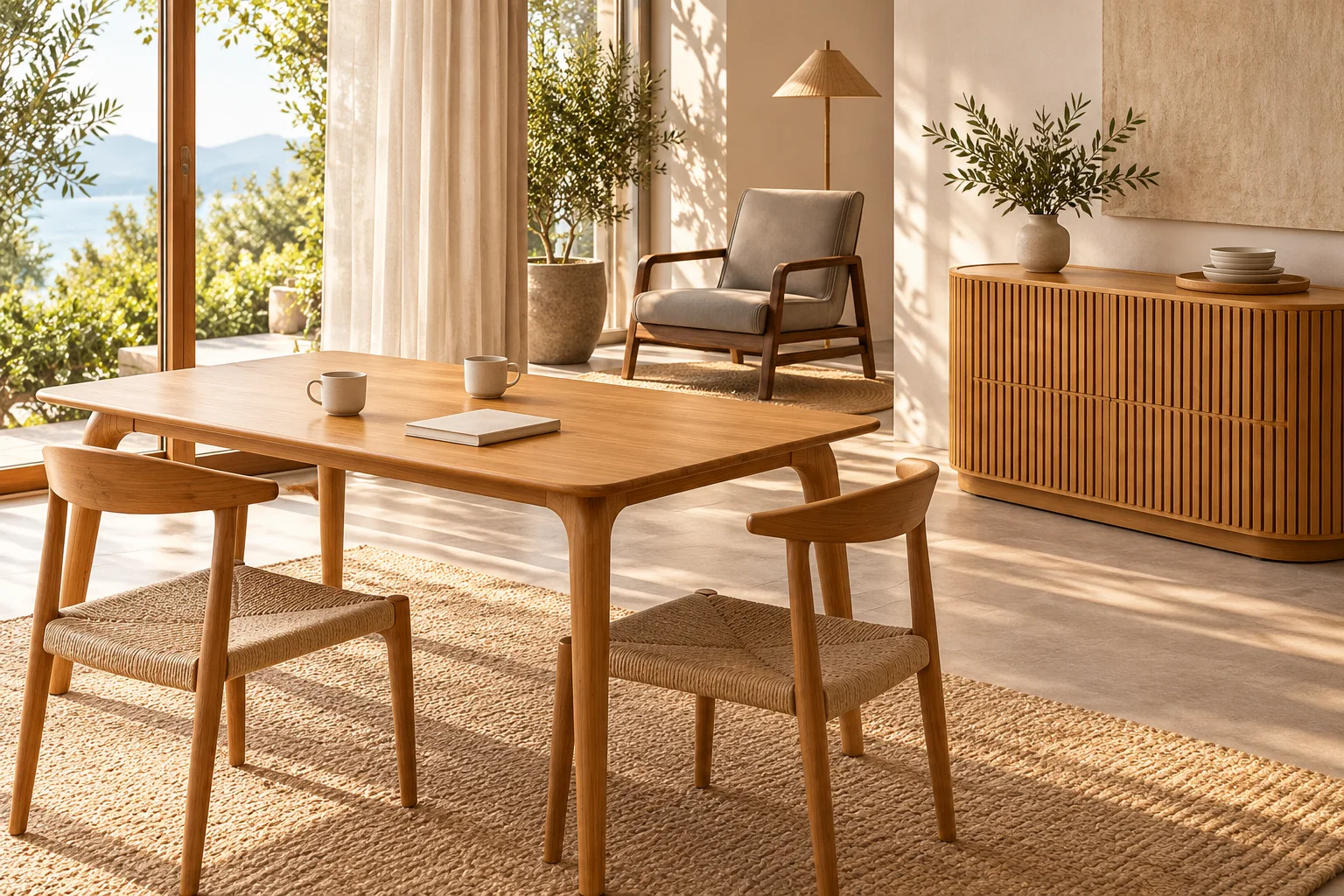
For a small property, a dining table that stays in place may be more practical than a room that needs a full rearrangement every day. A separate pair of lounge seats can support a different activity without requiring every dining chair to become a reading chair.
Draw the room twice, including the changeover
The first plan shows breakfast as it is actually served: guests seated, staff clearing and any service equipment in its operating position. The second shows the later use, such as reading, conversation or planning the next day’s trip. Mark furniture that stays in exactly the same place on both drawings.
Now draw the awkward middle moment. Where do used items go? Where are clean supplies kept? Can a guest still sit while the room is reset? Food-service arrangements and any appliance requirements need their own appropriate review; a sideboard is not automatically a buffet counter, food-contact surface or appliance enclosure.
Give every item a job after breakfast
Moment Hotels describes a breakfast room that also serves as coworking space. This independent operator example shows that a room can have more than one use. It is not a Green Bamboo Space installation or evidence that the same layout suits a small guesthouse.
| Furniture or contents | During breakfast | After breakfast / reset question |
|---|---|---|
| Dining tables and chairs | Seated meals with the intended place settings | Can the same positions support reading or a shared activity? |
| Clean service supplies | Stored or accessed for the agreed service | Which items must be put out of sight, and in which compartment? |
| Lounge seats and side surfaces | A separate sitting place if the room permits | Can guests use them while dining tables are being cleared? |
| Movable accessories | Menu cards, trays or other agreed items | Where is each item stored without taking another guest seat? |
| Furniture proposed to move | Shown in its breakfast position | Who moves it, by what approved method, and where does it park? |
Keep the daily reset small enough to be realistic
Try the sequence with the operator before committing to quantities. Removing table accessories and putting clean supplies away is a different job from moving tables and storing a roomful of chairs. Do not specify folding, stacking or one-person handling unless the exact furniture version supports it.
If the room must be cleared for occasional events, prepare that as a third layout with its own storage and handling plan. It is not the same requirement as everyday lounge use. Count each physical table once even if it appears on two drawings, and keep extra pieces outside the normal room quantity.
Choose dining, storage and lounge references separately
The Nordic Bamboo Restaurant Table offers a rectangular dining direction. The Ribbed Bamboo Sideboard Cabinet has concealed storage and adjustable shelves to review against the clean supplies. A Nordic Bamboo Lounge Chair is a separate seating reference, not a conversion function built into the dining set.
Check the complete selected chair-and-table arrangement with the intended activities. Confirm surface care for both meals and later use, rather than assuming a protective finish tolerates every cleaning product. The cabinet’s compartments and door openings need to fit the objects and the reset route, not merely the wall.
Use the restaurant table cleaning brief to record the proposed care method. For a guesthouse common-room furniture enquiry, send both room plans, the breakfast service format, expected simultaneous users, later activities, storage locations, selected models and quantities. Describe required changes as requests; final suitability and supply scope remain specific to the project.