
Before adding chairs beside a restaurant entrance, decide where diners report their arrival and where pickup customers receive an order. An inviting waiting seat can become an obstruction if everyone must pass the seated guest to speak to the host.
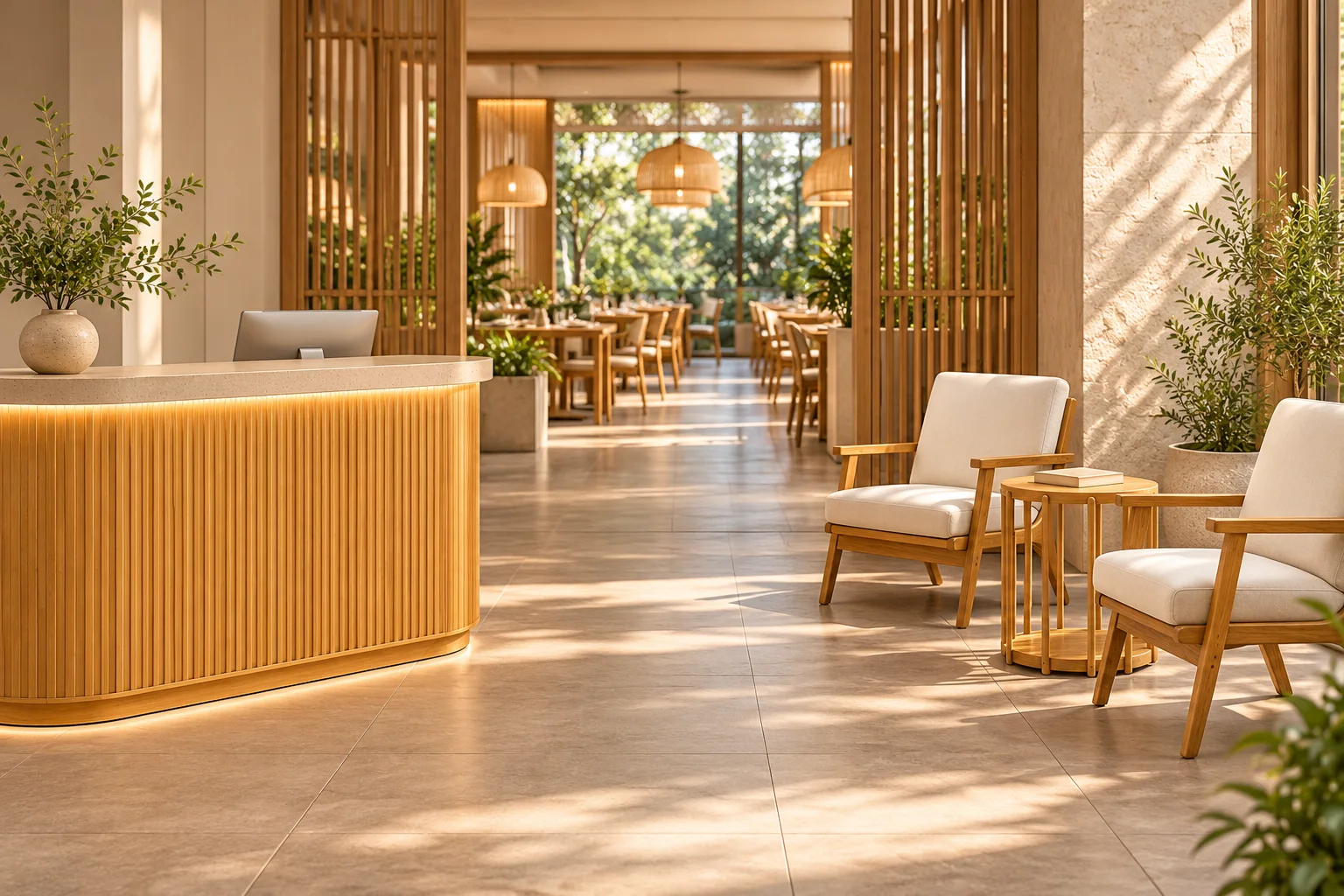
This is an indoor front-area furniture decision, not a plan for squeezing more dining places into the room. Waiting places and dining capacity should be recorded separately. Outdoor queues, emergency routes and required accessible circulation need the project team’s own review.
Start with the handoff points
Mark the entrance door’s movement, the host position, the route to the dining room and the pickup handoff. Add the staff route used to bring an order to that handoff. A customer waiting to be seated and someone collecting a bag may need different stopping points even when they use the same door.
Restaurant Furniture’s fast-casual design guide discusses a distinct pickup route alongside dine-in circulation. The useful question here is narrower: which pieces of waiting furniture, if any, can fit around those activities in your entrance?
Compare three arrangements, including the option with fewer seats
| Arrangement | When to investigate it | Busy-moment check |
|---|---|---|
| A defined check-in point without a seating group | The entrance cannot accommodate a separate seated waiting area | Where do people wait under the operator’s agreed arrival process? |
| A few individual waiting seats | Some guests need a seat and each position can have a clear exit | Can a called guest stand and follow the host without others moving? |
| Shared sofa | The entrance has a genuine lounge-sized area for companions | Do bags, companions and departure movements stay out of pickup and dining routes? |
None of these is a universal recommendation. Removing chairs does not by itself create an acceptable waiting arrangement, and a sofa’s catalogue seat count does not establish how many separate parties will use it. Ask the operator how waiting is managed and test that process on the measured plan.
Run the moment when a table becomes ready
Use an illustrative sequence: a party checks in, a pickup customer arrives, then the host calls a seated party to its table. Show people standing, collecting belongings and moving toward the dining room—not just sitting in their final positions. If the pickup customer has to step into the dining route to make space, the furniture plan still needs work.
Include a companion, a bag or other routinely expected belongings in the exercise. Use the operator’s observed waiting patterns when available; do not assume a fixed share of customers waits or copy a seat-to-table ratio from another restaurant. The layout review is not evidence of shorter waits or increased sales.
Buy only furniture with an identified role
The Modern Bamboo Reception Desk can be a starting reference for a host point if a counter is actually needed. Its equipment, staff access and size need review; it is not a ready-specified food-service station. The Upholstered Bamboo Lounge Chair offers an individual-seat direction to assess for the waiting routine and cleaning requirements.
A Bamboo Round Side Table should earn its floor space through a named task. If it only holds decoration while reducing room to stand up, leave it out of the shortlist. Do not repurpose it as a hot-food holding surface, bag shelf or drinks station without confirming the intended use.
Keep the dining table arrangement separate from the waiting brief. For a restaurant entrance furniture enquiry, send the entrance plan, door movement, host and pickup positions, actual or proposed waiting process, furniture references, quantities and delivery location. Ask for the required pieces individually so a counter or extra table does not enter the order by default.