
A shelf can look dry while moisture remains under a pot. Before choosing furniture for an indoor plant shop, decide where watering happens and how a plant returns to display. Ordinary bamboo storage furniture should not be treated as a watering bench or outdoor plant rack without explicit approval for that use.
Separate the display position from the watering job
Draw the route from display to the shop’s suitable watering area and back. Identify who checks that the pot has drained, the tray is ready and the underside is dry enough for the agreed display specification. If staff intend to water in place, state that at the start: it changes the requirements and may rule out ordinary display furniture.
A tray does not, by itself, prove that the shelf underneath will stay dry. Consider overflow, condensation, soil on the underside and a tray being set down wet. Ask for the coating and contact arrangement to be reviewed for the actual routine; do not invent a universal drying time.
| Record | Why it matters | Approval needed |
|---|---|---|
| Plant, pot, compost and tray mass after watering | The display load changes with the complete assembly | Shelf loading and distribution |
| Pot base and tray contact points | Small feet may sit unevenly on slats | Stable support for the actual assembly |
| Drainage and underside check | Visible top surfaces can hide moisture below | Agreed return-to-display condition |
| Daily movement and cleaning | Pots are lifted and repositioned repeatedly | Finish, handling and cleaning method |
Read the material of the shelf, not just the product name
IKEA’s SATSUMAS specification is a useful example of why component details matter: it lists bamboo legs but powder-coated steel shelves, and identifies indoor use. Those facts describe that product only. They do not establish water resistance, load capacity or care instructions for our bamboo shelves.
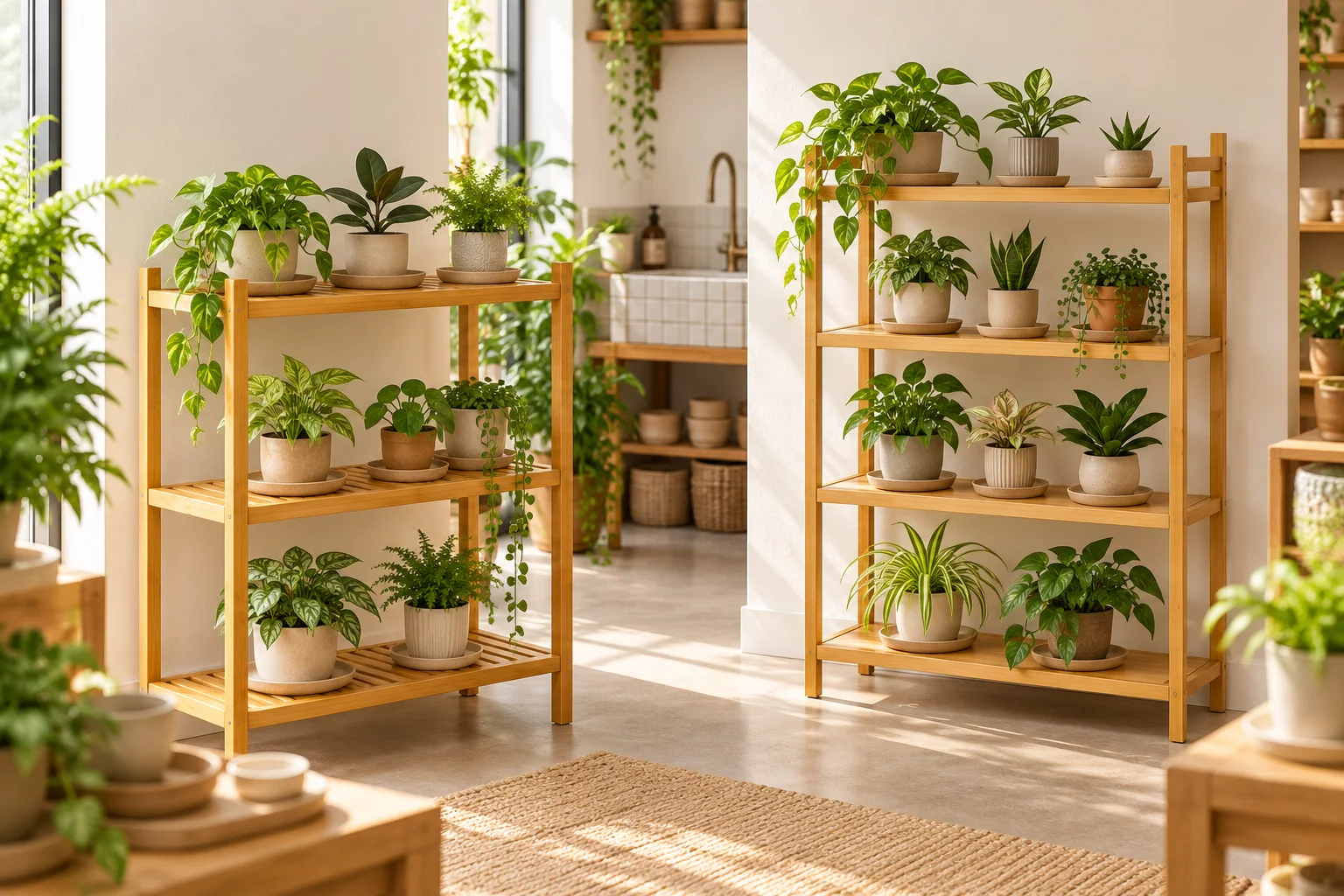
The 3-Tier Bamboo Storage Shelf has slatted surfaces. The Contemporary Bamboo Open Shelving Unit offers a different open-shelf direction. Both need a project-specific loading, finish and moisture review before being considered for a plant display.
Choose the plant assortment before filling the drawing
List the largest regular pots, not only the attractive small samples. Include the plant’s spreading leaves, lifting grip and full wet assembly weight. Check whether staff can remove a pot without brushing or dislodging the one beside it. Do not treat space for foliage as permission to exceed the approved shelf load.
For slatted shelves, examine the bottom of the actual tray or pot: a small foot that lands in a gap is a different problem from a broad, continuous base. Any additional liner changes contact, moisture and loading conditions and must be reviewed rather than quietly added at installation.
Keep the inquiry limited to the environment you can describe
Photograph the proposed indoor position and explain nearby windows, watering, floor cleaning and humidity conditions. A garden centre can have both dry retail rooms and wet or exposed areas; the business name does not tell the furniture supplier which environment applies. No all-weather suitability is implied here.
Use the shelf load-rating guide for the evidence needed around capacity. To review indoor plant-display furniture, send your pot-and-tray sheet, location photographs, watering route, desired shelf quantities and finish reference. If watering cannot be separated, identify that constraint before asking for ordinary bamboo shelves.