
A tasting table can look spacious before the second tea arrives. Once several cups, notes and used vessels share the surface, the important question is not simply how many chairs fit: can the host serve the next pour without confusing the samples or reaching across a guest?
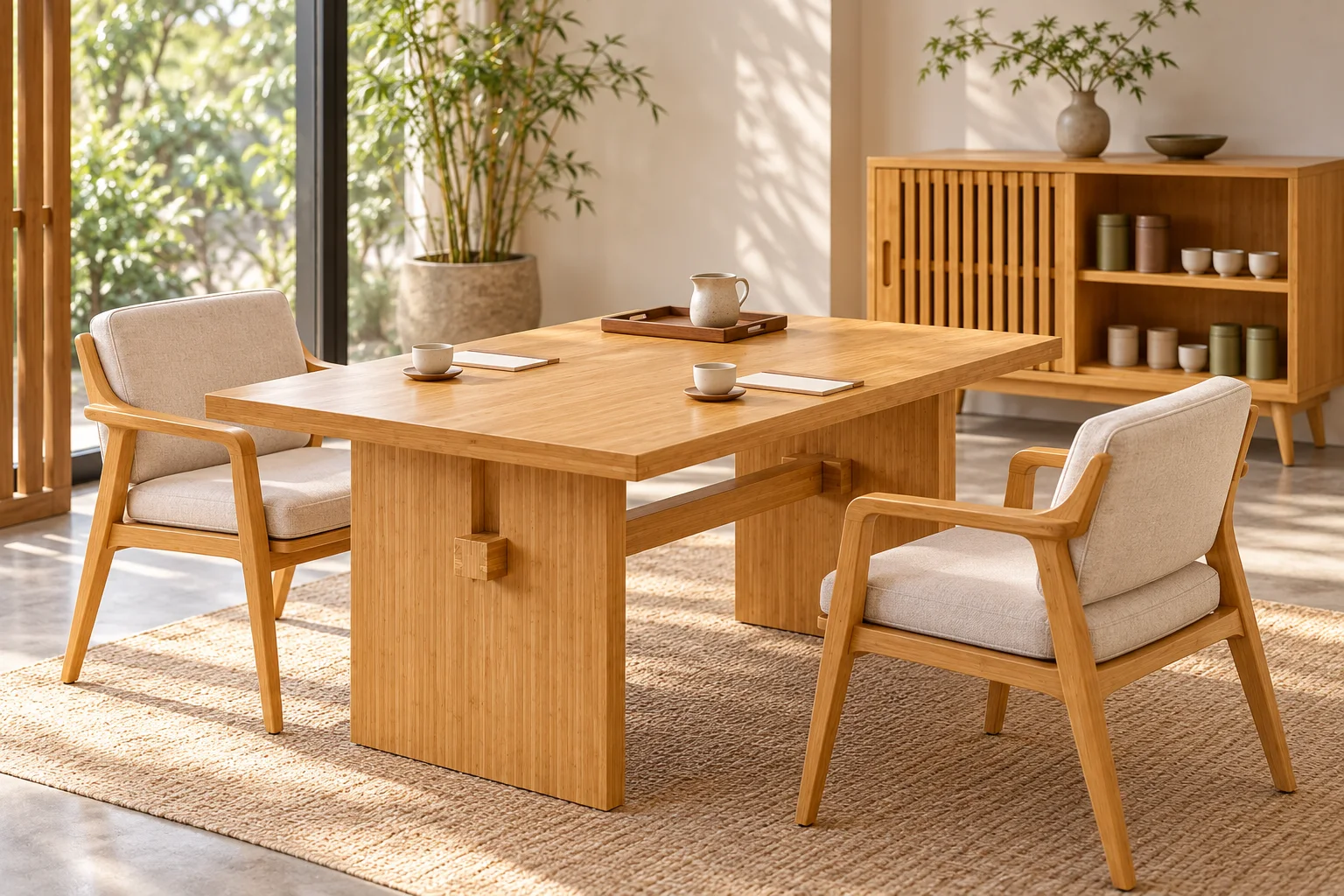
Decide whether teas stay on the table together
A one-tea-at-a-time service and a side-by-side comparison need different surface arrangements. Write down the intended number of samples, whether earlier cups remain, and where a guest puts a notebook. Keep the host’s serving position visible on the layout instead of assuming it will be whichever seat is empty.
UK Tea Academy’s equipment guidance names ordinary brewing items such as a kettle, small brewing vessels, a strainer and a cup. Our furniture brief separates preparation from guest tasting; it is not an academy standard, a tea-ceremony specification or an endorsement of these furniture products.
| Moment | Guest side | Host side |
|---|---|---|
| Before tasting | Places for cups and notes | Prepared samples identified |
| Next pour | Earlier samples retained or cleared by plan | Serving tray can be placed without moving guest items |
| Comparison | Each cup still linked to the correct tea | Information offered without rearranging samples |
| Finish | Notes and personal items remain separate | Used vessels go to the agreed clearing point |
Choose the table after the cups and trays
Use the 140 × 70 × 75 cm bamboo trestle table as one dimensional reference. Mark that outline and arrange the actual cups, saucers, trays and notes for the proposed service. The published size is not a guaranteed tasting capacity. Check the panel legs and stretcher with the seats in their intended positions.
The bamboo arm dining chair is a possible style reference, subject to fit and project requirements. Try sitting close enough to taste and write while leaving room for the host’s approach. Do not assume the chair’s arm height fits every table underside.
Keep boiling, rinsing and waste water out of an unverified furniture brief
List the hot preparation and rinsing station separately. Its surface, equipment, power, water and operating requirements need the appropriate project review. A bamboo table photo does not prove heat resistance or suitability for an appliance, and a protective tray is not a substitute for confirming compatibility.
Plan how clean vessels reach the host and used ones leave. If the same path serves both, explain the sequence and handover rather than filling every spare surface with cups. The furniture layout should follow the operator’s food-service procedures, not invent them.
Give spare cups a dry storage role
The bamboo sliding-door sideboard can be discussed as dry cup and packaged-item storage. Confirm internal dimensions and loading for the intended objects. It is not being offered here as a wash station or appliance enclosure.
For basic seating fit, see the table-and-chair guide. To discuss tea tasting room furniture, send the service sequence, sample count, cup and tray sizes, proposed guest count, preparation-station boundary and quantities. A photograph of one fully laid trial table is more useful than a mood image alone.