
One order is waiting for a drink. Another is complete. If both bags sit on the same unmarked surface, more shelving may simply create more places for staff to look. Plan the packing area around order status first, then specify the furniture that supports it.
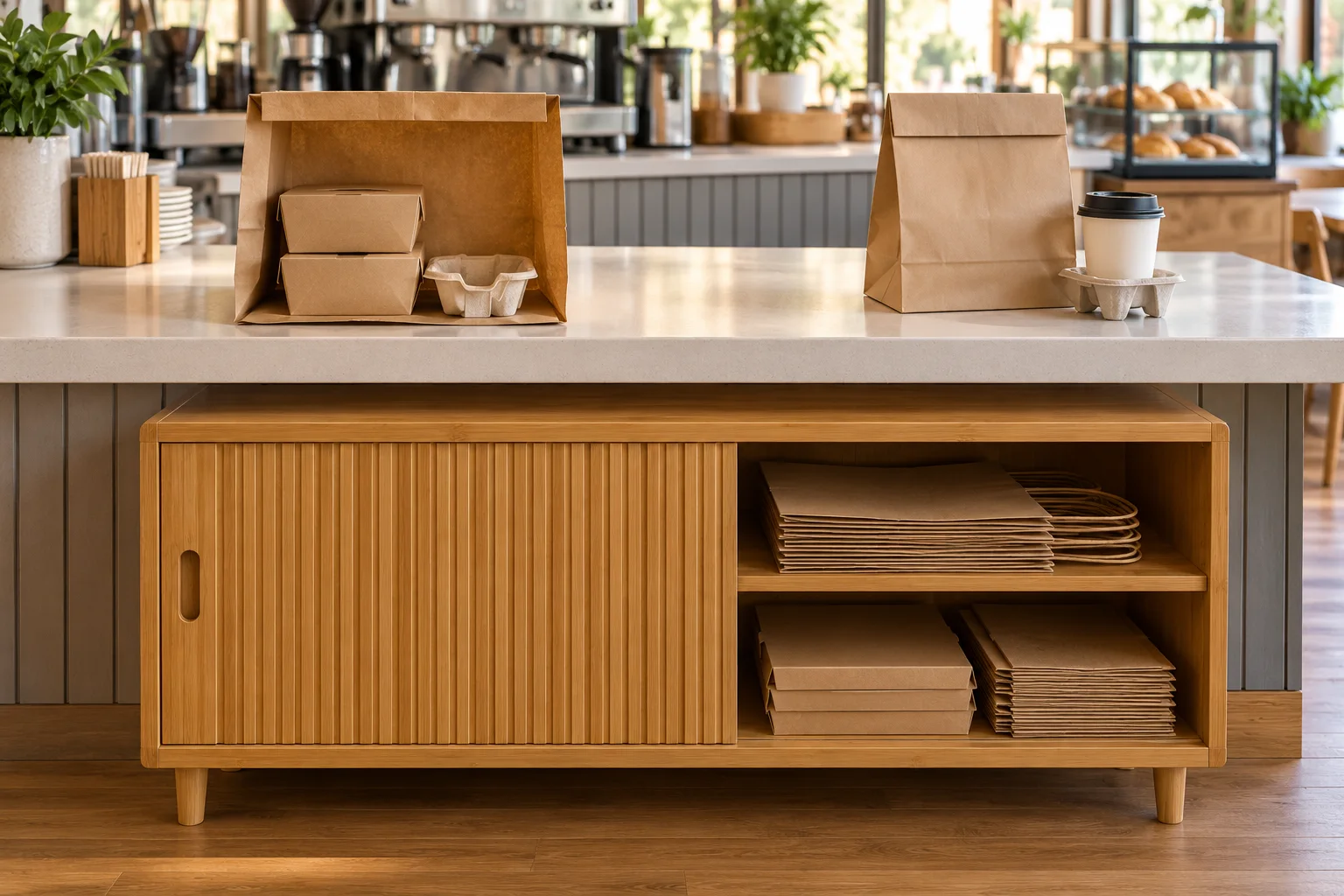
Keep three states understandable
Identify where prepared items arrive, where an incomplete order waits while it is assembled, and where a checked order is ready for handover. These may be separate positions on a reviewed worktop rather than three pieces of furniture. The operator must decide how orders are identified and released; the cabinet cannot make that decision.
Starr Design’s pickup-and-delivery guidance discusses order identification and a packing position with the necessary supplies. Here the furniture test focuses on two orders progressing at different speeds, before either reaches the customer pickup point.
| Order state | Put into the trial | Question to resolve |
|---|---|---|
| Arriving | The actual closed boxes and drinks | Where can staff set them without covering another order? |
| Incomplete | A bag waiting for one item | Does it keep a distinct place while another order is finished? |
| Ready | Checked bag plus any separate drink carrier | Can staff identify the entire order together? |
| Supply refill | Replacement bags, lids or approved packaging | Can stock be replenished without mixing with live orders? |
Separate packing stock from order parking
List the packaging formats actually used, including the largest bag and the awkward item that does not stack neatly. Measure them in the orientation staff will retrieve. A deep shelf can hold more stock while making the last few bags difficult to reach. Decide whether the station carries a whole delivery carton or only a smaller service quantity.
The sliding-door bamboo sideboard is a dry-storage direction to assess for those supplies. A bamboo open shelving unit offers visible retrieval, subject to the required protection, clear openings and load review. Neither is automatically a food-preparation counter or a hygiene-approved enclosure.
Run the missing-item moment
Use an illustrative practice order with two closed food boxes and a separate drink, alongside another order that is already complete. Leave the first drink out temporarily. Have the operator demonstrate how the unfinished order remains identifiable while the second leaves. Then introduce a fresh bundle of bags. Record which surface each item uses, rather than timing the exercise and promising faster service.
If the proposed cabinet needs to stand under a separately specified worktop, show the construction independently. Confirm the actual clearance, access and support arrangement; do not assume a freestanding sideboard can carry or brace another counter. Keep the normal furniture supply and specialist food-service work distinct in the quotation.
Connect the staff station to the handover point
Only after the packing arrangement is clear should the operator choose the route to customer collection. The staff-side unfinished-order position is not a public self-service shelf. An attractive cabinet facing the room does not resolve who may take a bag or how a separate drink is matched to it.
For the downstream entrance arrangement, see the restaurant waiting and pickup guide. To discuss cafe support furniture, send the order-state sketch, real packaging sizes, stock quantity, room plan and the intended role of each cabinet. Include cleaning and food-service requirements for separate review, without assuming that an ordinary bamboo finish meets them.