
A supplier reports that the installer has returned to site. That confirms a visit, not that every open furniture item is resolved. Before the room is handed over, connect each observation to an agreed remedy and a repeat check of the same item.
Name the exact item and the unfinished result
Use a room, furniture reference and component location together. “Cabinet door” is too broad when several similar cabinets share a floor. Record what can be observed, such as the left door contacting its neighbour when operated, without guessing the cause or prescribing a hinge adjustment.
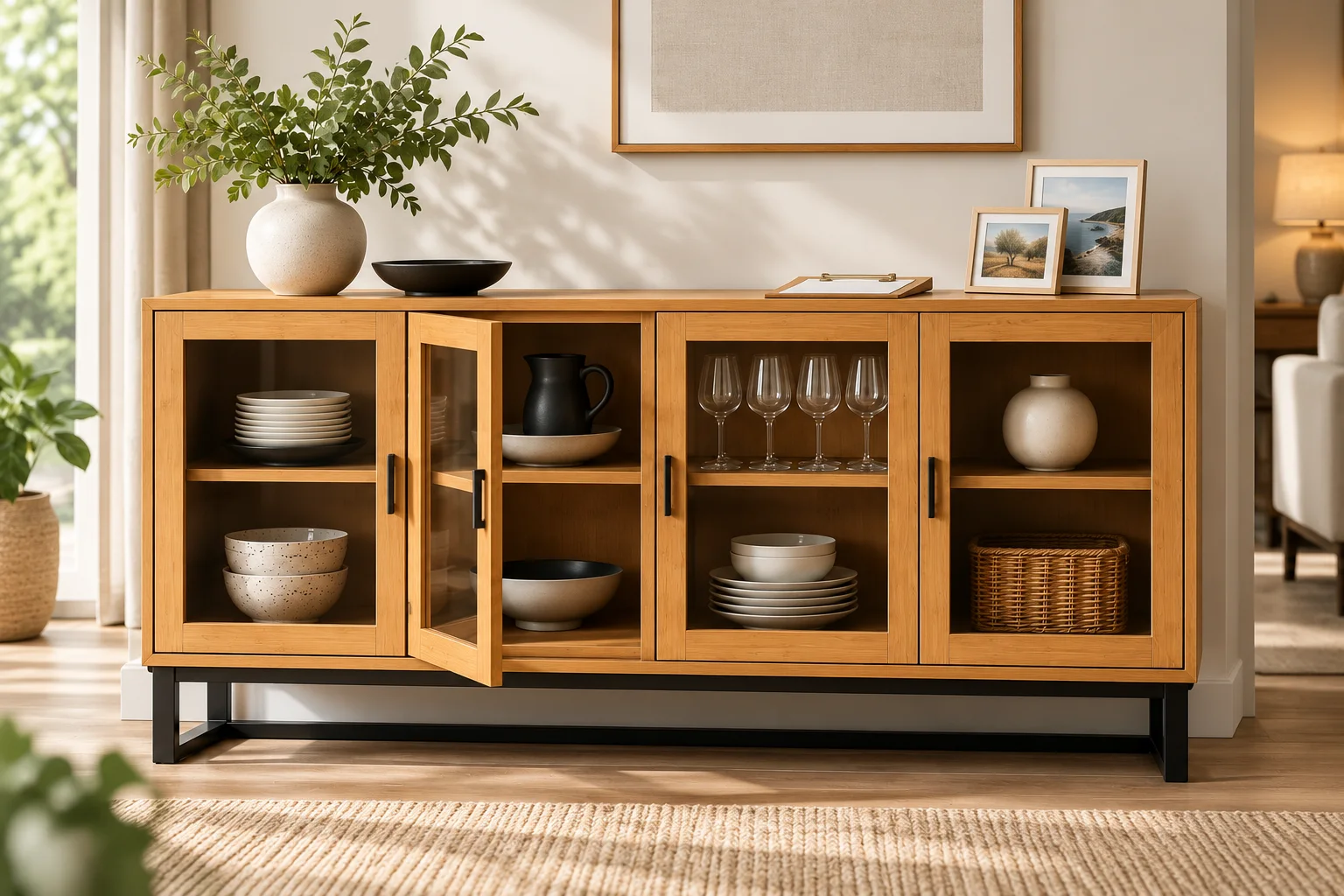
The Modern Bamboo Glass Door Sideboard has multiple framed glass doors on a raised base in its reference image. Number the doors from a stated viewing direction. A close-up of one handle should connect to an overall view of that particular cabinet. Its photograph does not establish a permitted door gap or installation tolerance.
Agree the remedy and the evidence before the return visit
The National Park Service construction closeout guidance calls for monitoring punch-list progress and updating the record. This is a useful documentation example, not a furniture acceptance standard or a rule for private projects.
For your order, ask who proposes the correction, who may authorize it and who verifies the result. A cosmetic mark, a missing component and an unresolved operating problem need separate entries. Do not combine them under “touch-up complete,” and do not allow an appearance repair to close a suspected structural issue.
| Entry | Evidence before work | Evidence needed to close |
|---|---|---|
| Exact room and component | Overall view linked to the observation | Same item and viewing direction after work |
| Accepted remedy | Named proposal and authorization | Work record identifying what changed |
| Operating issue | Defined movement or condition to repeat | Responsible reviewer records the repeat check |
| Open exception | Reason the item remains unresolved | Explicit decision and next owner |
Repeat the original check and record any remaining limitation
If the observation concerned door operation, a photograph of the closed front is insufficient. Have the responsible installer demonstrate the agreed movement under the same defined review conditions, and check nearby surfaces for effects of the work. Record the result against the original entry rather than replacing the original photograph.
Use distinct statuses: awaiting proposal, remedy authorized, work reported complete, verification pending and closed by the named reviewer. A proposed alternative that changes the accepted furniture needs its own decision; silence after an email is not a useful closeout record.
Hand over the unresolved list as well as the completed work
Identify any item that remains unavailable for use under the responsible team’s direction. Keep operational release, defect closure and commercial settlement as separate decisions. This worksheet does not decide liability, payment rights or whether an unsafe item may be used.
For a furniture closeout enquiry, send the item references, location map, observations, accepted specification and existing action list. Use the arrival-damage record guide for evidence collected at receipt; the installed-room list follows what still needs to be resolved after placement.