
A reception counter can be installed correctly and still be exposed to damage before opening day. The unanswered question is often who controls the furniture after the installer leaves and another trade returns. Decide whether the room can protect it before treating early installation as progress.
Decide whether the furniture should remain in the work area
List the remaining work beside, above and behind the furniture. Identify whether it requires moving the item, opening panels, wet cleaning or access across the finished surface. The site manager and furniture supplier should resolve incompatible work before the item is released into that area; a covering alone does not answer every exposure.
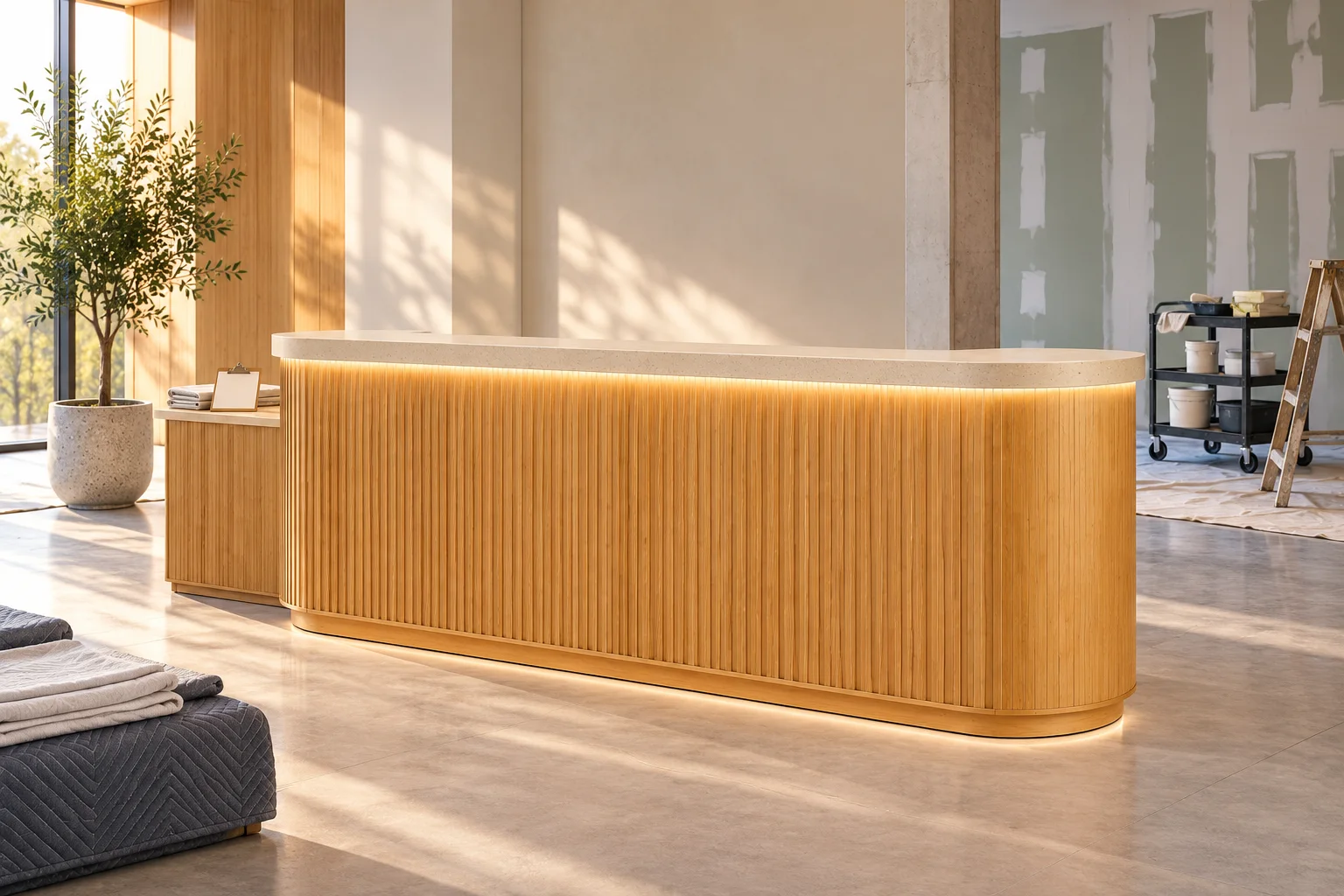
The Modern Bamboo Reception Desk shows a pale top, rounded ends and a vertically fluted bamboo front. These create distinct inspection zones. A top-only photograph would miss the lower front and curved corners most likely to be passed by workers or equipment. The image does not specify a compatible tape, wrap or cleaning chemical.
Make protection a named activity with a return check
Ask the supplier to identify suitable protection for the confirmed finish and the site team to approve its placement. Record who installs it, who may remove it and who restores it after access. Avoid directly applying adhesive or cleaning products simply because another trade uses them on the building.
The Steelcase Hong Kong store shipping policy requires sufficient safe space for assembly and placement. This is one seller’s installation policy, not Green Bamboo Space’s terms. For your project, record the actual workspace decision and unresolved conditions.
| Control point | Record before access | Record when returned |
|---|---|---|
| Furniture identity | Room, item and exposed condition | Same item and views |
| Authorized access | Trade, task and affected surfaces | Actual access and any changes |
| Protection | Approved method and person removing it | Restored protection and responsible person |
| Exception | Existing marks or unresolved restrictions | New observations and next decision owner |
Use a condition record at each change of control
Photograph the exposed item before protection, including pre-existing marks, and connect those views to the room and furniture reference. When an authorized trade needs access, identify the reason, affected surfaces and planned return time. Afterward, review the same views before covering again.
A record of a new mark establishes an observation, not its cause. Preserve the earlier photographs and report the location without assigning responsibility by assumption. The agreed project process should identify who assesses the issue and authorizes any repair.
Release the room with a clear outstanding-work list
Separate permission to store tools in the room from permission to use furniture as a work surface. Record any remaining access restrictions and who performs the final uncovered inspection. If the room cannot be controlled, ask the project team to choose a different installation sequence or an agreed protected location.
For a site-protection planning enquiry, send the furniture references, remaining-trades schedule, room photographs and proposed handover contacts. If furniture has not yet been installed, use the early-arrival storage guide to define the separate storage handover first.