
At a staffed collection point, a closed envelope may be waiting for a recipient, awaiting a check or returned after an unsuccessful collection. Those states can require different handling even when the envelopes are the same size. Define the workflow before ordering a cabinet.
Let the operator set the handling rules
Ask what documents may be handled here, who may see or retrieve them, how the intended recipient is checked and where exceptions go. The organisation responsible for the records must set its security and privacy arrangements; furniture selection does not establish them.
If the use requires controlled or specialist secure storage, identify that requirement before selecting ordinary casegoods. Do not infer a security rating, lock or confidentiality protection from a concealed front.
Keep the current handover separate from the queue
Demonstrate one envelope being checked while a second recipient arrives and an earlier item is returned. Assign a working handover position and separate holding positions for pending and unresolved items. The staff member should not need to spread several recipients’ documents over the public-facing surface.
Use actual empty envelopes or dummy records in the trial. Record the largest permitted package, any supporting paperwork and the way it is retrieved. The furniture brief should describe the task without reproducing customer information.
| Document state | Furniture question | Approval needed |
|---|---|---|
| Awaiting collection | Where is the approved holding position? | Operator’s storage arrangement |
| Being checked | Can one handover remain separate? | Staff verification workflow |
| Returned or unresolved | Where is it kept from re-entering the ready group? | Exception procedure |
| Uncollected at closing | Where does it transfer or remain? | Recorded shift-end responsibility |
Review open and concealed storage by role
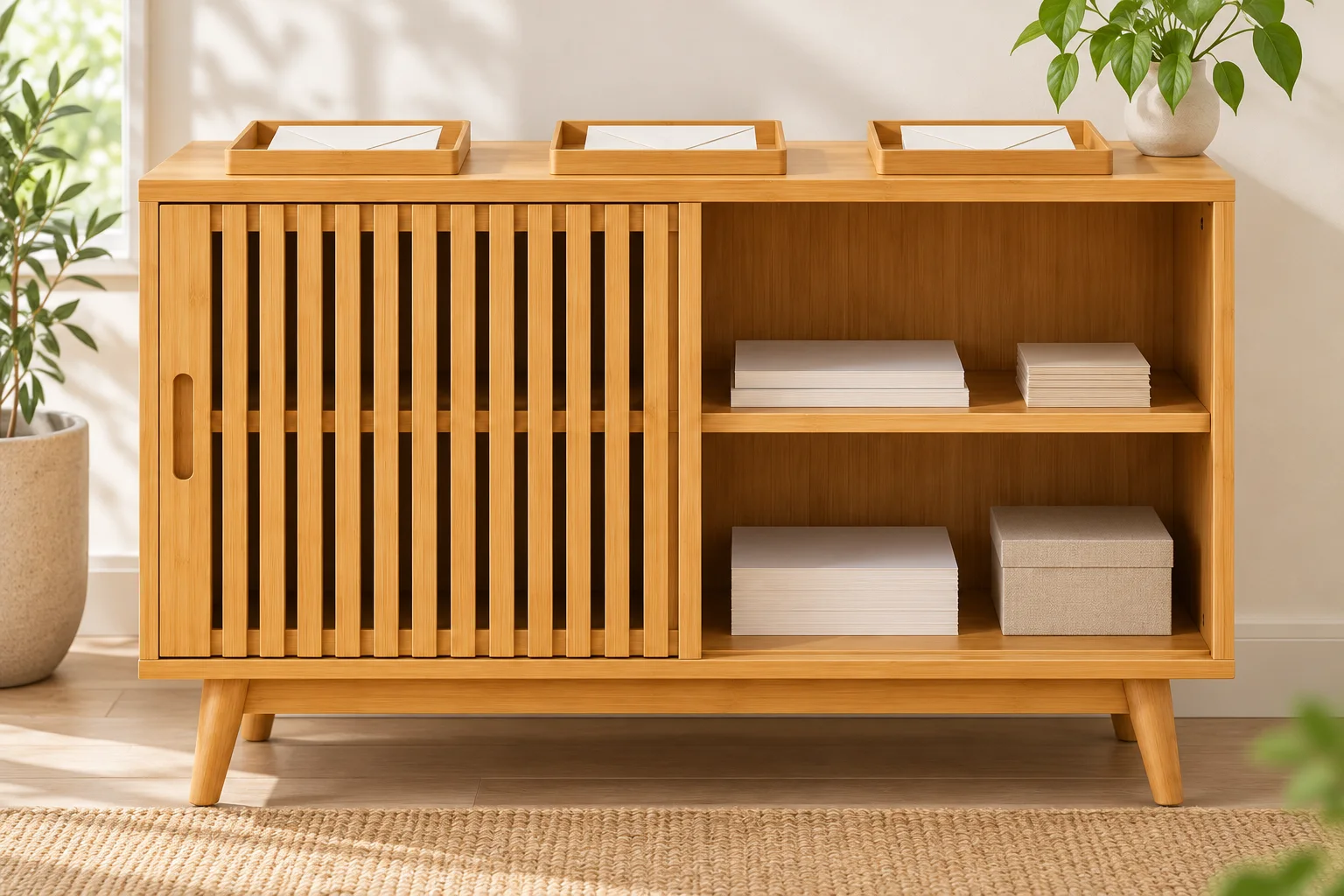
The sliding-door bamboo sideboard combines open shelving and a concealed section. That makes the reference useful for discussing access patterns, but a sliding door is not evidence of secure storage.
Assign only the roles approved by the operator. For example, an open area might hold blank supplies if permitted, while actual documents require the organisation’s separately approved storage arrangement. Do not present a new partition, lock or file system as included without confirmation.
Specify the end of each shift
Decide what happens to uncollected, returned and uncertain items before the staff member leaves. State which furniture must be empty, where items transfer and who records the handover. A closed cabinet at the end of the day is not a record of the documents inside.
Send the state diagram, dummy package sizes and approved storage requirements with a document-point furniture enquiry. Use the reception desk planning guide for the wider staff and visitor arrangement, keeping document handling as its own controlled process.