
An interview room can look ready with three chairs around a table and still give the candidate nowhere useful to write. Before ordering furniture, separate the conversation from any written exercise included in the session. The candidate’s working surface should not appear only after an interviewer moves a pile of documents.
Describe the session before choosing a table shape
Record the number of interviewers, the candidate’s position and whether the session includes forms, notes, a portfolio or a written task. Decide which materials are shared and which remain with the panel. A long table is not automatically better: its usable positions depend on the actual chair arrangement and the supports below it.
Florida Atlantic University’s interview guidance recommends a quiet private setting and attention to a consistent physical arrangement. That supports reviewing the room as part of the session. It does not establish acoustic privacy, employment compliance or a required furniture dimension for your workplace.
Test the candidate’s surface as a separate place
Put the actual paper format, pen and permitted personal items at the candidate’s seat. Add the panel’s folders and note-taking materials at their own positions. Try reading, writing and looking up to speak without moving someone else’s documents. If the task uses a laptop, include its open screen and connections in a separately reviewed equipment arrangement.
Do not use a low lounge table as a writing surface merely because the room is intended to feel informal. Equally, a large manager’s desk may make the candidate’s usable area an afterthought. Compare the proposed furniture by performing the actual task from each seat, including the least convenient position.
| Session phase | Materials in use | Question for the trial |
|---|---|---|
| Conversation | Panel notes and candidate belongings | Can people face one another without blocked places? |
| Written task | Actual paper or agreed device | Does the candidate have a clear usable surface? |
| Questions and close | Any shared documents | Can documents be handled without displacing the writing place? |
| Between candidates | Materials removed and furniture reset | Can the agreed arrangement be restored consistently? |
Check table and chairs together
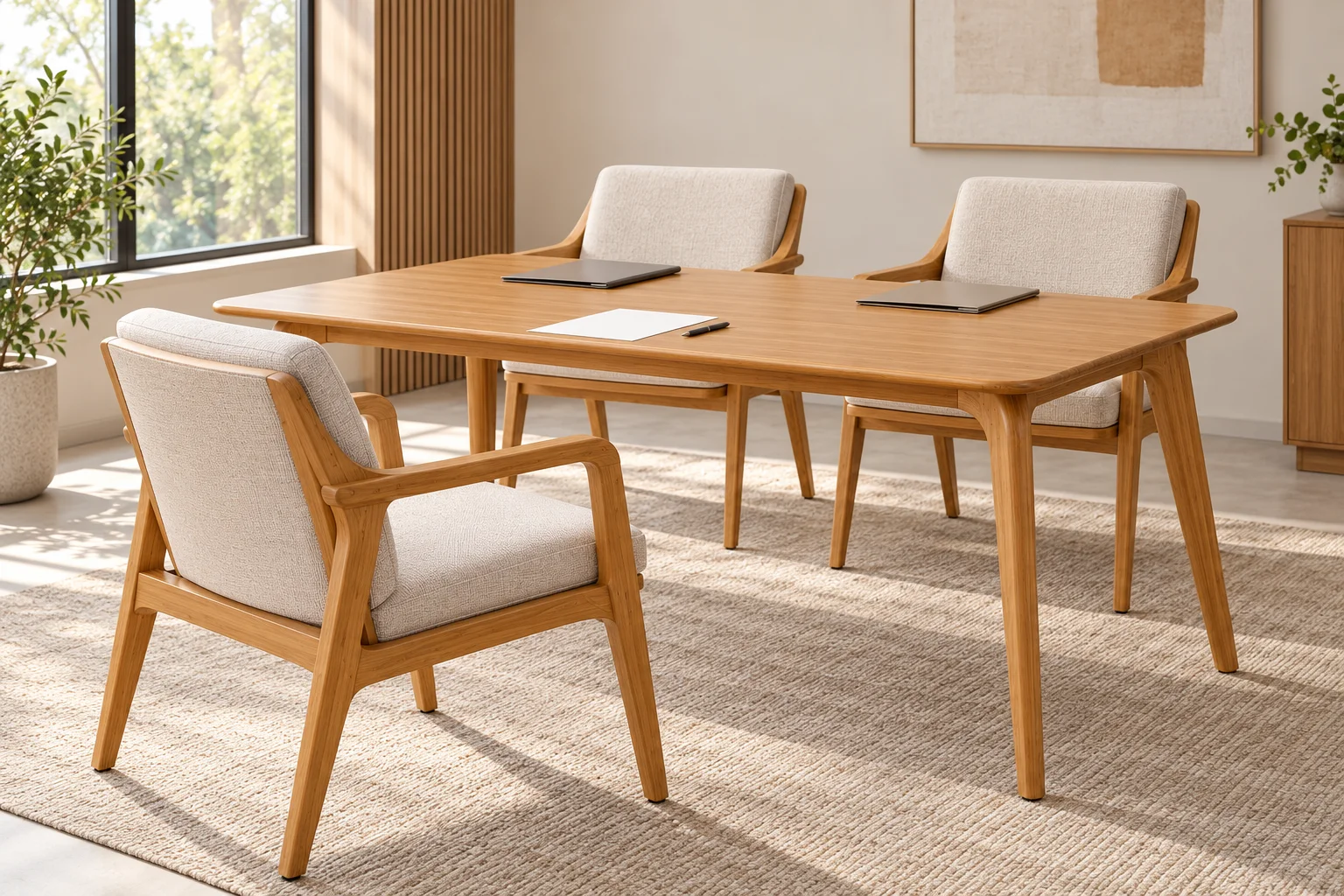
The Nordic Bamboo Restaurant Table has a rounded rectangular top and four tapered, slightly splayed legs. These are useful design facts for a layout review, not a declaration that it is a specialist interview desk. Mark leg positions on the drawing and check them against the nominated chairs and user access.
The Modern Engineered Bamboo Arm Dining Chair is an upholstered dining-led reference, not an adjustable task chair. Review the actual seat, arm and table relationship for the intended users and session duration. If adjustment or particular access requirements are needed, state them before selecting the furniture. See the chair-and-table fit guide for the pairing questions.
Agree the reset without using furniture as a privacy promise
Name a place for the next blank task pack and a separate operator-controlled destination for completed material. The person preparing the room should be able to tell when the candidate’s surface is clear. Keep document handling with the organisation’s own process; an ordinary cabinet door or bamboo screen is not evidence of confidentiality or sound isolation.
A simple room photograph taken without people or personal information can record the approved furniture arrangement. Confirm which parts may change to meet individual needs rather than insisting that a photographed position overrides the actual user. This guide concerns furniture selection, not interview assessment methods.
For an interview-room furniture enquiry, provide the floor plan, participant count, paper or device sizes, task sequence, selected chair references and relevant user requirements. Define the table and seating supply scope separately from room acoustics, technology and document-storage systems.