
A boutique does not need one of every display fixture. First decide which products customers should pick up themselves, which they should browse together and which require staff assistance. That distinction helps decide whether the shop needs a display island, open shelving, a glass-door cabinet—or a smaller combination.
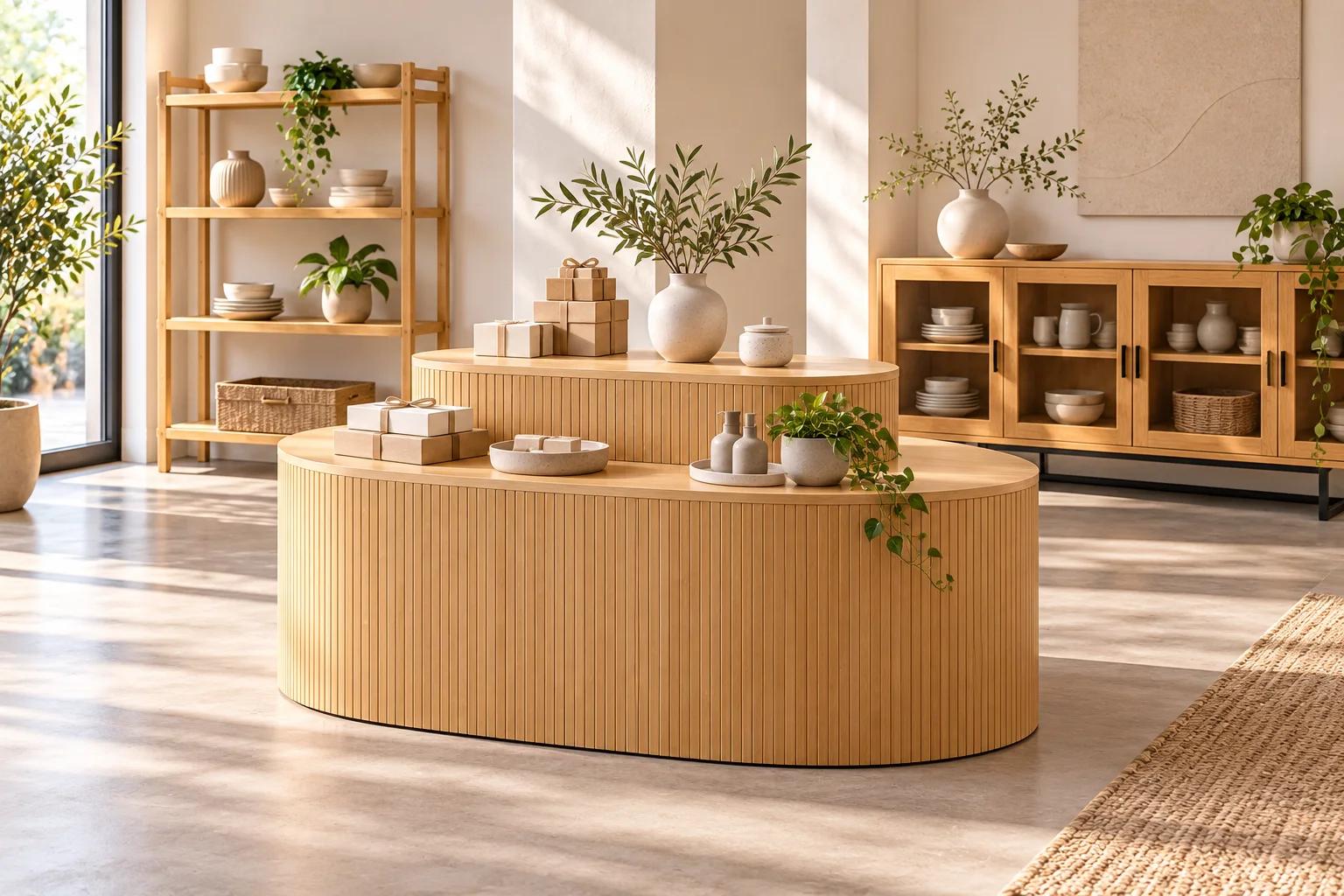
Choose the furniture around merchandise and the shopping interaction, not only around a photograph of an empty shop. The same cabinet can be attractive in two stores and serve quite different jobs in each.
Sort merchandise by how the customer encounters it
Make a short list of the main product groups using actual packages or representative samples. Record whether a customer can pick up one item freely, needs to compare several items beside each other, or must ask a member of staff to retrieve it. Keep display quantity separate from reserve stock.
For an illustrative lifestyle boutique, boxed gifts might be self-selected, a seasonal collection might be presented as a group, and selected fragile pieces might be shown behind doors. These are proposed choices, not rules for those merchandise types. A shop may choose a different interaction for the same objects.
Compare the three fixture types against that list
| Fixture direction | Useful shopping role | Question before selecting it |
|---|---|---|
| Open display table or island | View a focused group from several approaches | Does the loaded display leave the intended products visible and reachable? |
| Open shelving | Browse groups arranged across defined levels | Can customers read, remove and return the actual package? |
| Glass-door display cabinet | View selected items with retrieval handled as agreed | Who opens it, and where does the customer wait during retrieval? |
| Reserve-stock furniture | Keep extra units outside the main display | Is it needed here, elsewhere, or not in this furniture order? |
McKesson’s retail playbook discusses wall space, freestanding fixtures and platforms in a healthcare-retail setting. The broad planning lesson is to connect fixture choice to the merchandise and available space. It does not establish sales results or specifications for this boutique example.
Use real furniture references without borrowing unconfirmed features
The Oval Bamboo Display Island has a broad lower surface and a raised central tier as its design direction. This can be investigated for a focused product group; place the actual merchandise on both levels in the proposal. Do not assume concealed stock storage is included.
The Contemporary Bamboo Open Shelving Unit offers an open-frame direction whose shelf arrangement can be reviewed. The Modern Bamboo Glass Door Sideboard provides a different, enclosed display reference. Glass doors do not by themselves mean locking, theft resistance, museum-grade protection or suitable display lighting. Those are separate requirements, not included promises.
Test one small assortment before ordering a full store
Arrange a representative group, including the largest package, a small item and a product that customers need help to inspect. Try choosing, returning and replenishing each one. Include price information and any packaging that remains with the product. Note where a staff member has to stand during assistance.
If the same product group works on both a table and a shelf, compare what each takes away from the rest of the room. A central display may reduce open floor space; a tall display may change views across the store. Ask the designer to resolve the actual layout and required access rather than applying a universal fixture-to-floor ratio.
Use the display-island planning guide or glass-door cabinet guide once the fixture type has been chosen. To request a boutique display furniture proposal, send the store plan, product groups and package sizes, self-service or assisted-access choices, selected references and quantities. State whether reserve storage, lighting and security fittings are requested, excluded or still undecided.