
Brown marks noticed after cleaning are a reason to investigate, not proof that the cleaner caused corrosion. Before ordering replacement fittings or a stronger treatment, give the furniture supplier enough evidence to identify the component, compare unaffected examples and separate observed facts from possible causes.
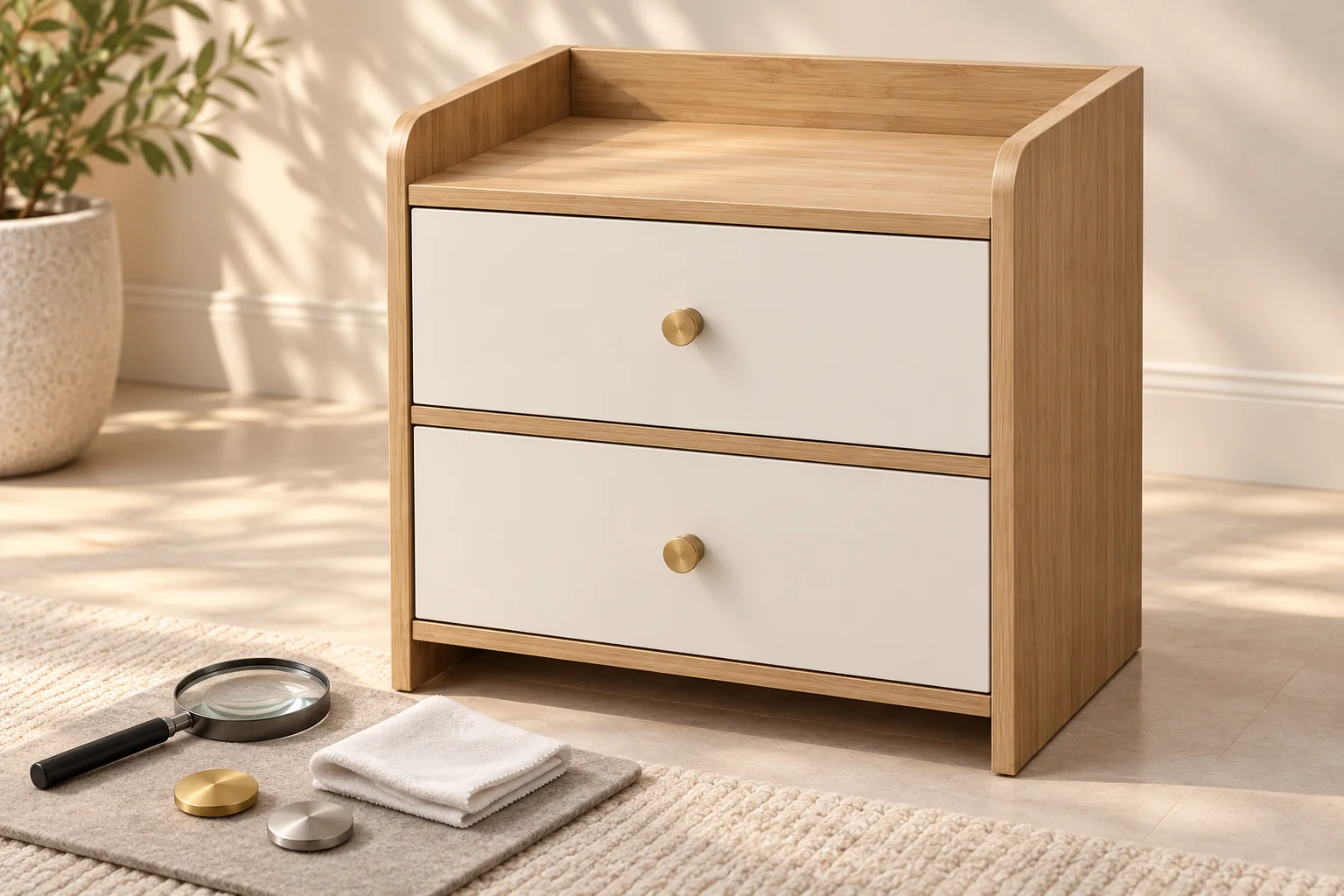
Locate the mark on a specific component
The two-drawer bamboo bedside cabinet has visible round metal knobs against cream drawer fronts. Its appearance identifies a useful inspection location, but the warm metal colour does not establish solid brass, plating, a clear coating or another construction. Keep those fields unconfirmed until the component supplier identifies them.
Record the furniture batch, upper or lower drawer, part reference if available, and whether marks appear on the exposed face, around the base or on the adjacent furniture surface. Take a whole-unit photograph and a close view before any new remedial treatment.
Compare an affected fitting with a relevant control
Look for an unaffected fitting from the same furniture batch and approved part reference. Photograph both under the same light and describe their positions and exposure histories. An unused spare may help identify the finish, but it is not automatically a valid exposure comparison.
Record whether each fitting was cleaned with the same product, cloth and routine. If that is unknown, write unknown. Differences between upper and lower knobs, nearby units or stored spares are observations for review, not a controlled experiment or proof of the cause.
Keep the event record separate from material identification
Attach the cleaning product label and the operator’s actual preparation, application and removal record, including dates and any change from the usual routine. Note nearby work or contact with other metal objects where observed. Do not recreate the event by exposing more furniture.
worldstainless’s cleaning guidance explains that external iron contamination can produce staining on stainless steel and that coloured or painted stainless surfaces need different care from bare steel. That illustrates why a photograph and the word “metal” cannot determine a remedy; it does not identify this knob’s material.
| Record | Affected fitting | Unaffected comparator or supplier response |
|---|---|---|
| Identity and position | Batch, part and marked surface | Same reference confirmed, or limitation stated |
| Exposure timeline | Cleaning dates, product, cloth and observed contact | Comparable history or explicitly unknown |
| Appearance evidence | Whole unit and close view before treatment | Same light and documented location |
| Material identification | Base metal and coating still to confirm | Written component identification |
| Decision and follow-up | Professional review, treatment or replacement scope | Responsible person and recurrence review date |
Request a finding before approving remedial work
Ask the supplier to confirm the base material, surface treatment and exact component revision, then state whether the evidence is sufficient or professional inspection is needed. The response should distinguish confirmed findings, possibilities and open questions, with any sample collection arranged by the responsible specialist.
Agree the treatment or replacement scope only after that review, including protection of adjacent bamboo and cream surfaces, who performs the work and how recurrence will be checked. Keep the case separate from metal-finish appearance matching and pre-purchase cleaning compatibility. Neither earlier approval establishes the cause of a later mark.
Send a decision-ready inquiry
Send the component photographs, batch information, comparator record and cleaning label through our service inquiry. Request material identification and an evidence-based assessment before authorising a new cleaning treatment or ordering replacement parts.