
“The lock is broken” leaves a supplier unsure whether the issue concerns the key, the lock mechanism or the drawer meeting the cabinet. A short, consistent evidence pack can make the service request more useful without asking staff to dismantle or force the lock.
Identify the cabinet and the affected function
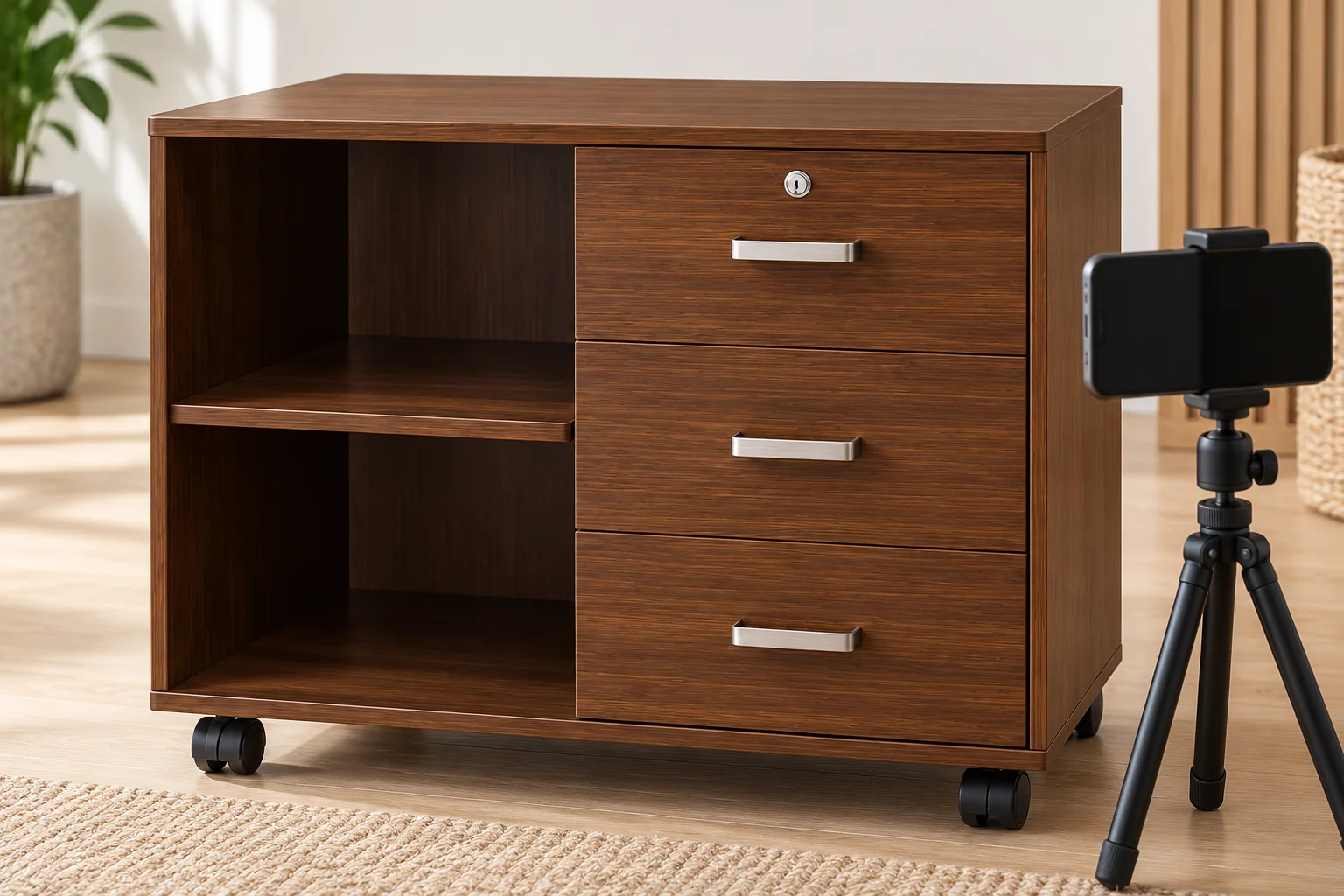
The mobile bamboo storage cabinet visibly has a keyhole on its upper right-hand drawer. Its left-hand open shelves and three-drawer layout help identify the unit. The photo does not establish the internal locking mechanism or whether any other drawers are linked.
Record the furniture reference, batch if known, affected drawer and when the symptom began. Note whether it followed a move, delivery or other observed event, but keep that history separate from a diagnosis. Use an authorised service channel for key or security-sensitive identifiers.
Describe the symptom without applying extra force
Report whether the authorised key can be inserted and turned normally, whether the drawer reaches its usual closed position and whether the problem is continuous or intermittent. Record ordinary operation only while it remains possible; do not repeatedly reproduce a jam.
If the drawer is already open and the relevant parts are normally visible, photograph the lock body, retaining surface or strike relationship for the supplier. Do not open a locked drawer by alternative means, remove the lock, bend the strike or prescribe lubricant.
Capture one wide view and one continuous sequence
Start with a wide image showing the whole cabinet and drawer gaps. Add a close view of the external lock face and any visible interference. A short continuous video of the normal attempted operation is more useful than disconnected stills that omit the point where motion stops.
LEHMANN lists several furniture-lock families and versions. That variety is a reason to identify the installed mechanism before seeking specific service instructions; it does not mean this cabinet is equipped with that brand.
| Evidence | What to record | What it helps distinguish |
|---|---|---|
| Unit identity | Product, batch and affected drawer | Correct mechanism and service history |
| Normal key operation | Insertion and turning symptom, without force | Key/lock symptom for supplier review |
| Drawer closure | Usual closed position and visible gap | Possible surrounding-furniture issue |
| Visible relationship | Accessible lock/strike photographs and sequence | Where professional inspection should begin |
Ask for a diagnosis route and a defined completion check
Send the evidence once with a concise symptom timeline. Ask the responsible supplier whether further non-destructive observations are needed, who should attend and which part or complete assembly they propose to inspect or replace.
After authorised service, record the observed normal opening, closing and locking functions agreed for that unit. Keep the service result separate from the key allocation plan and include it in the maintenance record. Repeated symptoms should be referred back with the same unit identity.
Send a decision-ready inquiry
Send the cabinet reference, symptom timeline and photographs through our service inquiry. Request an authorised inspection route and a completion check; the evidence pack supports diagnosis but does not determine the cause on its own.